


Diprotodon

Name meaning:
Two forward-projecting teeth
Period of life:
1,77 million years - 40 thousand years ago
Period:
Quaternary period
Habitat:
Savannas and plains
Taxonomy:
Mammals
Countries:



 Hydrodamalis gigas


Haikouichthys


What does the name mean: The name Diprotodon comes from the Greek words di- (“two”), pro- (“forward”), and odous (“tooth”), meaning “two forward-projecting teeth.”
Diprotodon was a giant marsupial that lived in Australia during the Pleistocene (from approximately 1.77 million years ago until around 40 thousand years ago) and became extinct together with other representatives of the Australian megafauna. It was the largest known marsupial: shoulder height reached about 1.8 m, body length exceeded 4 m, and body mass may have reached up to 2800 kg. Females were apparently smaller than males.
The skull of Diprotodon was massive, with a shortened facial region and a broad forehead. The eyes were positioned on the sides of the head, providing a wide field of view. A characteristic feature was the pair of large continuously growing incisors projecting forward, functionally similar to the incisors of rodents.
Locomotion was carried out on four powerful column-like limbs functionally comparable to those of large terrestrial mammals. Most of the weight was supported by the proximal parts of the limbs, providing stability under enormous body mass. No direct evidence of fur coloration exists; it is assumed that the coat may have had a cryptic, inconspicuous coloration.
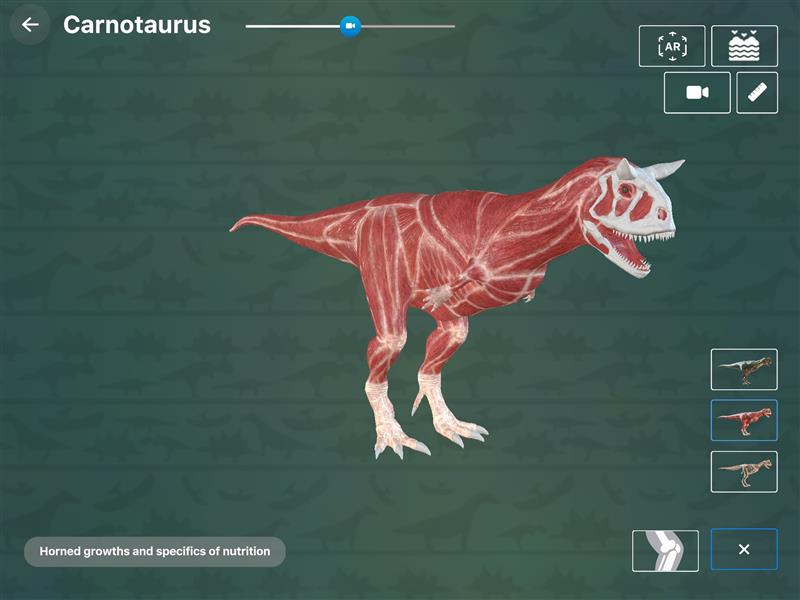
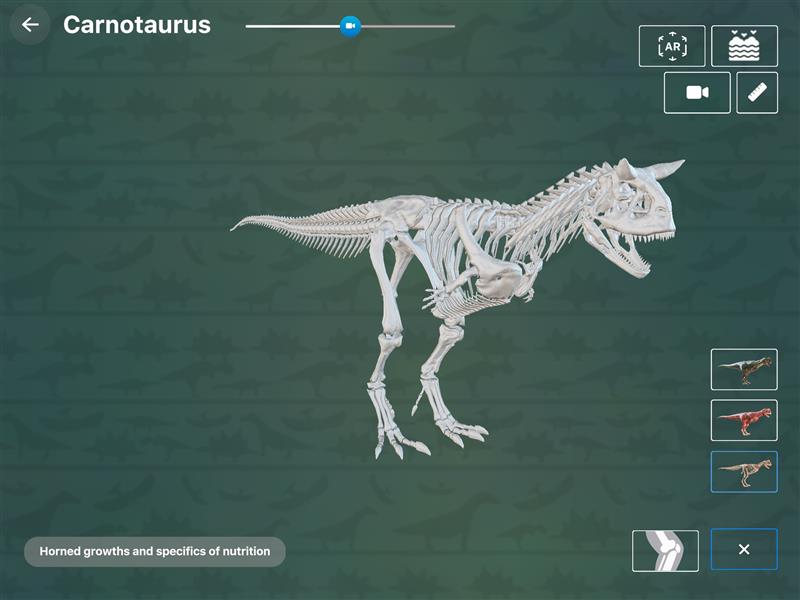
The skeleton of Diprotodon was extremely robust and adapted to supporting great weight. The limb bones were broad and massive, while the vertebral column was resistant to heavy mechanical stress. Moving such a body required well-developed musculature, especially in the shoulder girdle, thighs, and neck.
Diprotodon was herbivorous, and its digestive system was adapted for processing large quantities of plant material. Like other marsupials, females possessed a pouch in which the young developed. It is suggested that the pouch may have opened backward, similar to that of modern wombats.
The jaws of Diprotodon were extremely powerful, generating forces of up to 2300 N at the incisors and more than 11,000 N at the molars. This allowed efficient grinding of tough vegetation, including branches and leaves.
According to paleoecological evidence, these animals may have lived in herds, performed seasonal migrations, and shown elements of social organization. The study of Diprotodon is important for understanding the structure of Australian Pleistocene ecosystems and the evolution of large terrestrial faunas.
Discussions
Start the first one!
 Start a discussion
Other animals


 INTERESTING FACTS
 PUZZLES
 HOME
HOME
 3D MODEL "SKIN"
 3D MODEL "MUSCLES"
 3D MODEL "SKELETON"
 VISION
 NEIGHBORS
 VOICE ACTING
 AR - MODE
 GALLERY
 HISTORY OF DISCOVERIES

