


Cotylorhynchus

Name meaning:
Cup-snouted
Period of life:
273,01–266,9 million years ago
Period:
Permian period
Habitat:
Floodplains
Taxonomy:
Synapsids
Countries:




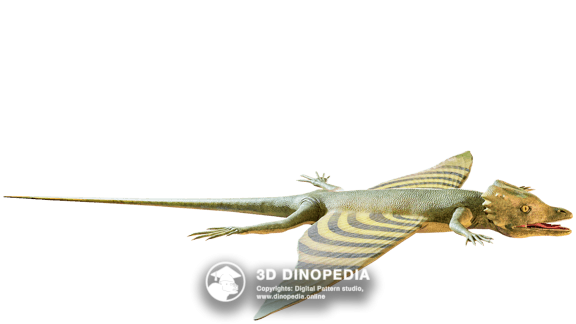 Weigeltisaurus


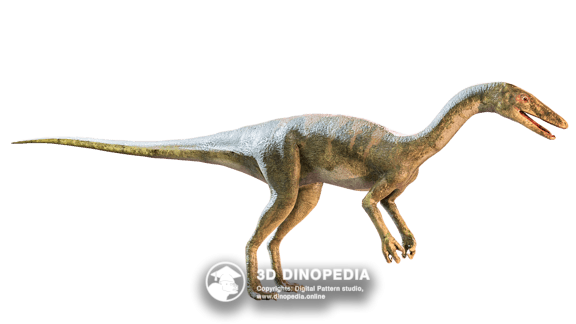
Coelophysis


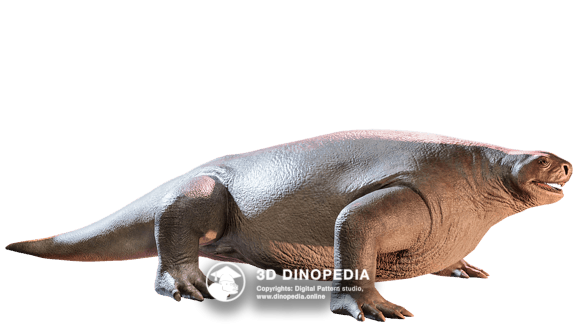
What does the name mean: the genus name Cotylorhynchus comes from the Greek kotyle — “cup, hollow” and rhynchos — “beak, snout.” The name refers to the structure of the nasal region, which was surrounded by a depressed, cup-shaped bony surface.
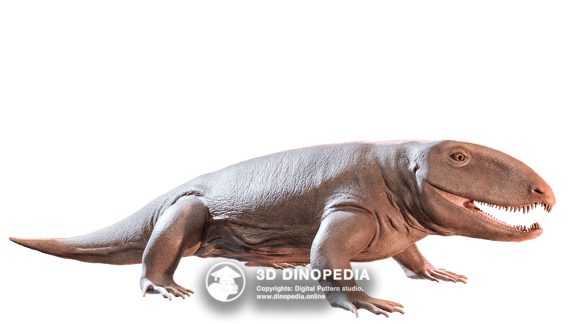
During the Permian period, long before the appearance of dinosaurs, early synapsids known as caseids inhabited the land. These animals were among the first vertebrates to adopt a herbivorous diet and attain large body sizes. Cotylorhynchus was a characteristic representative of this group, notable for its unusual body proportions: a massive torso combined with a relatively small head. This giant herbivore lived around 270 million years ago in what is now North America. The largest species, Cotylorhynchus hancocki, reached lengths of up to 6 meters and weighed approximately 1.4 tonnes.
Cotylorhynchus possessed a massive, barrel-shaped body with a broad ribcage that enclosed an enormous digestive system. Its short neck supported a small head with a blunt snout and large external nostrils, which probably indicate a well-developed sense of smell. The limbs were short and powerful, ending in five broad digits equipped with large claws that may have been used to dig up plant material.
The internal anatomy of Cotylorhynchus was adapted for processing large amounts of vegetation. Its voluminous torso housed an extensive digestive tract capable of breaking down plant matter, including cellulose. Members of this genus were among the earliest large herbivorous vertebrates and successfully occupied their ecological niche for a long period of time.
The lifestyle of caseids remains a subject of debate. Most researchers consider them terrestrial animals. However, there is also a hypothesis suggesting a semi-aquatic lifestyle, based on certain features of the limbs that may have aided swimming. In any case, caseids played an important role in the evolution of terrestrial ecosystems, becoming some of the first giant herbivorous vertebrates.
Discussions
Start the first one!
 Start a discussion
Other animals


 INTERESTING FACTS
 PUZZLES
 HOME
HOME
 3D MODEL "SKIN"
 3D MODEL "MUSCLES"
 3D MODEL "SKELETON"
 VISION
 NEIGHBORS
 VOICE ACTING
 AR - MODE
 GALLERY
 HISTORY OF DISCOVERIES

