


Repenomamus

Name meaning:
Crawling mammal
Period of life:
125–123 mya
Period:
Cretaceous period
Habitat:
Mixed and broadleaf forests
Taxonomy:
Mammals
Countries:




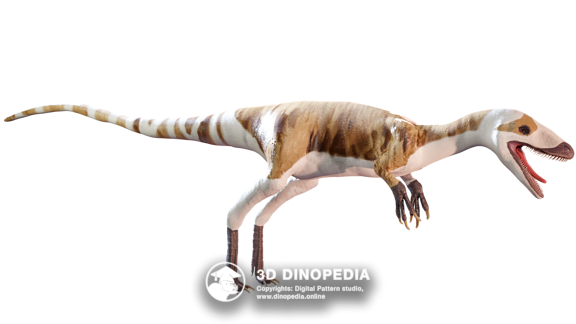 Sinosauropteryx


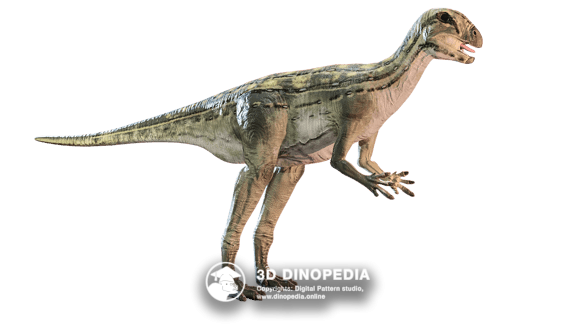
Hypsilophodon


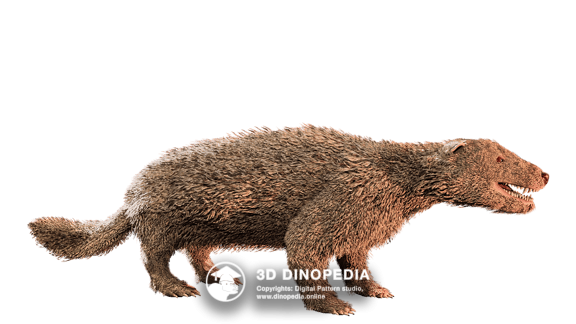
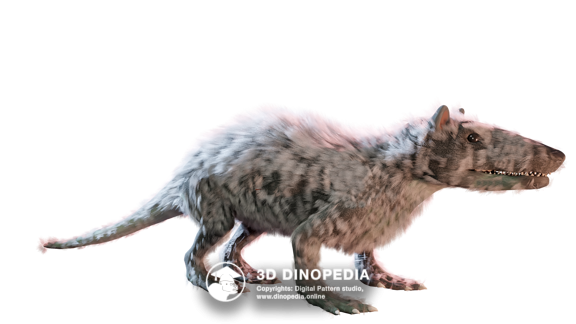
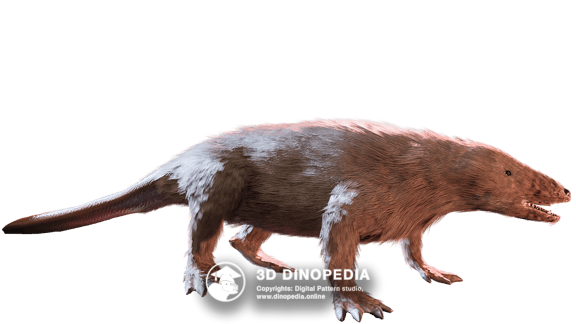
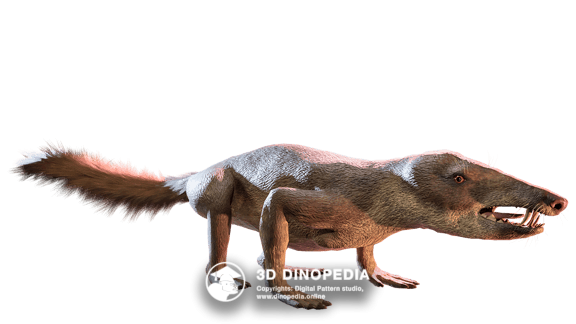
Repenomamus is one of the most remarkable mammals of the Early Cretaceous period. This ancient animal lived approximately 125 million years ago in what is now Liaoning Province, China. Its name, translated from Latin, means «reptile mammal» — a reference to the combination of traits characteristic of both ancient reptiles and modern mammals.
Repenomamus is assigned to the Eutriconodonta — one of the earliest branches of mammals, with no direct descendants today. Among its relatives, it stood out for its considerable size: total body length reached about one meter, with a trunk length of approximately 52 centimeters. For a mammal of its time, it was a true giant.
The structure of its limbs indicates that Repenomamus was a moderate runner: the humerus and femur formed a wide angle at the joints, and the limbs were relatively short and robust. Its feet had a flat structure, making the animal stable but not especially fast.
A particularly striking discovery concerns its feeding habits. In the fossil remains of one species — Repenomamus robustus — scientists found bones of a juvenile Psittacosaurus, a small herbivorous dinosaur. This sensational finding demonstrated that some mammals of that time were not merely scavengers, but active predators capable of hunting even dinosaurs.
Thus, Repenomamus overturned the conventional image of «insignificant little mammals» of the Cretaceous. This small but formidable predator serves as a reminder that within the world of dinosaurs, mammalian life was already diversifying and gaining ecological prominence.
Discussions
Start the first one!
 Start a discussion
Other animals





 INTERESTING FACTS
 PUZZLES
 HOME
HOME
 3D MODEL "SKIN"
 3D MODEL "MUSCLES"
 3D MODEL "SKELETON"
 VISION
 NEIGHBORS
 VOICE ACTING
 AR - MODE
 GALLERY
 HISTORY OF DISCOVERIES

