


Helveticosaurus

Name meaning:
Lizard from Helvetia
Period of life:
242 mya
Period:
Triassic period
Habitat:
Marine environment
Taxonomy:
Marine reptiles
Countries:

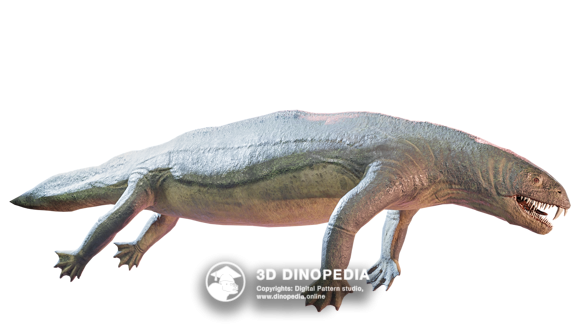



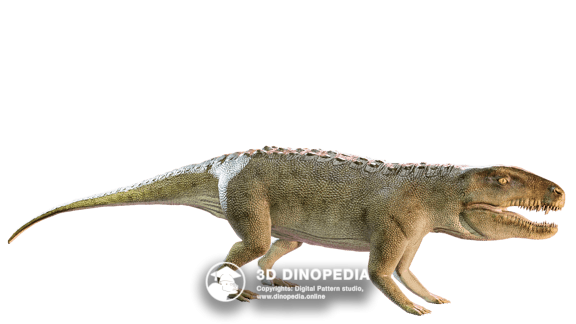 Postosuchus


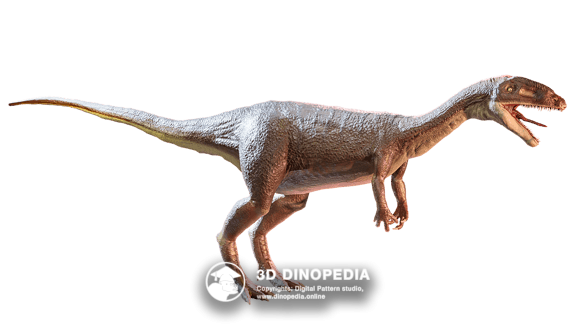
Liliensternus


«lizard of the Helvetic Zone», named after a geological unit identified in the Alps — the «Helvetic Zone».
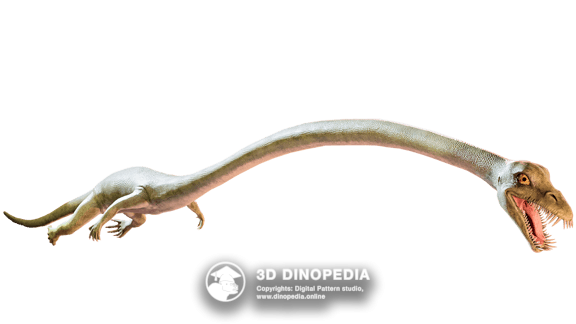
Helveticosaurus was an enigmatic marine reptile that lived around 240–250 million years ago, at a time when the warm waters of the ancient Tethys Ocean washed over what is now Europe.
This animal had a short snout, sharp teeth, and an elongated body measuring between 2.8 and 3.6 metres in length. Its exact size is unknown, as the tail is not fully preserved in the fossils that have been found. However, judging by the structure of its spine, it was probably long and flexible — an excellent «engine» that helped Helveticosaurus move through wave-like undulations.
This reptile was well adapted to shallow waters. Its flexible tail allowed it to manoeuvre skilfully through the water column in search of fish and invertebrates, while its powerful forelimbs and well-developed shoulder girdle helped generate paddling strokes, adding thrust while swimming. This combination of a long, flattened tail and strong limbs is unusual among marine reptiles, making Helveticosaurus a truly unique creature of its time.
Interestingly, its well-developed limbs suggest a connection to life on land. Helveticosaurus probably, like modern marine iguanas, occasionally climbed ashore to bask in the sun.
Unlike many of its marine neighbours, this reptile had a short neck and a relatively massive head. All of this made its appearance even more distinctive — something halfway between an aquatic predator and a terrestrial lizard.
All known remains of Helveticosaurus have been found in the bituminous shales of the Swiss canton of Ticino. Long ago, this area formed a shallow coastal margin of the ancient Tethys Ocean — a realm of corals, molluscs, and the first marine reptiles. It was here that Helveticosaurus hunted, gliding through coastal waves and tracking prey in the clear water.
Discussions
Start the first one!
 Start a discussion
Other animals






 INTERESTING FACTS
 PUZZLES
 HOME
HOME
 3D MODEL "SKIN"
 3D MODEL "MUSCLES"
 3D MODEL "SKELETON"
 VISION
 NEIGHBORS
 VOICE ACTING
 AR - MODE
 GALLERY
 HISTORY OF DISCOVERIES

