


Cryolophosaurus

Name meaning:
Frozen-crested lizard
Period of life:
186-183 mya
Period:
Jurassic period
Habitat:
Taiga
Taxonomy:
Theropods
Countries:




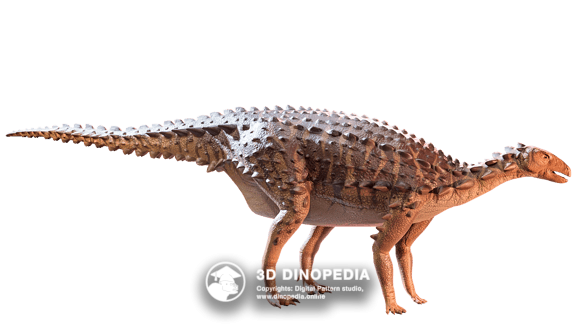 Scelidosaurus


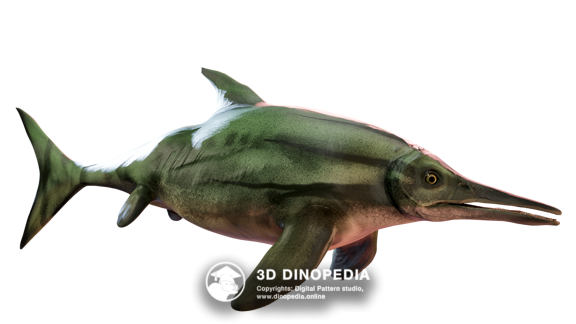
Stenopterygius


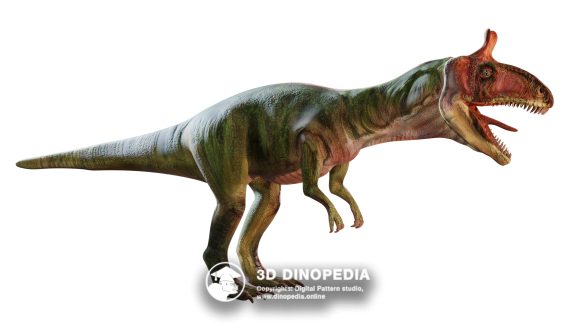
Cryolophosaurus was a predatory saurischian dinosaur from the theropod group. Its remains were discovered in Antarctica in 1990, and the find caused a real sensation. An expedition led by Dr. William Hammer, a paleontologist from Augustana College (USA), was extraordinarily fortunate: for the first time on the frozen continent, scientists uncovered not just isolated bones, but an almost complete dinosaur skeleton. Extracting the fossils took several weeks, and in 2003 additional material was found at the same site, confirming how unique the discovery was.
Cryolophosaurus belonged to the saurischians — the “lizard-hipped” dinosaurs. Despite the name, it was not closely related to modern lizards, but the structure of its pelvis did resemble theirs. This dinosaur was a theropod — a bipedal predator, a close relative of Dilophosaurus, and one of the largest carnivores of the Early Jurassic.
According to scientific estimates, Cryolophosaurus reached 6.5–7.5 meters in length, with a body mass of about 350–465 kilograms. It was among the top predators of its time. Powerful hind limbs allowed it to pursue prey quickly, while its strong jaws filled with sharp, inward-curving teeth made every bite potentially fatal.
Millions of years ago, during the Mesozoic Era, Antarctica looked very different. It was part of the ancient supercontinent Gondwana, together with South America, Africa, and Australia. The climate was much warmer, and lush forests and river valleys supported abundant plant and animal life. In these conditions, Cryolophosaurus was a dominant predator, hunting other dinosaurs and perhaps even members of its own species.
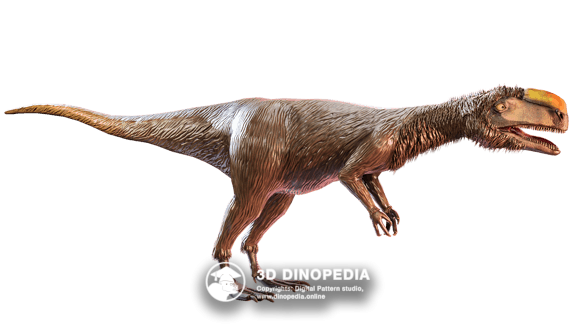
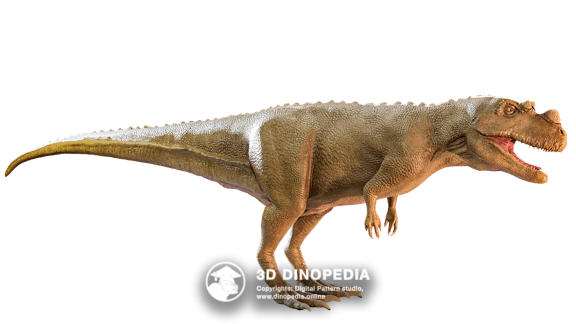
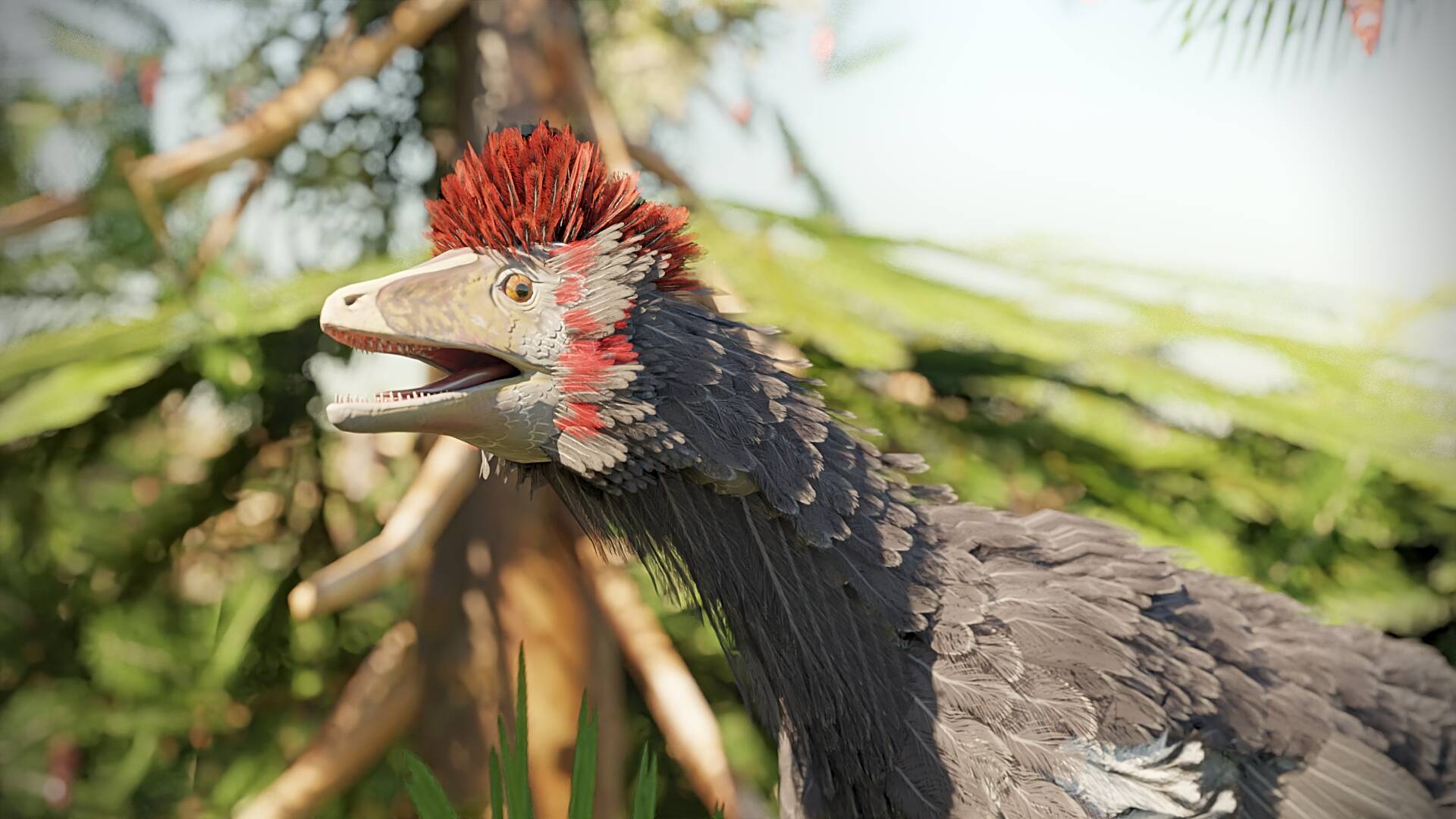
What made this dinosaur especially memorable was its appearance. On its skull rose an unusual bony crest running across the head — a distinctive feature unlike that of many other theropods. While dinosaurs such as Monolophosaurus or Dilophosaurus had crests extending along the length of the skull, Cryolophosaurus had a transverse crest, giving it a truly unique profile. Scientists suggest that this crest was mainly ornamental and may have been present only in males, serving as a display structure for attracting mates and demonstrating strength.
Discussions
Start the first one!
 Start a discussion
Other animals






 INTERESTING FACTS
 PUZZLES
 HOME
HOME
 3D MODEL "SKIN"
 3D MODEL "MUSCLES"
 3D MODEL "SKELETON"
 VISION
 NEIGHBORS
 VOICE ACTING
 AR - MODE
 GALLERY
 HISTORY OF DISCOVERIES

