


Hydrodamalis gigas

Name meaning:
Water cow
Period of life:
20,000 years ago and up to 1768
Period:
Quaternary period
Habitat:
Marine environment
Taxonomy:
Mammals
Countries:





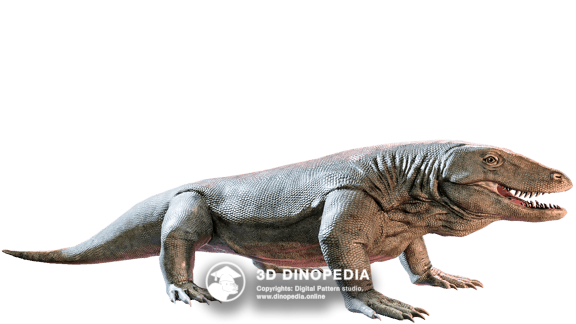 Megalania


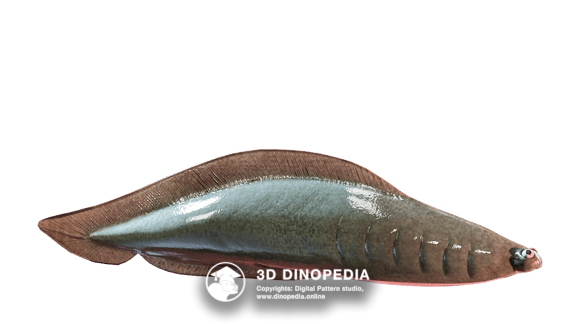
Haikouichthys


What does the name mean: Hydrodamalis means “water cow”, while gigas means “giant”. Thus, the scientific name Hydrodamalis gigas can be translated as “giant water cow”.
Steller’s sea cow (Hydrodamalis gigas), also known as the sea cow or “cabbage eater,” was an extinct large marine mammal belonging to the order Sirenia. In historical times, the species inhabited mainly the Commander Islands in the Bering Sea, although in earlier epochs members of the genus were widespread across the North Pacific.
Steller’s sea cow reached 7–8 meters in length and weighed up to 10 tons. Its body was massive and covered with thick wrinkled skin resembling tree bark. Coloration ranged from grayish-brown to dark brown, sometimes with lighter patches. The head was relatively small and mobile. The forelimbs formed shortened curved flippers, probably used while feeding in shallow water. The tail was broad, with a central notch, resembling the tail of cetaceans.
Steller’s sea cow was a large herbivorous animal. Its diet consisted mainly of marine algae, especially kelp (“sea cabbage”), which explains one of its common names. Teeth were absent; food was crushed between two horny plates located on the upper and lower jaws. The animals spent most of their time in shallow coastal waters feeding on algae and periodically surfacing to breathe. They apparently were not adapted for prolonged diving and remained mainly in near-surface waters.
Human interaction with Steller’s sea cow was extremely brief. The species was described in 1741 during Vitus Bering’s expedition and became completely extinct by 1768. The main causes of extinction are considered to be intensive hunting and the animals’ high vulnerability due to their slow movement and lack of fear toward humans.
Discussions
Start the first one!
 Start a discussion
Other animals



 INTERESTING FACTS
 PUZZLES
 HOME
HOME
 3D MODEL "SKIN"
 3D MODEL "MUSCLES"
 3D MODEL "SKELETON"
 VISION
 NEIGHBORS
 VOICE ACTING
 AR - MODE
 GALLERY
 HISTORY OF DISCOVERIES

