


Euoplocephalus

Name meaning:
Well-armored head
Period of life:
76 mya
Period:
Cretaceous period
Habitat:
Tropical and subtropical forests
Taxonomy:
Ankylosaurs
Countries:





 Nemegtbaatar


Parasaurolophus


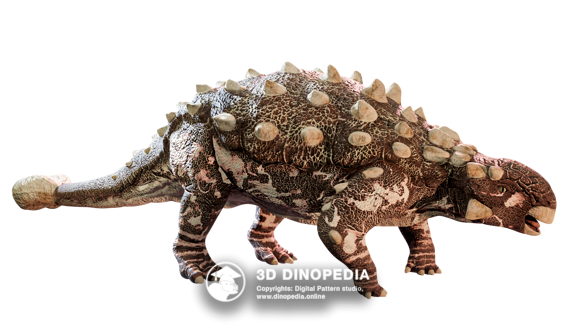
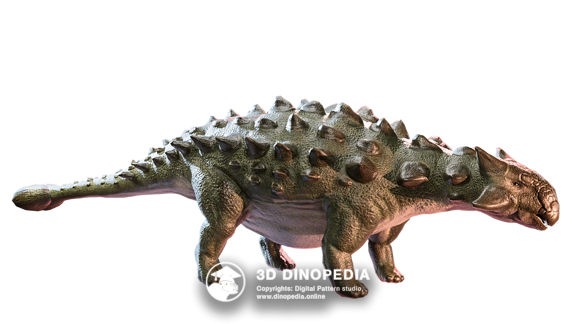
Euoplocephalus was one of the best-protected dinosaurs of the Late Cretaceous. This heavily armored ankylosaurid lived approximately 76–74 million years ago in what is now the United States and Canada. Its first fossils were discovered in 1897 in the Red Deer River Valley of Alberta, Canada. Among the finds were massive cervical armor plates and parts of the skull. The name Euoplocephalus derives from Greek and translates as “well-armored head” — an exceptionally accurate description.
The dorsal surface of Euoplocephalus was covered with thick armor composed of bony osteoderms, interspersed with spikes, some reaching up to 15 centimeters in length. The largest plates protected the neck region, while the tail terminated in a massive bony club formed by fused osteodermal structures — an effective defensive weapon capable of inflicting severe injuries on large predators.
Euoplocephalus moved on four short, robust limbs, carrying its body close to the ground. This low center of gravity made it extremely stable and difficult to overturn. Measuring about six meters in length and weighing roughly two metric tons, it functioned as a living fortress. For a large theropod predator to subdue it, the animal would have needed to flip it onto its back, exposing the unarmored ventral surface — its primary vulnerability. However, the heavy armor also posed a disadvantage: if swept into deep water, Euoplocephalus would likely have struggled to stay afloat. Notably, many specimens have been recovered from sedimentary deposits formed in ancient aquatic environments.
Even the head was effectively encased in armor. The skull was covered with tightly fused bony plates, and the snout terminated in a beak adapted for cropping vegetation. Small horn-like projections extended from the sides of the skull, and the eyes were protected by bony palpebral elements that may have functioned as protective «eyelids». Additionally, the cranial vasculature included channels that likely assisted in thermoregulation by dissipating excess heat.
Euoplocephalus was herbivorous. Using its sturdy limbs and hoof-like digits, it could excavate roots and tubers and feed on low-growing vegetation. Its robust beak was well suited for processing coarse plant material, while its slow but resilient physiology allowed it to persist in environments where other dinosaurs relied primarily on speed or predatory power.
Euoplocephalus was not merely a massive herbivore of the Cretaceous — it was a biologically engineered defensive system, refined by evolution to an extraordinary degree.
Discussions
Start the first one!
 Start a discussion
Other animals



 INTERESTING FACTS
 PUZZLES
 HOME
HOME
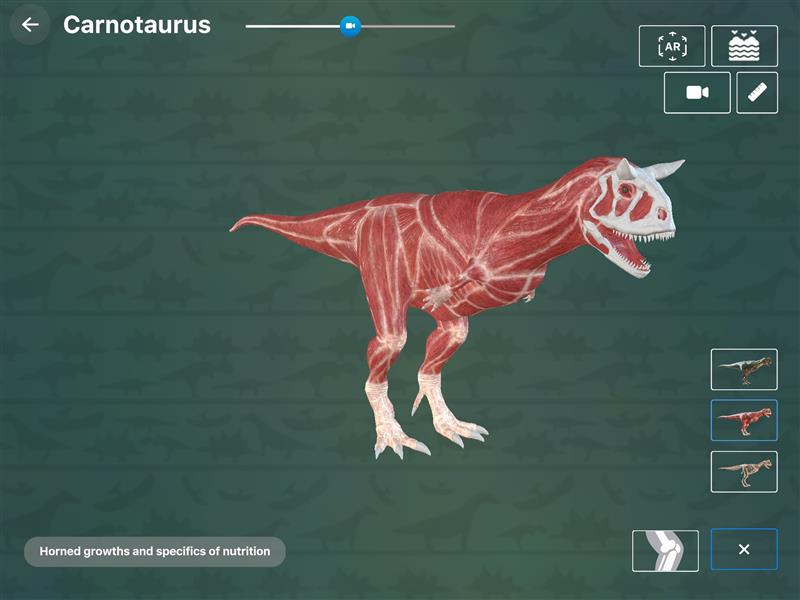
 3D MODEL "SKIN"
 3D MODEL "MUSCLES"
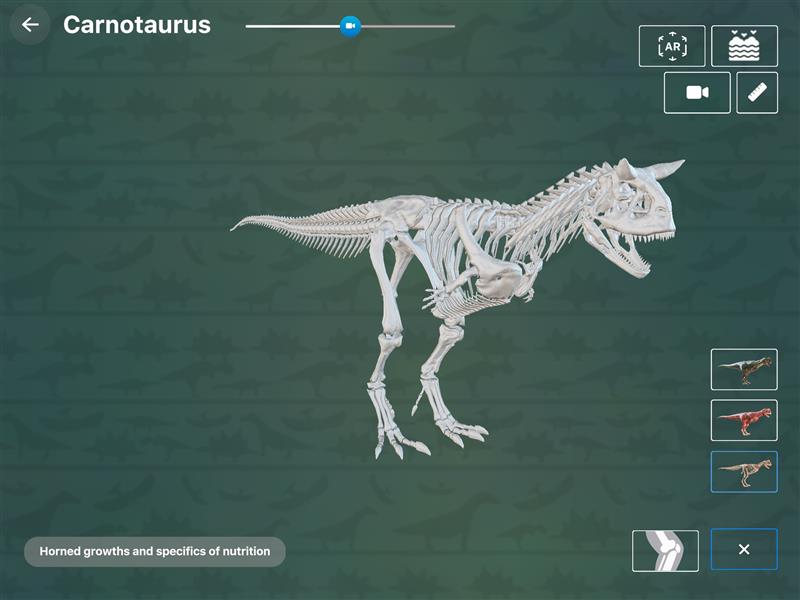
 3D MODEL "SKELETON"
 VISION
 NEIGHBORS
 VOICE ACTING
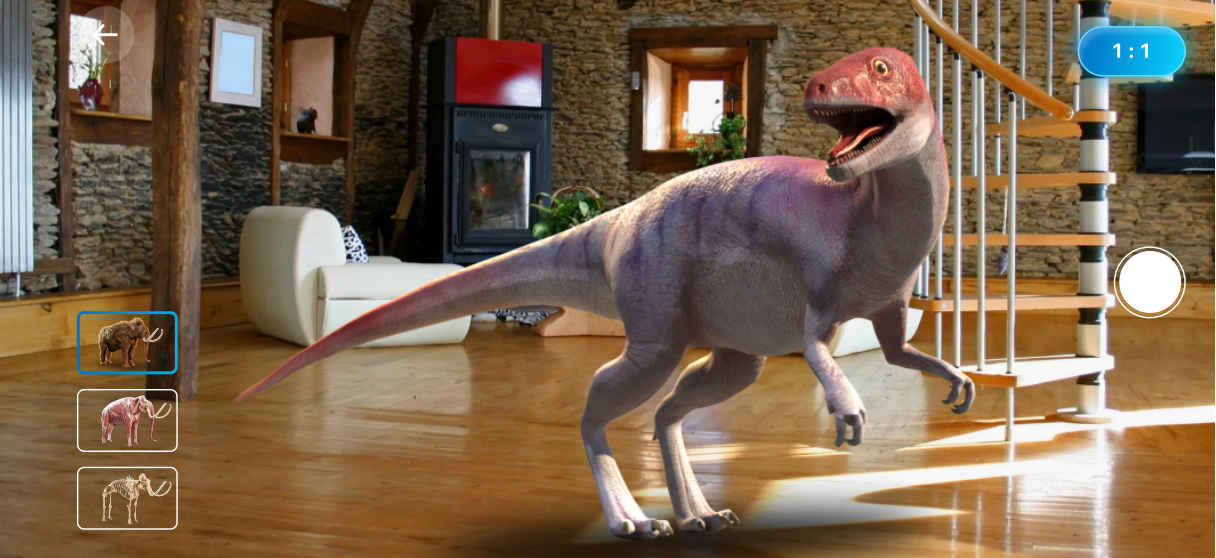
 AR - MODE
 GALLERY
 HISTORY OF DISCOVERIES

