


Sinosauropteryx
Name meaning:
Chinese feathered lizard
Period of life:
125-122 mya
Period:
Cretaceous period
Habitat:
Mixed and broadleaf forests
Taxonomy:
Theropods
Countries:




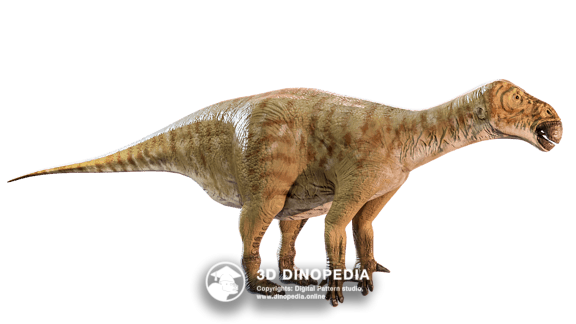 Iguanodon


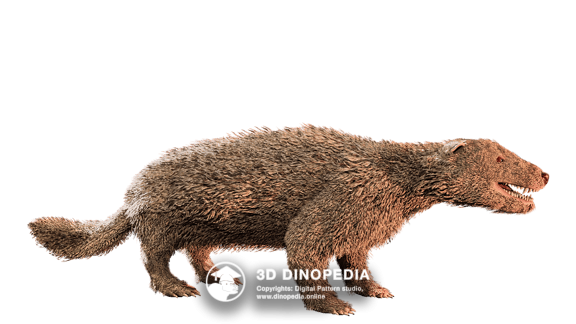
Repenomamus


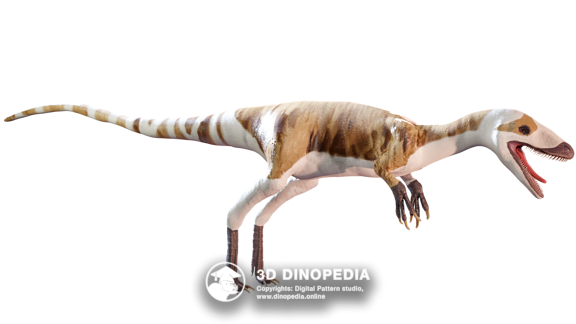
Sinosauropteryx is one of the most remarkable dinosaurs that transformed our understanding of the ancient world. This small theropod lived approximately 125 million years ago, during the Early Cretaceous, in what is now China.
Its discovery began in 1996, when a Chinese farmer, Li Yumin, accidentally uncovered unusual fossils in Liaoning Province. On slabs of ancient rock, not only bones were preserved, but also distinct impressions of soft structures resembling feathers.
When paleontologists examined the specimen, the scientific community was profoundly affected. The American scientist John Ostrom, who in 1970 had proposed that birds evolved from predatory dinosaurs, now had strong supporting evidence for his hypothesis. Sinosauropteryx became the first unequivocally recognized non-avian dinosaur with preserved feathers, fundamentally altering perspectives on the evolution of birds.
This dinosaur was small — about 1 meter in total length, of which nearly 70% consisted of the tail. It possessed 64 caudal vertebrae, giving the tail considerable length and flexibility — well suited for maintaining balance and maneuverability during rapid terrestrial locomotion. Sinosauropteryx weighed no more than 1–2 kilograms, yet had powerful hind limbs and a lightweight body adapted for swift movement.
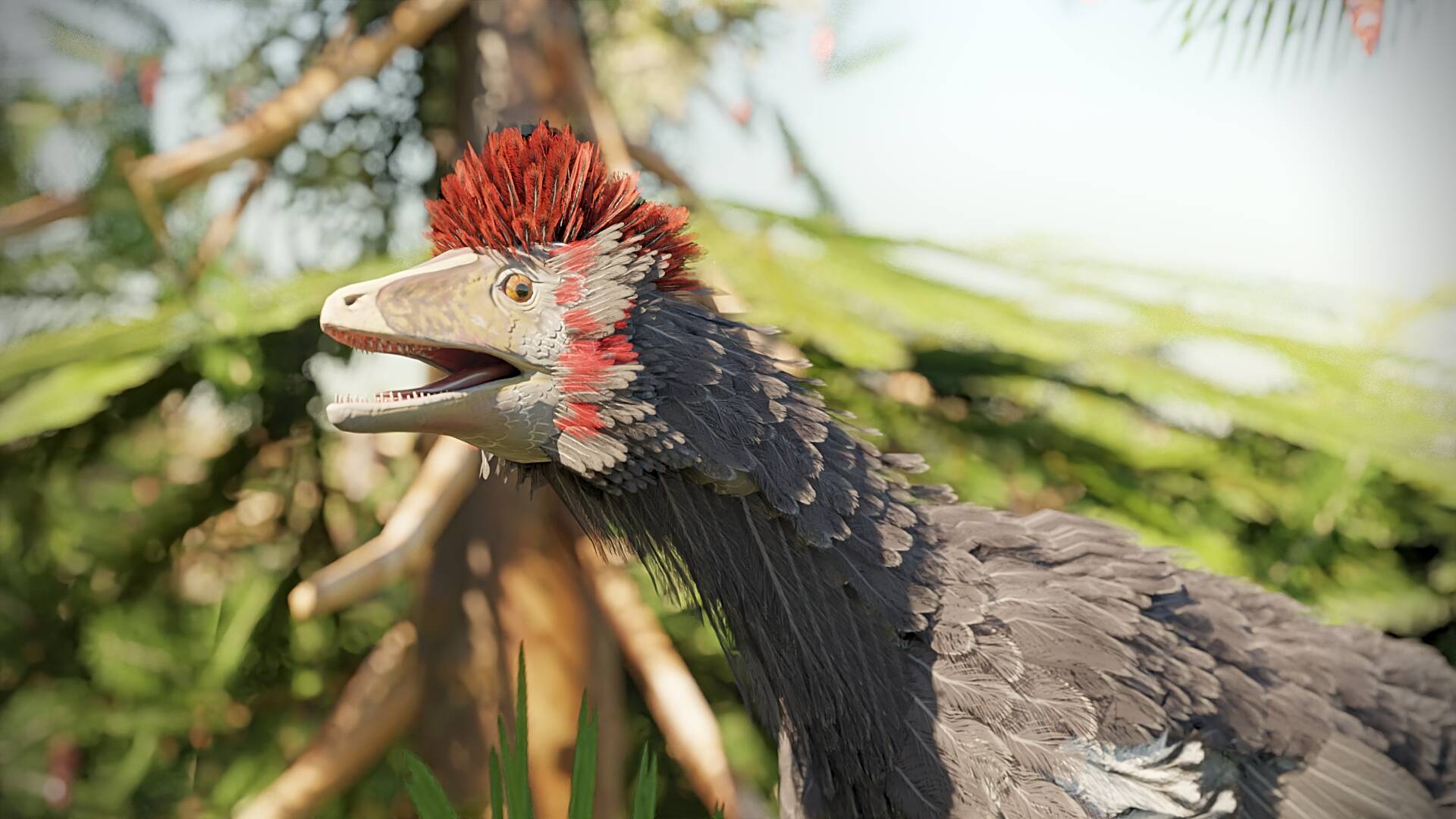
Its body was covered with fine, filamentous feathers, predominantly reddish-brown in coloration, which formed a crest-like structure along the head. These feathers were not adapted for flight; rather, they likely functioned in thermoregulation, enabling the animal to retain body heat in the relatively cool climate of the Early Cretaceous.
Sinosauropteryx preyed upon small reptiles, lizards, and insects, moving rapidly across the ground in search of food. Its appearance — seemingly awkward at first glance, yet agile in motion — has become emblematic of the evolutionary transition from non-avian dinosaurs to birds.
Discussions
Start the first one!
 Start a discussion
Other animals




 INTERESTING FACTS
 PUZZLES
 HOME
HOME
 3D MODEL "SKIN"
 3D MODEL "MUSCLES"
 3D MODEL "SKELETON"
 VISION
 NEIGHBORS
 VOICE ACTING
 AR - MODE
 GALLERY
 HISTORY OF DISCOVERIES

