


Tarbosaurus

Name meaning:
Fearsome lizard
Period of life:
70-66 mya
Period:
Cretaceous period
Habitat:
Taiga
Taxonomy:
Theropods
Countries:





 Kelmayisaurus


Deinonychus


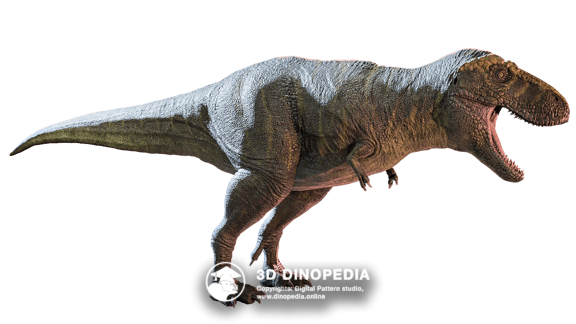
Tarbosaurus was one of the most formidable predators of the Late Cretaceous. This gigantic theropod lived about 70 million years ago in what is now Mongolia and China. In overall appearance, it closely resembled its famous North American relative, Tyrannosaurus. It possessed the same massive skull armed with powerful teeth, extremely reduced forelimbs, and a long, heavy tail that functioned as a counterbalance during locomotion.
Tarbosaurs were among the largest terrestrial predators ever to inhabit Earth. Most researchers consider them slightly smaller than Tyrannosaurus, reaching approximately 10 meters in length based on the most complete Mongolian skeletons. However, the Polish paleontologist Zofia Kielan-Jaworowska reported specimens that may have reached 13 meters in length. If such estimates are confirmed, Tarbosaurus could rank among the largest theropods known to science. In terms of body mass, it likely weighed around 6 metric tons, somewhat less than its North American counterpart.
The skull of Tarbosaurus was proportionally longer but narrower than that of Tyrannosaurus, reducing overall cranial mass and possibly allowing faster rotational movements during predatory strikes. The forelimbs were extremely small, bearing only two functional digits, and likely played a limited role in prey capture. The primary locomotor and predatory force resided in the powerful hind limbs: three weight-bearing toes equipped with claws and a reduced fourth digit supported its enormous body. The long, muscular tail served as an effective counterbalance to the massive head and thorax, stabilizing the animal during rapid forward lunges.
Tarbosaurs were most likely solitary predators, similar to other tyrannosaurids. Nevertheless, some researchers hypothesize that during certain life-history stages—such as the breeding season—adults may have hunted in pairs or in loose association with subadults. It is also possible that juveniles remained with adults for a period of time, acquiring hunting skills and survival strategies.
Powerful, agile, and highly dangerous, Tarbosaurus was a dominant apex predator of the Late Cretaceous Asian plains—one of the last representatives of a great lineage of giant theropods before their extinction at the end of the Mesozoic Era.
Discussions
Start the first one!
 Start a discussion
Other animals







 INTERESTING FACTS
 PUZZLES
 HOME
HOME
 3D MODEL "SKIN"
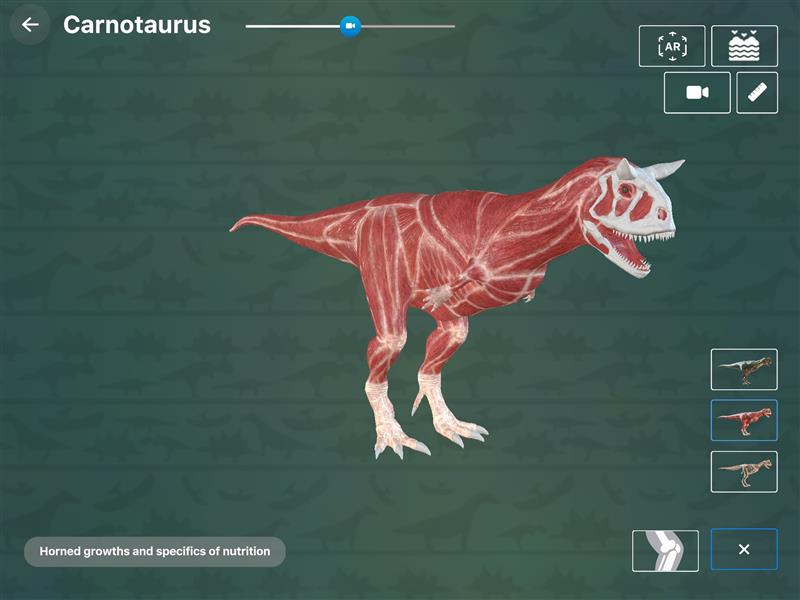
 3D MODEL "MUSCLES"
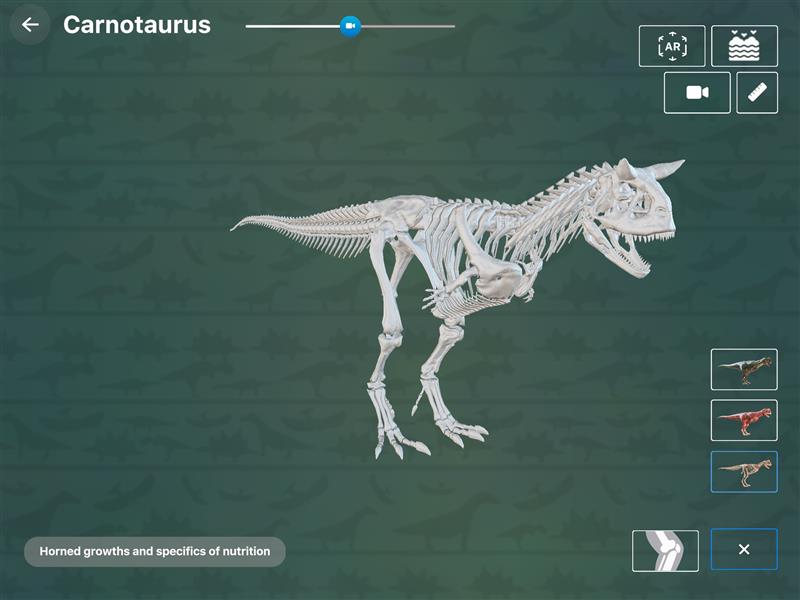
 3D MODEL "SKELETON"
 VISION
 NEIGHBORS
 VOICE ACTING
 AR - MODE
 GALLERY
 HISTORY OF DISCOVERIES

