


Dimorphodon

Name meaning:
Two-formed tooth
Period of life:
195-190 mya
Period:
Jurassic period
Habitat:
Coasts
Taxonomy:
Pterosaurs
Countries:




 Apatosaurus


Anurognathus
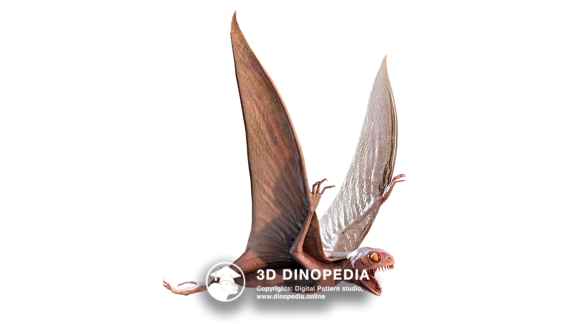


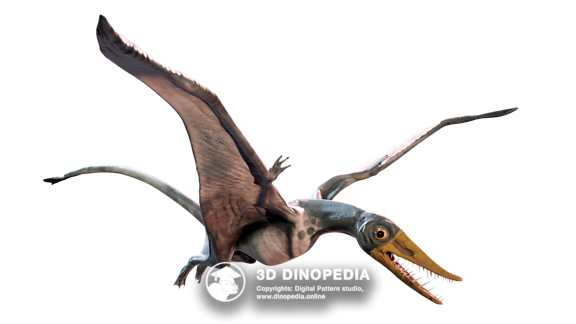
Dimorphodon was one of the most fascinating pterosaurs of the Early Jurassic. This medium-sized flying reptile lived about 190 million years ago. Its name, meaning “two forms of teeth,” was given in 1859 by the English naturalist Richard Owen, who was the first to describe the unusual fossils originally discovered in 1828 in southern England, in the county of Dorset.
The anatomy of Dimorphodon revealed it as an ancient, “primitive” representative of pterosaurs. Its braincase was tiny, and its wings were relatively short. At the same time, its neck was strong and flexible, capable of supporting a heavy head more than 20 centimeters long. The vertebrae contained openings that reduced the overall weight of the skeleton—an important advantage for a flying animal.
An adult Dimorphodon reached about one meter in length and had a wingspan of nearly one and a half meters. Its long tail consisted of around thirty vertebrae and may have ended in a vane-like tip, similar to its close relative Rhamphorhynchus, although direct evidence for this has not yet been found.
The very name Dimorphodon reflects the distinctive structure of its teeth: its jaws contained two different types—long, sharp fang-like teeth and flatter ones adapted for crushing food. Such a combination is extremely rare among reptiles and suggests that Dimorphodon may have had a varied diet.
Scientists believe that this pterosaur lived in coastal environments and could hunt both small fish and insects, demonstrating remarkable adaptability to its surroundings.
Discussions
Start the first one!
 Start a discussion
Other animals

 INTERESTING FACTS
 PUZZLES
 HOME
HOME
 3D MODEL "SKIN"
 3D MODEL "MUSCLES"
 3D MODEL "SKELETON"
 VISION
 NEIGHBORS
 VOICE ACTING
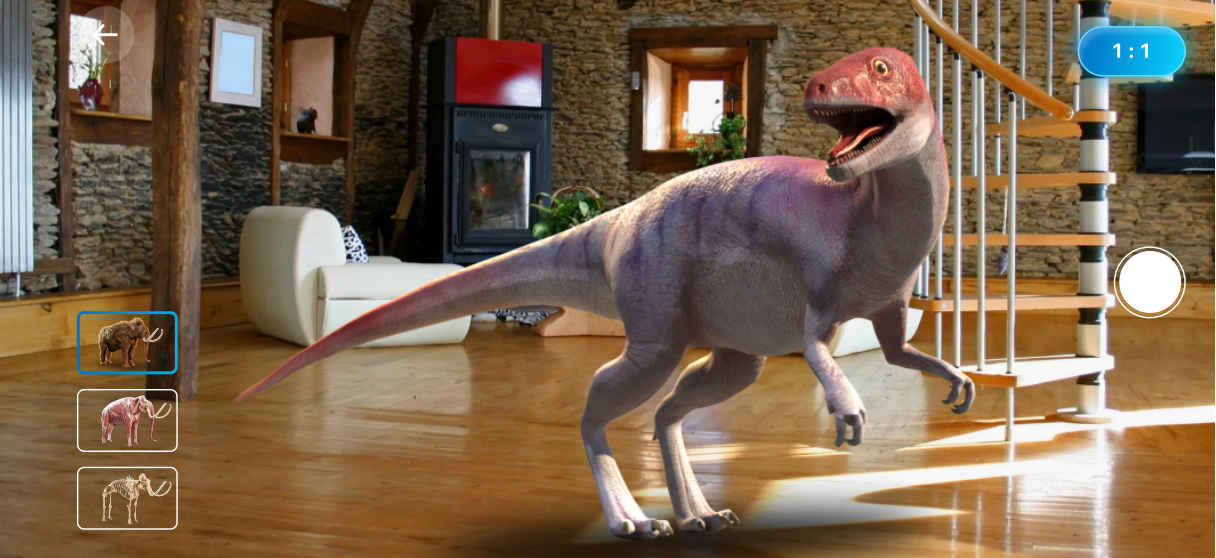
 AR - MODE
 GALLERY
 HISTORY OF DISCOVERIES

