


Sarcosuchus
Name meaning:
Flesh crocodile
Period of life:
133-112 mya
Period:
Cretaceous period
Habitat:
Freshwater environment
Taxonomy:
Crocodilians
Countries:




 Concavenator


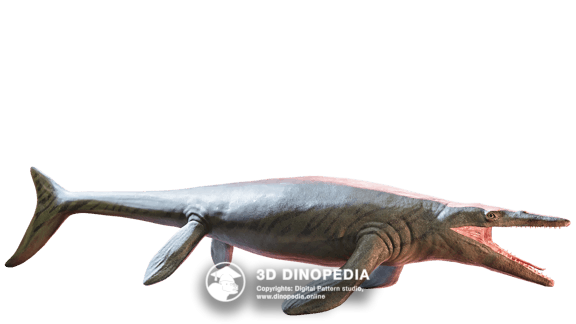
Tylosaurus


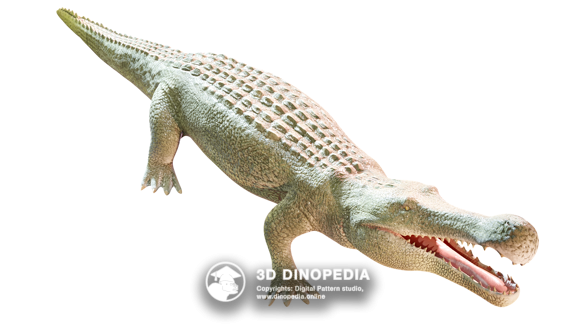
Sarcosuchus was one of the most impressive predators of the Cretaceous period. Despite its name, meaning «flesh crocodile», it only distantly resembled modern crocodiles. It belonged to a distinct group of ancient crocodylomorphs that became completely extinct and left no direct descendants.
This giant lived approximately 110 million years ago in the warm freshwater environments of Africa and South America. An adult Sarcosuchus could reach 9.5–12 meters in length and weigh several tonnes. Its enormous jaws, armed with numerous sharp teeth, made it a dominant predator of the rivers and marshes of its time.
Its diet consisted primarily of fish, but it may also have attacked small dinosaurs that ventured too close to the water’s edge. Sarcosuchus was an excellent swimmer, using its powerful tail for rapid bursts of movement underwater. On land, however, it likely moved slowly and awkwardly, advancing in short thrusts.
Unlike modern crocodiles, Sarcosuchus probably did not perform the well-known «death roll» used by crocodilians to dismember prey. Its hunting strategy was different: its long, narrow snout was adapted for capturing large fish and other aquatic prey.
Sarcosuchus exemplifies how nature, millions of years ago, experimented with diverse life forms, producing organisms that combined strength, functional efficiency, and remarkable adaptations to their environment.
Discussions
 Start a discussion
Other animals




 INTERESTING FACTS
 PUZZLES
 HOME
HOME
 3D MODEL "SKIN"
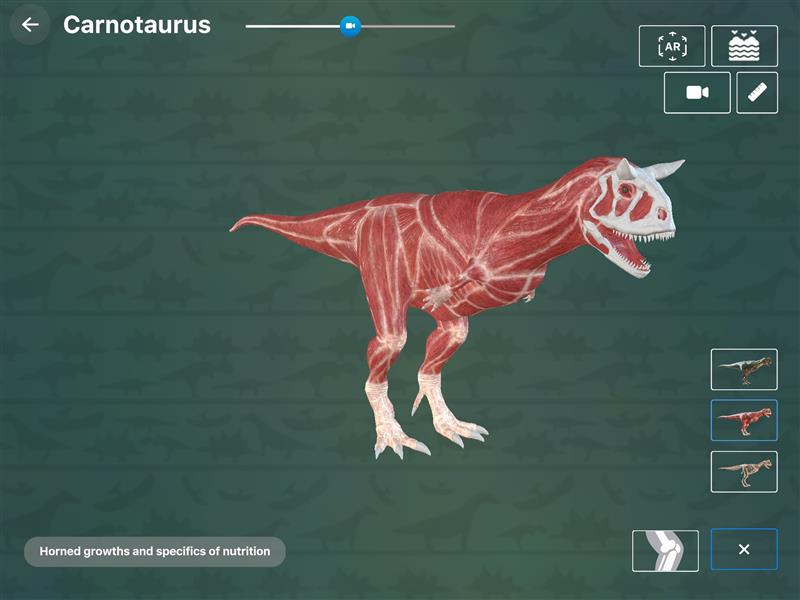
 3D MODEL "MUSCLES"
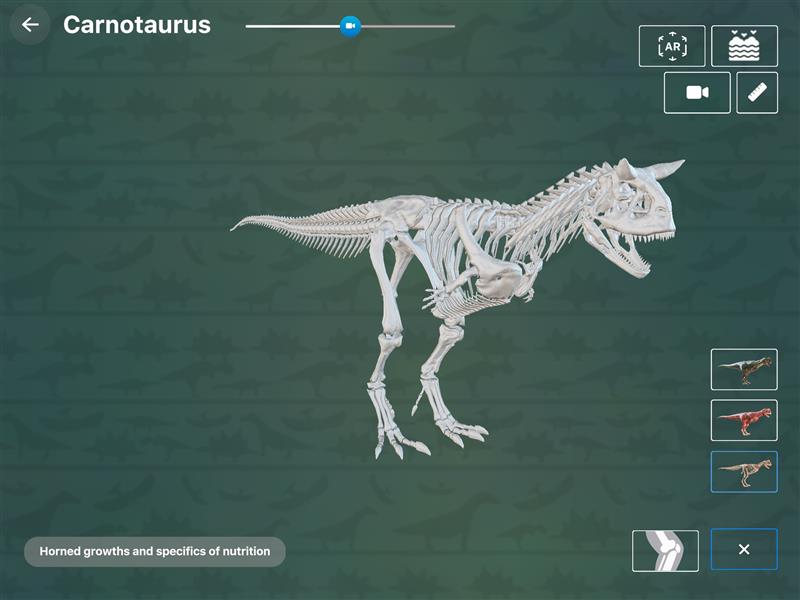
 3D MODEL "SKELETON"
 VISION
 NEIGHBORS
 VOICE ACTING
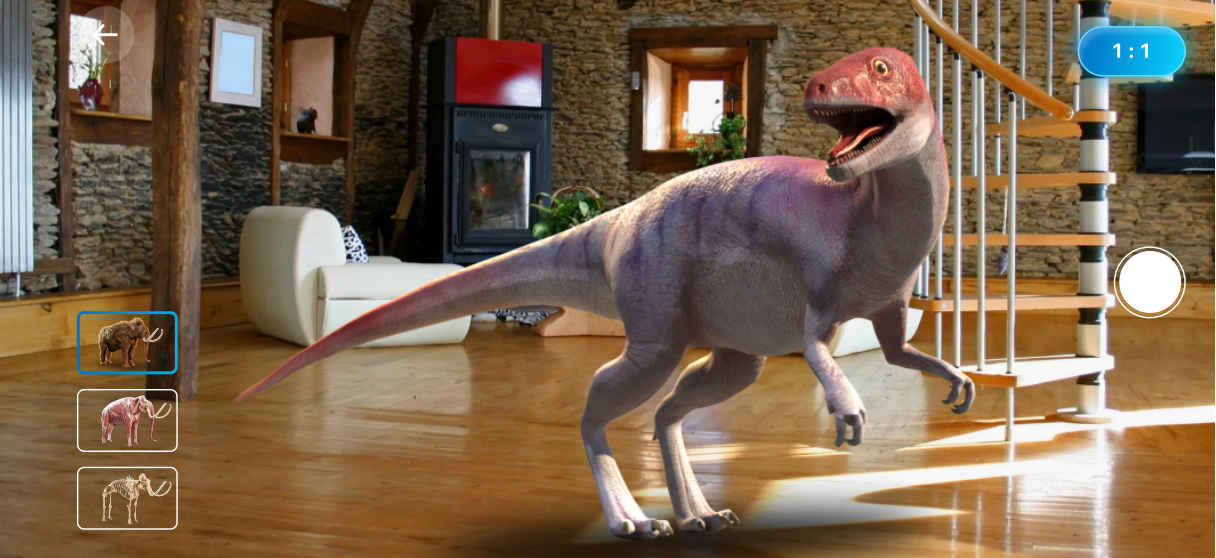
 AR - MODE
 GALLERY
 HISTORY OF DISCOVERIES

