


Tylosaurus


Name meaning:
Knob lizard
Period of life:
94–66 mya
Period:
Cretaceous period
Habitat:
Marine environment
Taxonomy:
Lizards and snakes
Countries:






 Sarcosuchus


Spinosaurus
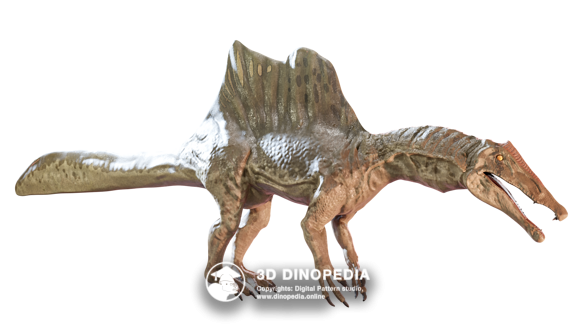


Tylosaurus was one of the most formidable marine predators of the Late Cretaceous. This giant belonged to the family Mosasauridae — ancient marine reptiles that once dominated the warm waters of prehistoric oceans. Its name translates as «knob lizard» or «battering-ram lizard» (from Greek tylos — «knob», «protuberance», or «peg», and sauros — «lizard»), reflecting the powerful, forceful nature of this predator.
Tylosaurus reached lengths of up to 14 meters and weighed approximately 6.5 metric tons. Its elongated skull accounted for nearly one-seventh of its total body length, and its wide gape enabled it to swallow large prey whole. Despite its massive size, Tylosaurus was an agile swimmer. It propelled itself using a powerful tail with a well-developed fluke functioning similarly to that of sharks, allowing it to execute rapid ambush attacks. In sustained pursuit it may have been slower than some of its more streamlined relatives, but it compensated with sudden acceleration and sheer impact force.
Some researchers hypothesize that Tylosaurus may have rammed its prey. Evidence for this comes from healed fractures observed on fossilized skull bones, indicating traumatic impacts sustained during life. Fossil stomach contents and associated skeletal remains include sharks, large teleost fish, flightless marine birds, smaller mosasaurs, and even plesiosaurs — demonstrating a broad and opportunistic predatory spectrum.
The closest modern relatives of Tylosaurus are monitor lizards (Varanidae). This relationship highlights an evolutionary continuum from dominant Mesozoic marine predators to present-day terrestrial hunters. However, at the end of the Cretaceous, approximately 66 million years ago, Tylosaurus — along with many other marine reptiles — became extinct during the global mass extinction event that marked the end of the age of dinosaurs and paved the way for the rise of mammals.
Discussions
 Start a discussion
Other animals




 INTERESTING FACTS
 PUZZLES
 HOME
HOME
 3D MODEL "SKIN"
 3D MODEL "MUSCLES"
 3D MODEL "SKELETON"
 VISION
 NEIGHBORS
 VOICE ACTING
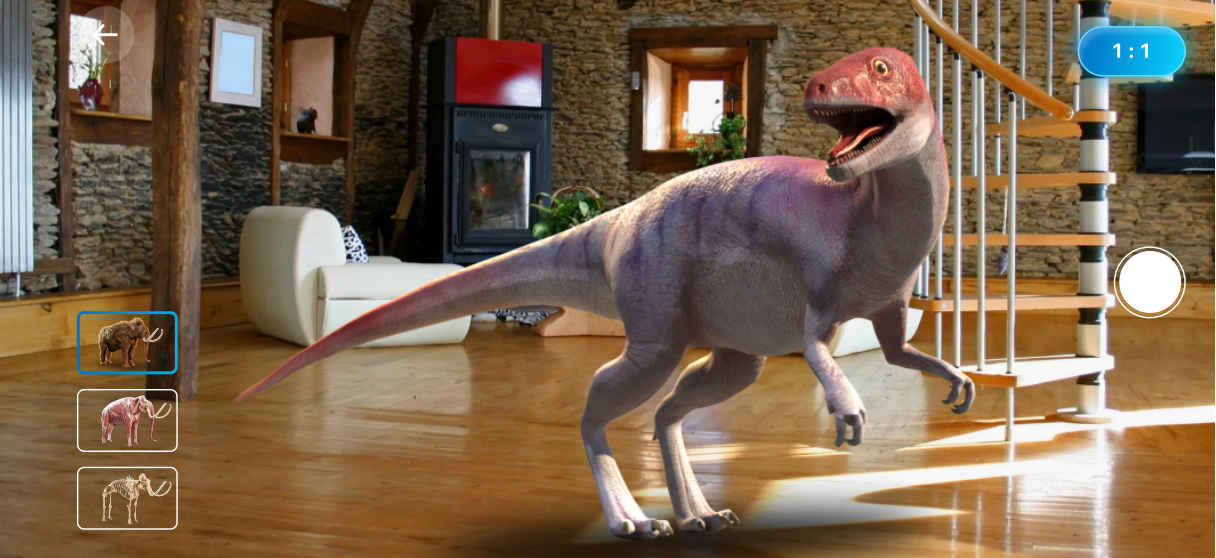
 AR - MODE
 GALLERY
 HISTORY OF DISCOVERIES

