


Concavenator
Name meaning:
Hunter from Cuenca
Period of life:
130-125 mya
Period:
Cretaceous period
Habitat:
Tropical and subtropical forests
Taxonomy:
Theropods
Countries:




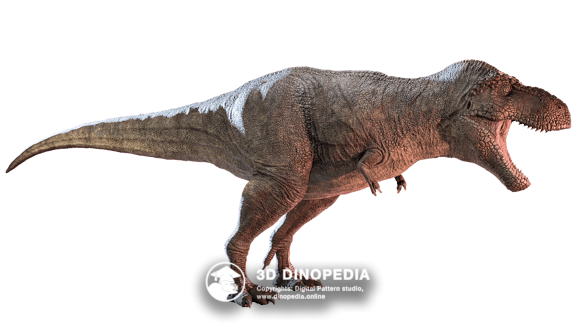 Tyrannosaurus


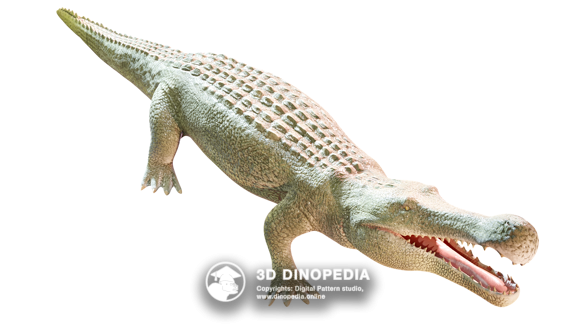
Sarcosuchus


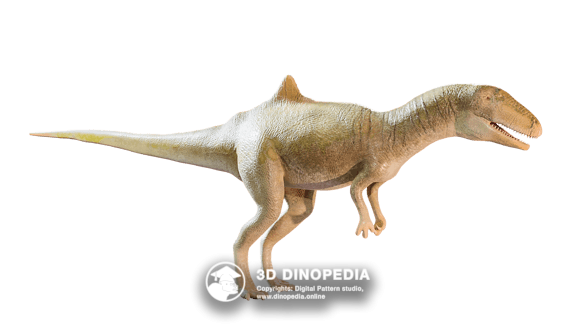
Concavenator is one of the most intriguing predatory dinosaurs of the Early Cretaceous. This «hump-backed lizard» lived in what is now Spain about 130 million years ago and was a close relative of Acrocanthosaurus. It reached roughly 6 meters in length and had an estimated body mass of around 400 kilograms.
Although relatively little is known about its biology, researchers consider Concavenator to have been an active carnivorous predator. It likely hunted herbivorous dinosaurs inhabiting forests and the margins of ancient lakes. Based on its body proportions, solitary ambush hunting is regarded as the most plausible strategy; group hunting has been suggested but lacks direct supporting evidence. Its agility and well-developed musculature would have allowed rapid, forceful attacks, comparable to those of modern large predators.
The most unusual feature of Concavenator is the distinctive hump on its back. Its function remains uncertain, and several hypotheses have been proposed. The structure may have played a role in thermoregulation, served as an energy reserve, or functioned as a display feature. It is also possible that the hump was involved in reproductive behavior, with coloration or shape helping to attract mates, or that it served to intimidate rivals or predators.
Regardless of its precise function, the dorsal hump makes Concavenator one of the most recognizable and enigmatic dinosaurs of Europe—a species that continues to preserve many unresolved questions about the ancient world.
Discussions
 Start a discussion
Other animals







 INTERESTING FACTS
 PUZZLES
 HOME
HOME
 3D MODEL "SKIN"
 3D MODEL "MUSCLES"
 3D MODEL "SKELETON"
 VISION
 NEIGHBORS
 VOICE ACTING
 AR - MODE
 GALLERY
 HISTORY OF DISCOVERIES

