


Kelenken

Name meaning:
A legendary giant bird
Period of life:
15 million years ago
Period:
Neogene period
Habitat:
Savannas and plains
Taxonomy:
Birds
Countries:




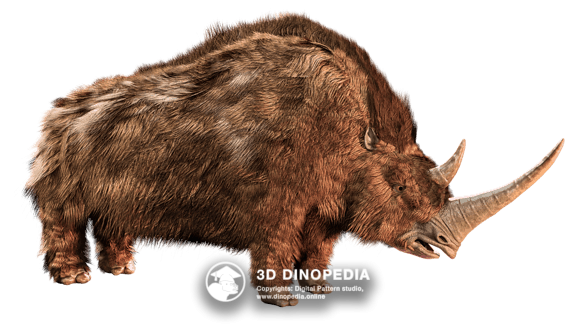 Coelodonta


Meiolania



What does the name mean: The name of the genus comes from Kelenken — an evil spirit from the mythology of the Tehuelche people who inhabited Patagonia. According to legend, Kelenken was a gigantic predatory bird capable of abducting humans.
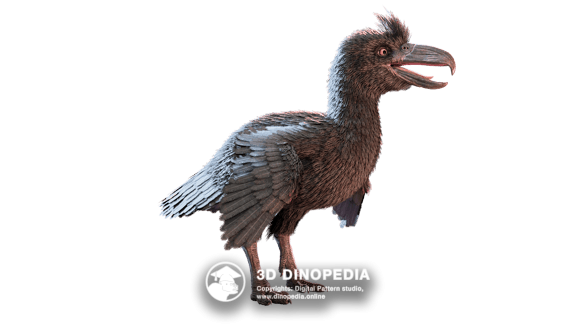
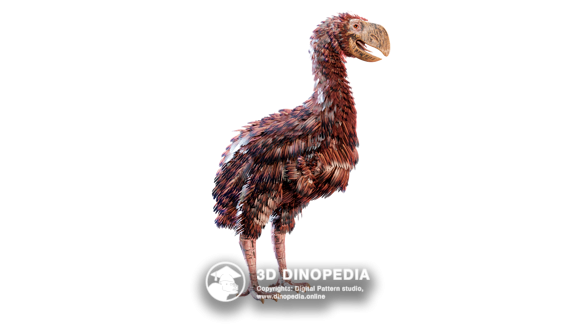
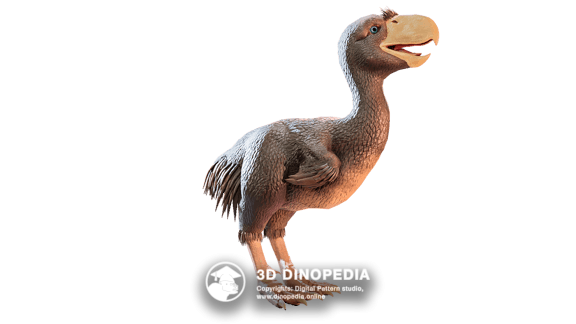
Kelenken was one of the most striking representatives of the phorusrhacids, a group of extinct birds nicknamed “terror birds” because of their enormous size and predatory habits. It ruled the territory of modern Argentina during the Middle Miocene, about 15 million years ago. At that time, Patagonia was a realm of open landscapes where extraordinary creatures wandered among grasses and sparse groves of trees — giant sloths, armadillos, and predatory marsupials. And Kelenken, standing nearly three meters tall with its powerful build, occupied the very top of this food pyramid.
Imagine a creature resembling an eagle enlarged several times over, with strong, muscular legs capable of developing impressive speed. Its feather-covered body concealed a robust skeleton able to withstand enormous stresses during rapid running and violent struggles with prey. But the most astonishing and terrifying feature of Kelenken was its skull — enormous, reaching 71.6 centimeters in length, comparable to the size of a horse’s head. This skull, the largest known among all birds, was crowned by a powerful downward-curving beak resembling that of an eagle, but vastly larger. Its upper portion was extraordinarily strong, allowing Kelenken to deliver devastating blows capable of stunning prey with a single strike.
The structure of Kelenken’s legs, especially the long and slender tarsometatarsus, indicates that it was an excellent runner capable of reaching considerable speeds while pursuing prey across the open spaces of Patagonia. Unlike its smaller and more heavily built relatives, Kelenken was probably able to overtake nearly any prey animal within its environment.
Kelenken lived during a unique period in the history of South America, when the continent remained isolated and possessed a highly distinctive fauna. At that time, there were still no large placental predators in the region, and phorusrhacids such as Kelenken occupied the top of the food chain, serving as the deadly rulers of the Patagonian plains. The open landscapes that dominated the region favored the evolution of fast terrestrial predators and equally swift prey animals. It was under such conditions that the form of Kelenken evolved — a perfect hunter, embodying speed and power.
Discussions
Start the first one!
 Start a discussion
Other animals











 INTERESTING FACTS
 PUZZLES
 HOME
HOME
 3D MODEL "SKIN"
 3D MODEL "MUSCLES"
 3D MODEL "SKELETON"
 VISION
 NEIGHBORS
 VOICE ACTING
 AR - MODE
 GALLERY
 HISTORY OF DISCOVERIES

