


Palaeotragus

Name meaning:
Ancient goat
Period of life:
20.44—1.2 million years ago
Period:
Quaternary period
Habitat:
Savannas and plains
Taxonomy:
Mammals
Countries:




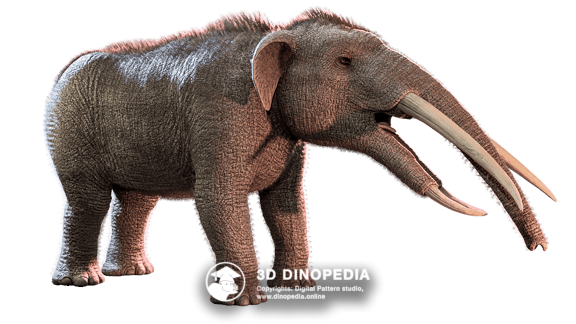 Gomphotherium


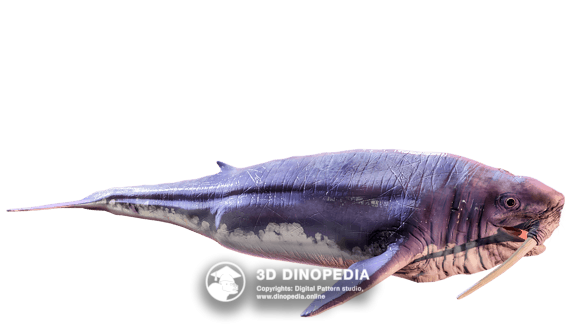
Odobenocetops


What does the name mean: The name Palaeotragus comes from the Ancient Greek πᾰλαιός (palaios) — “ancient” and τράγος (tragos) — “goat.”
Around 20–12 million years ago, giraffids of the genus Palaeotragus inhabited Africa and Eurasia. These were early and diverse representatives of the group related to the lineage of modern giraffes and okapis. Their fossil remains provide important information about the early evolution of giraffids.
Palaeotragus were slender, long-legged animals, but they differed considerably from modern giraffes. Their necks were shorter, although they already showed signs of elongation characteristic of giraffid evolution. The body was probably more compact and proportionate, and the overall appearance combined features of giraffes and large antelopes.
The skull of Palaeotragus possessed several characteristic features. Like other giraffids, they had ossicones — permanent bony protuberances covered with skin during life. In representatives of the genus Palaeotragus, these structures were positioned above the eye sockets, widely spaced, simple in shape, smooth-surfaced, and pointed at the tips. This morphology differs from the ossicones of later giraffids.
The structure of the teeth and the front part of the snout indicates that Palaeotragus were ruminant herbivores. In ruminants, the upper premaxilla lacks incisors and functions together with the lower incisors and the soft tissues of the lips during feeding. Analyses of the diet of Miocene giraffids suggest that Palaeotragus were primarily browsers, feeding on leaves, shoots, and other vegetation.
The habitat of Palaeotragus probably consisted of mosaic landscapes including open woodlands, areas of tree and shrub vegetation, and open grassy spaces. In such environments, many Miocene ungulates combined mobility with the ability to feed at different heights and within different vegetation types.
The study of Palaeotragus helps reconstruct Miocene ecosystems of Eurasia and trace the development of key anatomical features of giraffids, including the structure of the neck, limbs, and skull. These data improve understanding of the origin of modern giraffes and the evolution of ungulates under conditions of major climatic and environmental change.
Discussions
Start the first one!
 Start a discussion
Other animals


 INTERESTING FACTS
 PUZZLES
 HOME
HOME
 3D MODEL "SKIN"
 3D MODEL "MUSCLES"
 3D MODEL "SKELETON"
 VISION
 NEIGHBORS
 VOICE ACTING
 AR - MODE
 GALLERY
 HISTORY OF DISCOVERIES

