


Psammolepis

Name meaning:
Sand scale
Period of life:
393 – 378 million years ago
Period:
Devonian period
Habitat:
Marine environment
Taxonomy:
Fish
Countries:






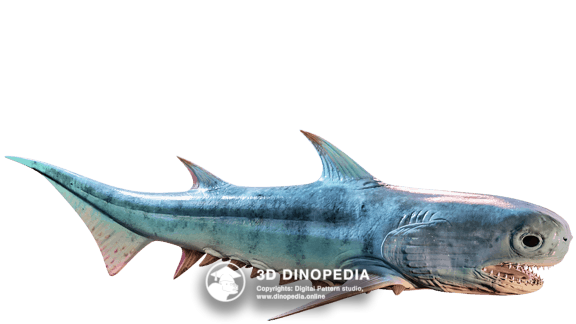 Climatius


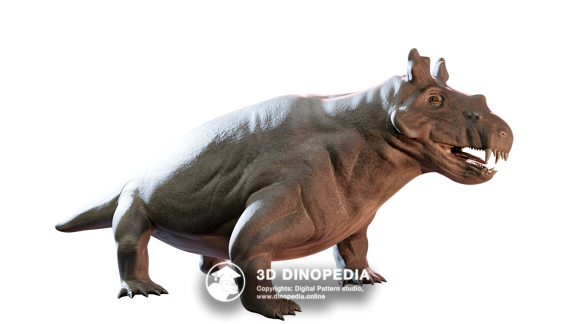
Estemmenosuchus


What does the name mean: “sand scale”
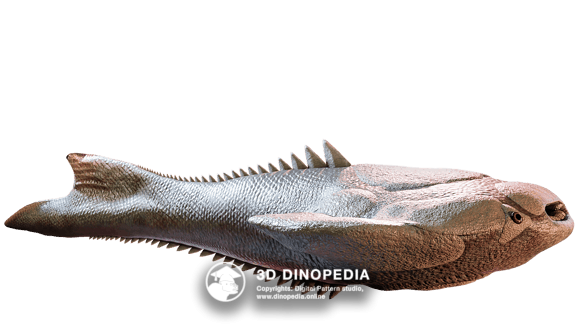
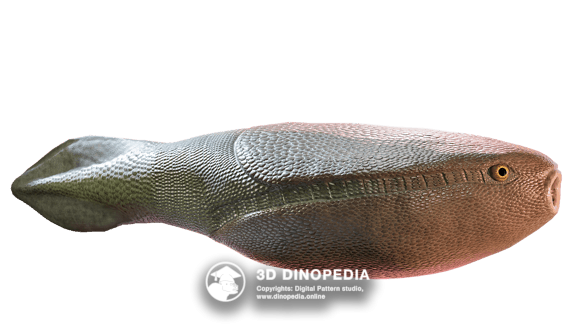
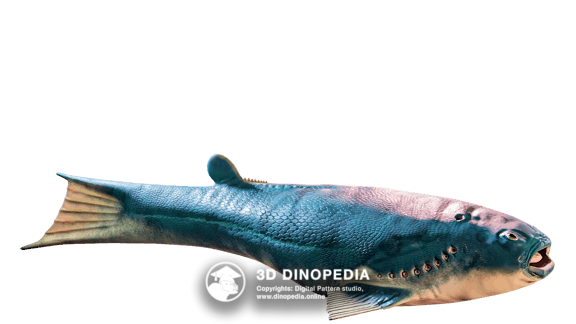
Psammolepis is a genus of extinct jawless fishes that inhabited the seas of the Devonian period. These fishes could also enter estuarine environments — areas where rivers meet the sea. These organisms resembled medium-sized flattened fishes, ranging from about 50 cm to approximately 90 cm in length.
The external appearance of Psammolepis was distinctive. Its body was strongly flattened, resembling a disc, and its mouth was oriented upward. Instead of jaws, Psammolepis possessed bony plates. Its body was covered with a robust armor that provided protection against predators. This armor reduced mobility but increased resistance to predation. The surface of the armor was covered with an enamel-like tissue.
Based on its body shape, Psammolepis was a benthic organism. Its diet likely included various invertebrates present in the water column.
Lacking jaws, Psammolepis could not bite or tear prey. Instead, it used specialized plates within the oral cavity. Its flattened body and upward-oriented mouth allowed it to effectively suction prey passing above it.
Psammolepis occupied an important position in Devonian marine food webs. It fed on small, soft-bodied invertebrates and, in turn, could become prey for larger predators such as placoderms and early sharks.
Psammolepis was widely distributed in Devonian seas of Europe, Greenland, Canada, and Central Asia. Its fossil remains contribute to the understanding of early vertebrate evolution and the diversity of life in ancient oceans.
Discussions
Start the first one!
 Start a discussion
Other animals






 INTERESTING FACTS
 PUZZLES
 HOME
HOME
 3D MODEL "SKIN"
 3D MODEL "MUSCLES"
 3D MODEL "SKELETON"
 VISION
 NEIGHBORS
 VOICE ACTING
 AR - MODE
 GALLERY
 HISTORY OF DISCOVERIES

