


Coelophysis
Name meaning:
Hollow form
Period of life:
212 mya
Period:
Triassic period
Habitat:
Floodplains
Taxonomy:
Theropods
Countries:




 Cotylorhynchus


Eoraptor
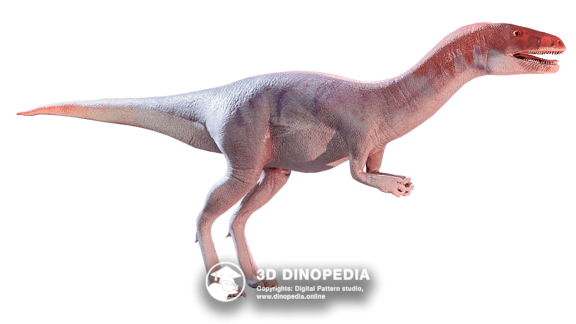


Name means «hollow form», because the structure of the skeleton includes some bones and vertebrae that are hollow inside.
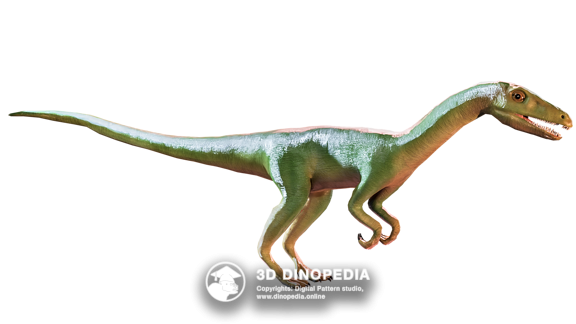
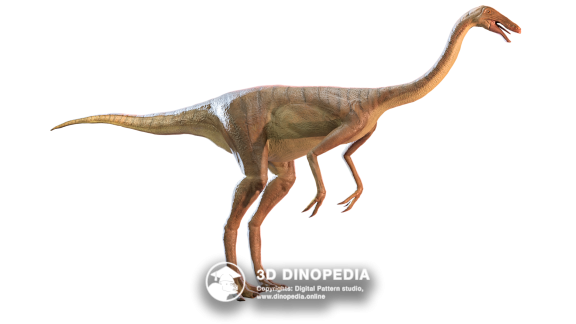
Coelophysis was a small but extremely agile dinosaur of the Late Triassic period. It lived around 215–209 million years ago in what is now North America and southern Africa.
Its body was light and flexible, allowing Coelophysis to launch quickly and reach a respectable speed. This combination of traits made it an excellent hunter. Its eyes were large and forward-facing, giving it binocular vision — much like a hawk’s — which helped it judge distances to prey with precision.
Adult Coelophysis reached about three metres in length, stood roughly one metre tall, and weighed around 30 kilograms. Its long body was balanced by a slender tail that helped maintain stability during fast running. A narrow skull with sharp, serrated teeth was perfectly suited for seizing and holding small prey. Its flexible neck allowed it to snap up animals with ease, while the forelimbs had mobile joints and three long, clawed fingers. There was also a fourth finger — short and clawless — which was probably useless in hunting.
Coelophysis fed on a varied diet: small reptiles, early mammals, fish, silesaurids — close relatives of dinosaurs — as well as small pseudosuchians, near the ancestors of modern crocodiles. At times it may also have eaten insects or carrion when prey was scarce.
Discussions
Start the first one!
 Start a discussion
Other animals



 INTERESTING FACTS
 PUZZLES
 HOME
HOME
 3D MODEL "SKIN"
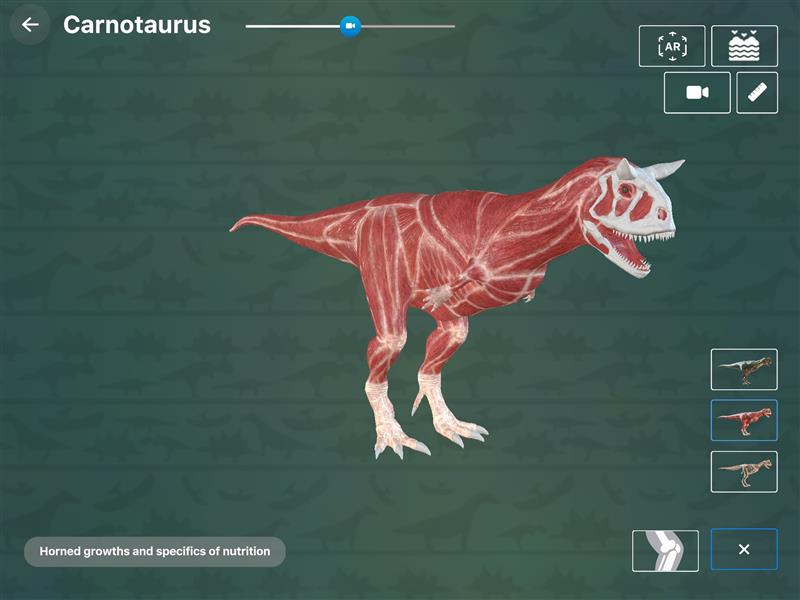
 3D MODEL "MUSCLES"
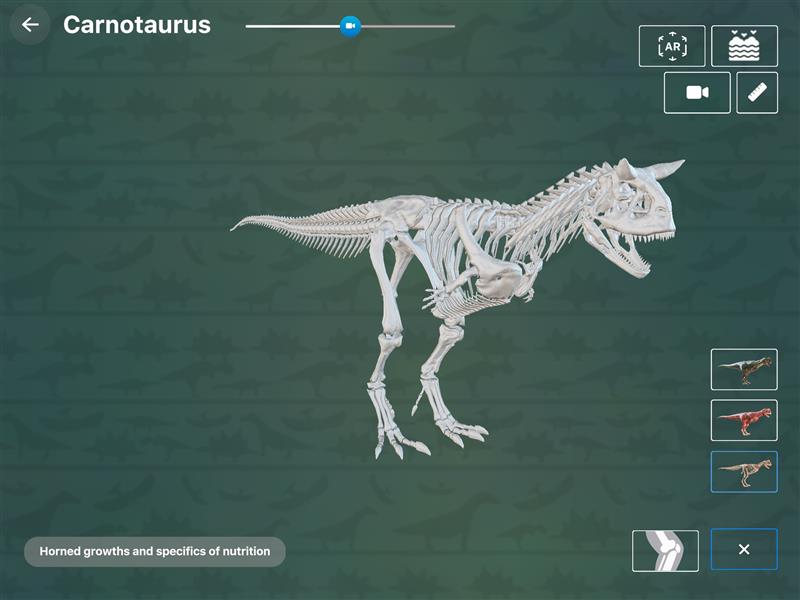
 3D MODEL "SKELETON"
 VISION
 NEIGHBORS
 VOICE ACTING
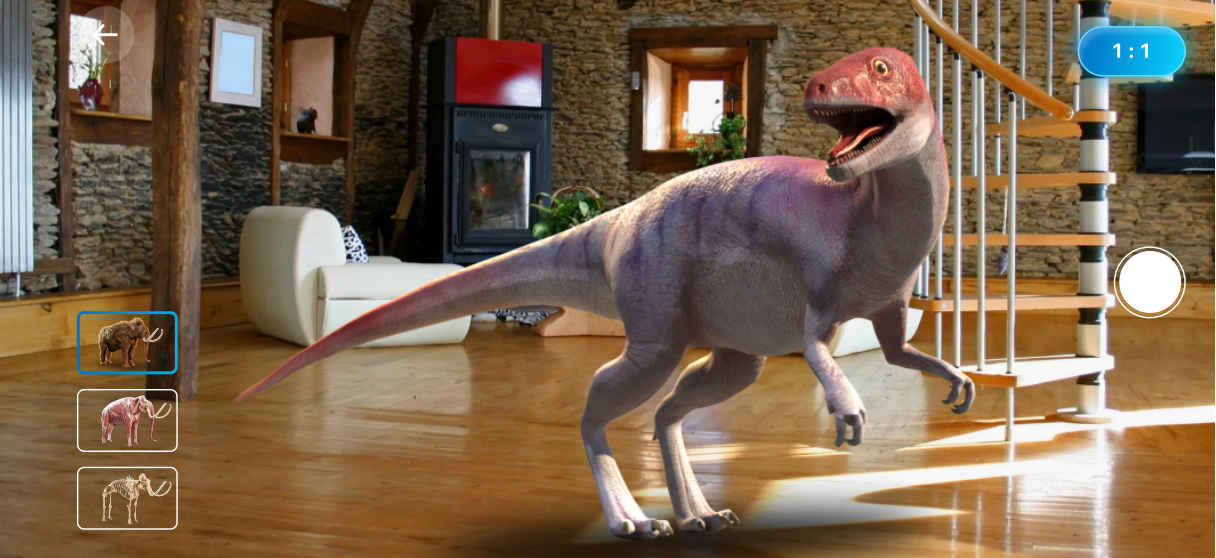
 AR - MODE
 GALLERY
 HISTORY OF DISCOVERIES

