


Merychippus

Name meaning:
Ruminant horse
Period of life:
17–11 million years ago
Period:
Neogene period
Habitat:
Savannas and plains
Taxonomy:
Mammals
Countries:




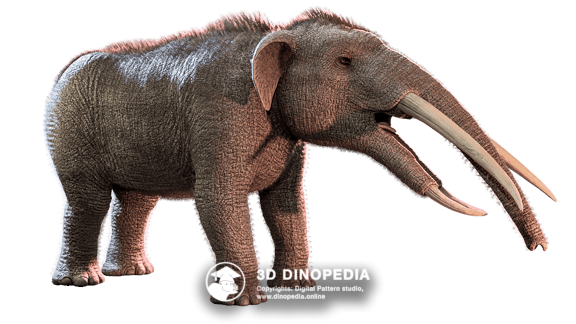 Gomphotherium


Odobenocetops
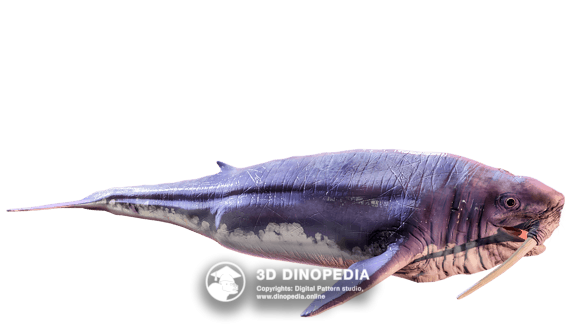


What does the name mean: “ruminant horse”: from the Greek merykasthai (“to chew the cud”) + hippos (“horse”). It is associated with the structure of the teeth rather than with membership in the group of ruminant animals.
Merychippus was an extinct genus of equids (Equidae) that inhabited North America during the Miocene, approximately 17–11 million years ago. It is regarded as one of the key representatives of equid evolution, from closely related forms of which modern horses originated. The widely distributed ancient equids known as hipparions (Hipparion) also descended from this lineage.
Externally, Merychippus was more similar to modern horses than its ancestors. It reached about 1 m at the shoulder — approximately the size of a modern pony. The head was elongated, with an extended facial region, which was associated with the restructuring of the dental system and the transition to feeding on tough grasses. The eyes were positioned farther from the tip of the snout and somewhat higher, providing a wider field of vision.
The limbs of Merychippus reflect an important stage in equid evolution. Three toes were still present on each foot, but the lateral toes were reduced and played little role in support. The main load was borne by the elongated and thickened middle toe, which ended in a hoof. This structure indicates adaptation for rapid running across the firm surfaces of open landscapes.
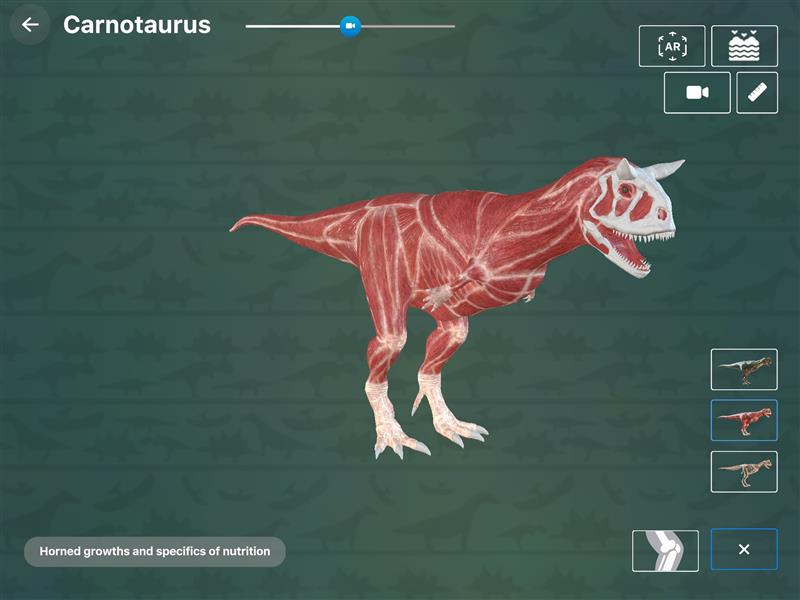
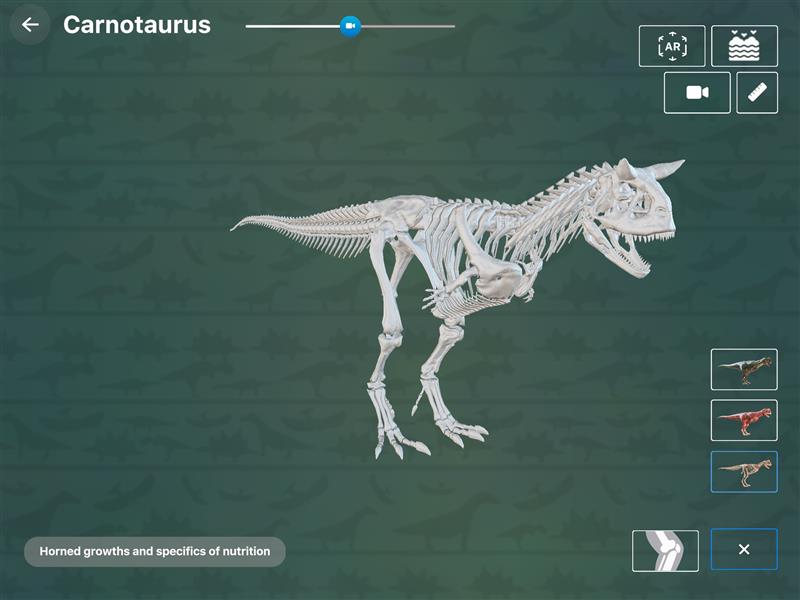
The internal anatomy of Merychippus is reconstructed only partially and mainly by analogy with modern horses. Nevertheless, it can be assumed that its digestive system was adapted for processing large quantities of coarse plant food.
Digestion began in the oral cavity. High-crowned teeth with folded enamel ensured efficient grinding of tough vegetation. Saliva participated in the initial breakdown of carbohydrates, after which food entered the stomach, where further processing occurred.
The stomach of Merychippus, like that of all equids, was single-chambered, so the main digestion took place in the intestines. Symbiotic microorganisms likely inhabited the digestive tract and participated in the breakdown of cellulose. Food residues passed into the large intestine, where water absorption occurred, after which they were excreted from the body.
Merychippus is an important taxon for studying equid evolution. Its fossil remains make it possible to trace key changes in the anatomy and adaptations of these animals in response to environmental changes.
Discussions
Start the first one!
 Start a discussion
Other animals




 INTERESTING FACTS
 PUZZLES
 HOME
HOME
 3D MODEL "SKIN"
 3D MODEL "MUSCLES"
 3D MODEL "SKELETON"
 VISION
 NEIGHBORS
 VOICE ACTING
 AR - MODE
 GALLERY
 HISTORY OF DISCOVERIES

