


Anhanguera

Name meaning:
Ancient spirit-protector of animals
Period of life:
112-93 mya
Period:
Cretaceous period
Habitat:
Coasts
Taxonomy:
Pterosaurs
Countries:





 Oviraptor


Utahraptor


From the Tupi language, it means «ancient protective spirit of animals».
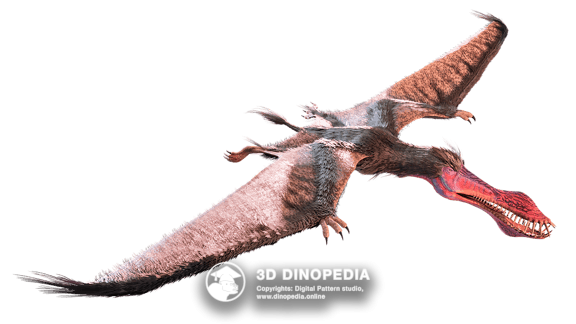
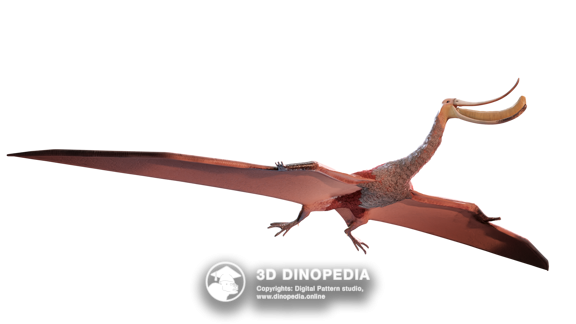
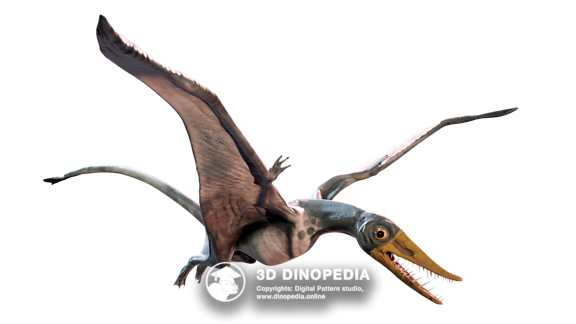
Anhanguera was one of the most striking pterosaurs of the Cretaceous skies. This large predator fed mainly on fish, skillfully snatching prey directly from the water. Its wingspan reached about 4.5 meters — comparable to that of a modern albatross.
The appearance of Anhanguera was truly unusual. At the front of both the upper and lower jaws it bore rounded bony crests. The jaws were lined with numerous teeth — conical, slightly compressed, and gently curved — perfectly suited for gripping slippery fish. At the tip of the snout there was also a spoon-shaped expansion, giving the head a distinctive shovel-like profile that is easily recognizable in fossil skulls.
In 2003, researchers examined the structure of Anhanguera’s inner ear and reached an interesting conclusion: this pterosaur likely held its head at an angle relative to the ground. This inference was based on the anatomy of its vestibular system — the balance and spatial orientation apparatus.
In addition, Anhanguera possessed specialized bony rings within the eye sockets, known as scleral rings. These helped the eyes maintain their shape and provided protection during flight, especially when the pterosaur plunged toward the water in pursuit of prey. Altogether, these features made Anhanguera not only an impressive flier, but also a highly adapted hunter of the air–water interface.
Discussions
Start the first one!
 Start a discussion
Other animals










 INTERESTING FACTS
 PUZZLES
 HOME
HOME
 3D MODEL "SKIN"
 3D MODEL "MUSCLES"
 3D MODEL "SKELETON"
 VISION
 NEIGHBORS
 VOICE ACTING
 AR - MODE
 GALLERY
 HISTORY OF DISCOVERIES

