


Meiolania

Name meaning:
Small wanderer
Period of life:
16 million years – 3,000 years ago
Period:
Neogene period
Habitat:
Lakes and marshes
Taxonomy:
Reptiles
Countries:




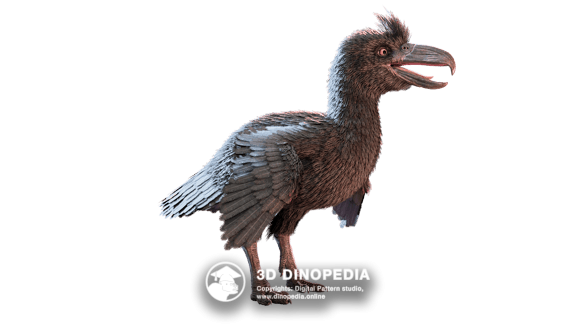 Kelenken


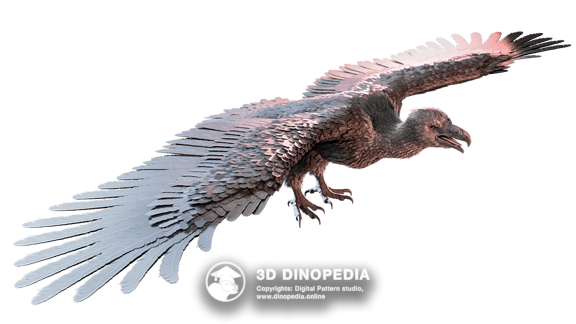
Argentavis


What does the name mean: "small wanderer".
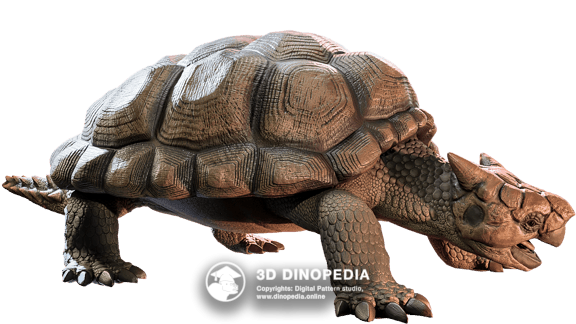
Meiolania was a genus of extinct turtles that lived in Australia, New Caledonia, and several islands of Oceania. These remarkable reptiles existed through much of the later Cenozoic Era, beginning in the middle Miocene around 16 million years ago, although most of their remains date to the Pleistocene (2.5 million–11,700 years ago). It is believed that the last representatives of the genus survived until only a few thousand years ago, and some controversial evidence even suggests they may have persisted until around 500 CE.
Meiolania was a true giant among turtles. Its shell alone reached up to two meters in length, while the total body length — including the head, neck, and tail — may have exceeded three meters. This made it one of the largest terrestrial turtles of all time.
One of the most remarkable features of Meiolania was its shell. It was tall and dome-shaped, composed of thick bony plates protecting the back and sides of the animal. Rather than being smooth, the shell surface was covered with ridges and bumps, giving the turtle an even more formidable appearance.
Another distinctive feature was its horns. At the rear of the skull, Meiolania possessed a pair of massive backward-curving horns resembling those of a cow. These horns could reach up to 70 centimeters in length. Scientists still debate their purpose. They may have served as protection against predators, as displays of strength during mating competitions, or perhaps even for digging in search of food.
The skull of Meiolania was massive and extremely sturdy, equipped with powerful jaws. It lacked teeth, but instead had a strong beak capable of cutting through tough vegetation. Its legs were short and powerful, adapted for movement on land. The tail was long and flexible, armored with rings of bony spikes. At the tip was a heavy bony club resembling the tail weapon of ankylosaur dinosaurs.
Meiolania defended itself not only with its shell and spiked tail, but possibly also with sound. Scientists suggest that these turtles may have produced loud growling noises to intimidate predators.
Meiolania was herbivorous, feeding on a variety of plants including leaves, fruits, and grasses. Its importance to science lies in the fact that it belonged to a unique lineage of turtles that disappeared long ago. The study of its fossils helps scientists better understand turtle evolution and the role these extraordinary reptiles played in ancient ecosystems.
Discussions
Start the first one!
 Start a discussion
Other animals
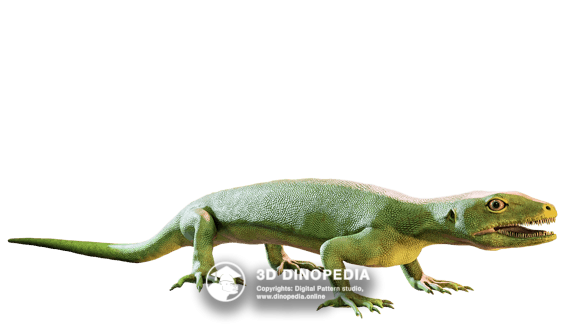





 INTERESTING FACTS
 PUZZLES
 HOME
HOME
 3D MODEL "SKIN"
 3D MODEL "MUSCLES"
 3D MODEL "SKELETON"
 VISION
 NEIGHBORS
 VOICE ACTING
 AR - MODE
 GALLERY
 HISTORY OF DISCOVERIES

