


Proganochelys

Name meaning:
The first bright turtle
Period of life:
about 210 million years ago
Period:
Triassic period
Habitat:
Lakes and marshes
Taxonomy:
Turtles and tortoises
Countries:






 Broomistega


Pappochelys


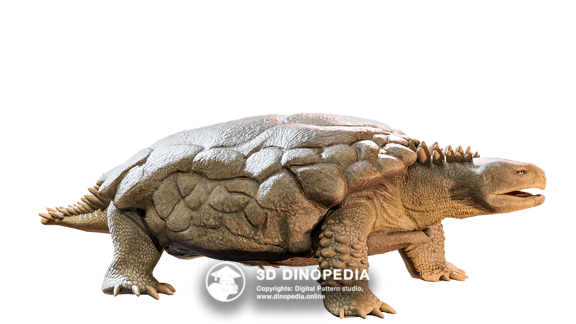
What the name means: “First bright turtle”. The name Proganochelys comes from Greek: pro (“before” or “early”), ganos (“brightness” or “shine”), and chelys (“turtle”). Together, the name can be interpreted as “early shining turtle” or “first bright turtle,” reflecting its status as one of the earliest known representatives of turtles.
Imagine a turtle nearly the size of a large dining table, covered in a solid bony shell and armed with a spiked, club-like tail. This was Proganochelys, one of the earliest known animals at the origin of turtle evolution. It lived about 210 million years ago, during the Late Triassic, when the continents were still united into the supercontinent Pangea.
Fossils of Proganochelys have been discovered in Germany, Greenland, and Thailand. This wide distribution suggests the species was distributed across the northern regions of Pangea, likely inhabiting coastal lowlands, wetlands, and shallow waters.
In appearance, Proganochelys was already very similar to modern turtles. Its body was protected by a strong bony shell formed from fused ribs and dermal plates, and its teeth had been replaced by a hard beak. However, important differences remained. Unlike modern turtles, it could not retract its head into the shell, and its long tail ended in a bony club—likely used as a defensive weapon against predators such as early archosaurs and crocodile-line reptiles.
Interestingly, small teeth were still present on the palate, even though the jaws themselves were toothless. This indicates its transitional position between early reptiles and modern turtles. Based on the structure of its beak and dentition, it likely fed on aquatic vegetation, soft plant material, and possibly small invertebrates.
The story of Proganochelys is the story of the early evolution of one of the most successful groups of vertebrates. Its shell became a symbol of evolutionary innovation, and the turtle body plan proved to be remarkably resilient. Although Proganochelys is long extinct, its form lives on in every modern turtle, continuing the legacy of this ancient pioneer.
Discussions
Start the first one!
 Start a discussion
Other animals





 INTERESTING FACTS
 PUZZLES
 HOME
HOME
 3D MODEL "SKIN"
 3D MODEL "MUSCLES"
 3D MODEL "SKELETON"
 VISION
 NEIGHBORS
 VOICE ACTING
 AR - MODE
 GALLERY
 HISTORY OF DISCOVERIES

