


Confuciusornis

Name meaning:
Confucius’ bird
Period of life:
125-120 mya
Period:
Cretaceous period
Habitat:
Mixed and broadleaf forests
Taxonomy:
Birds
Countries:




 Hypsilophodon


Psittacosaurus


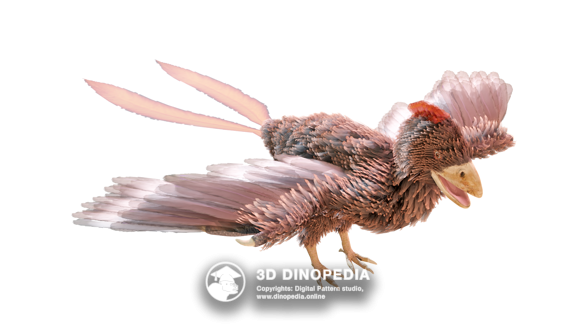
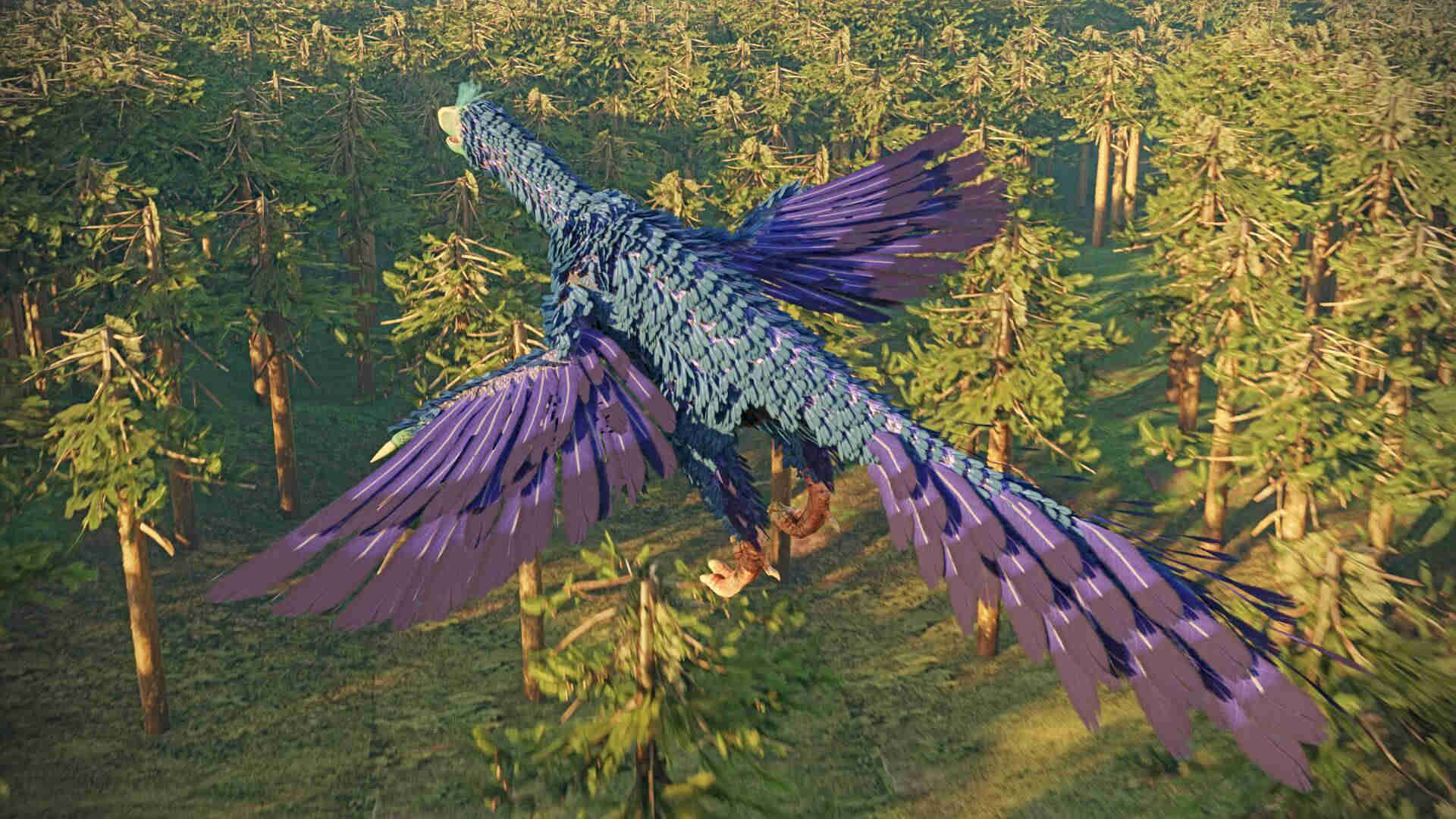
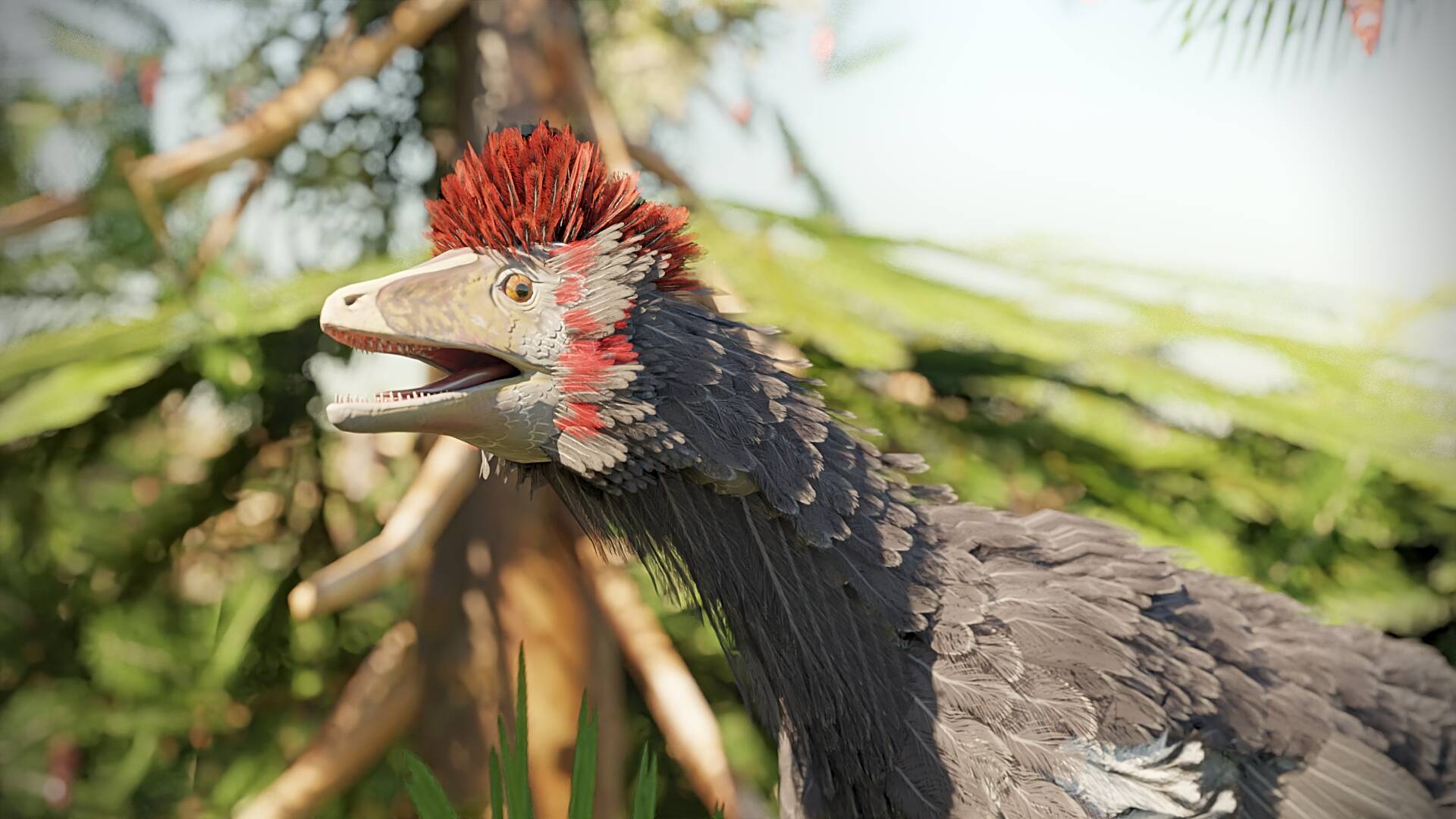
Confuciusornis is one of the earliest known birds, which lived about 120–125 million years ago during the Early Cretaceous, on the territory of what is now China. Its remains were first discovered in 1993 near Sihetun and soon came into the possession of a fossil collector named Zhang He. It later became clear that this was an exceptional find surrounded by controversy: rare fossils were apparently being traded illegally on the black market.
In size, Confuciusornis was comparable to a modern crow. It already possessed a toothless beak, a feature that aligns it with modern birds. This is particularly notable because some later birds, such as Ichthyornis and Hesperornis, still retained teeth; therefore, tooth loss likely occurred independently in different avian lineages.
The long tail typical of more primitive bird-like forms was already absent. Instead, Confuciusornis had a short pygostyle—fused caudal vertebrae that supported the tail feathers. Its entire body was covered with plumage, which not only enabled flight but also played a role in thermoregulation.
Based on the morphology of the beak, Confuciusornis likely fed on insects, plant seeds, and possibly small fish. It was a light, agile animal and probably led an active diurnal lifestyle, behaviorally resembling modern birds. As such, Confuciusornis occupies a key position in avian evolution as one of the earliest forms to combine archaic traits with distinctly avian characteristics.
Discussions
Start the first one!
 Start a discussion
Other animals









 INTERESTING FACTS
 PUZZLES
 HOME
HOME
 3D MODEL "SKIN"
 3D MODEL "MUSCLES"
 3D MODEL "SKELETON"
 VISION
 NEIGHBORS
 VOICE ACTING
 AR - MODE
 GALLERY
 HISTORY OF DISCOVERIES

