


Carnotaurus

Name meaning:
Meat-eating bull
Period of life:
72-70 mya
Period:
Cretaceous period
Habitat:
Coasts
Taxonomy:
Theropods
Countries:

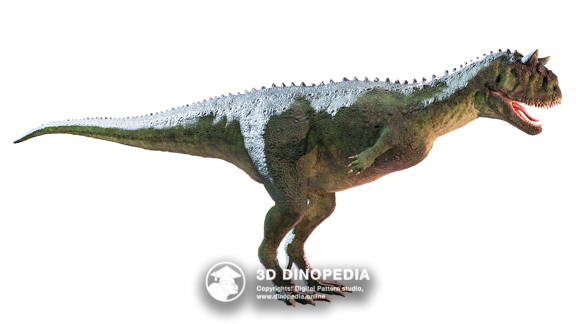



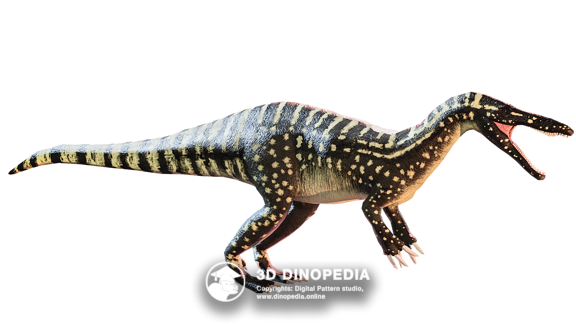 Suchomimus


Majungasaurus
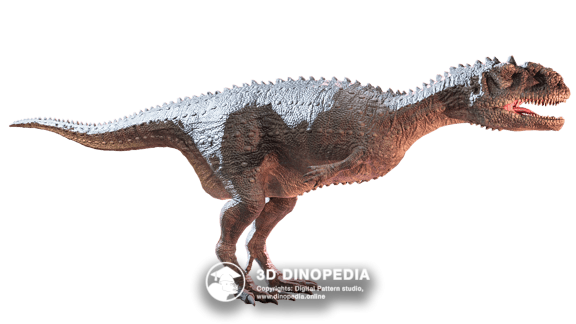


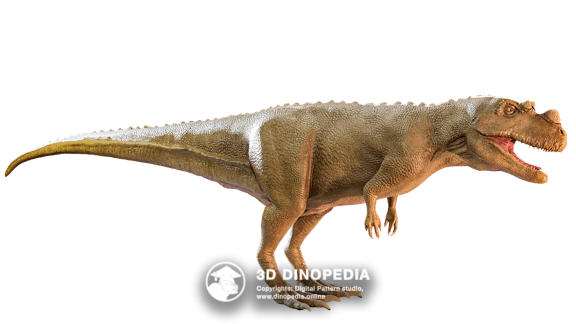
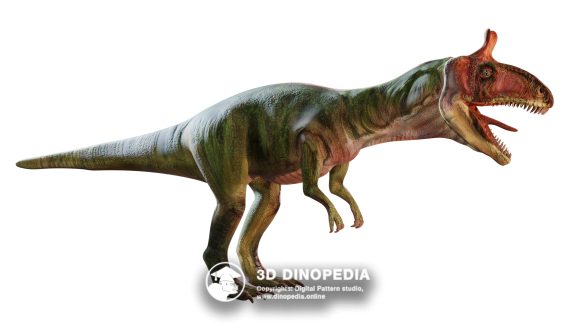
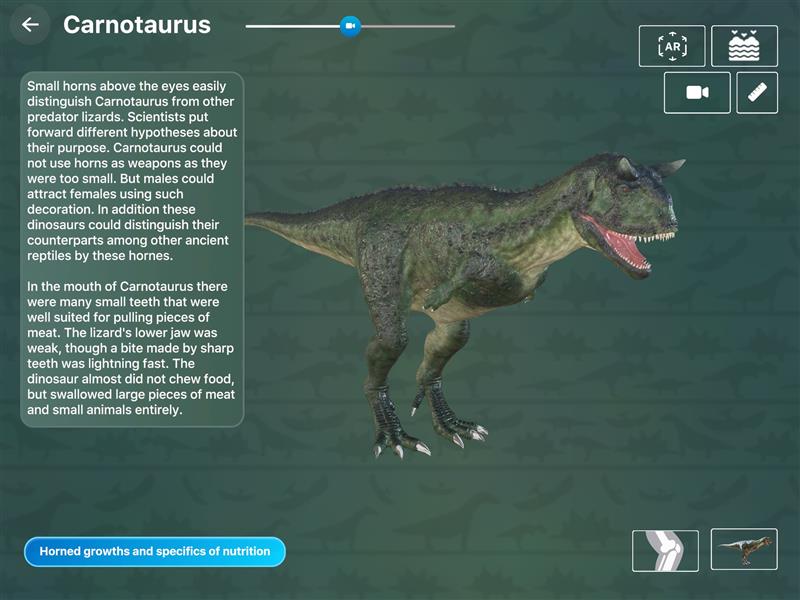
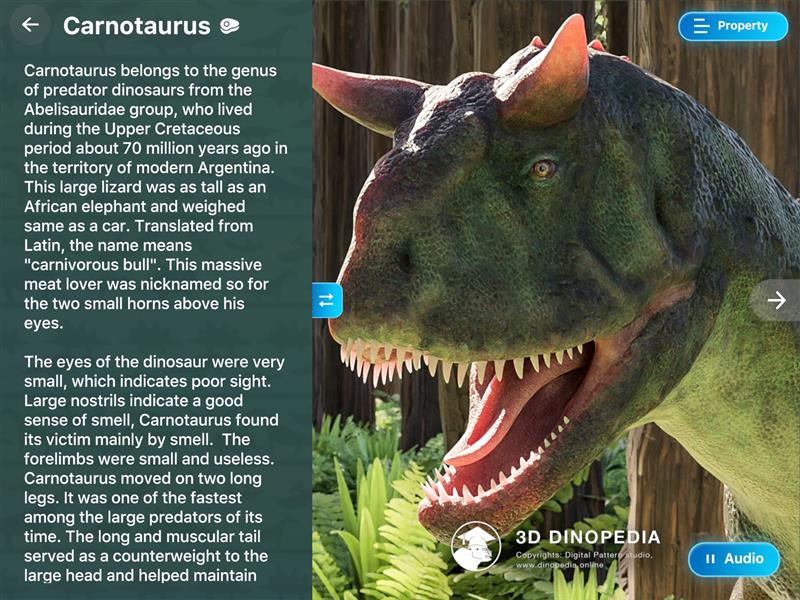
Carnotaurus was one of the most unusual predators of the Late Cretaceous. This dinosaur belonged to the family Abelisauridae and lived about 70 million years ago in what is now Argentina. Its name comes from Latin and means «carnivorous bull», a highly appropriate description: above the eyes rose two short horns that gave Carnotaurus a distinctive and intimidating appearance.
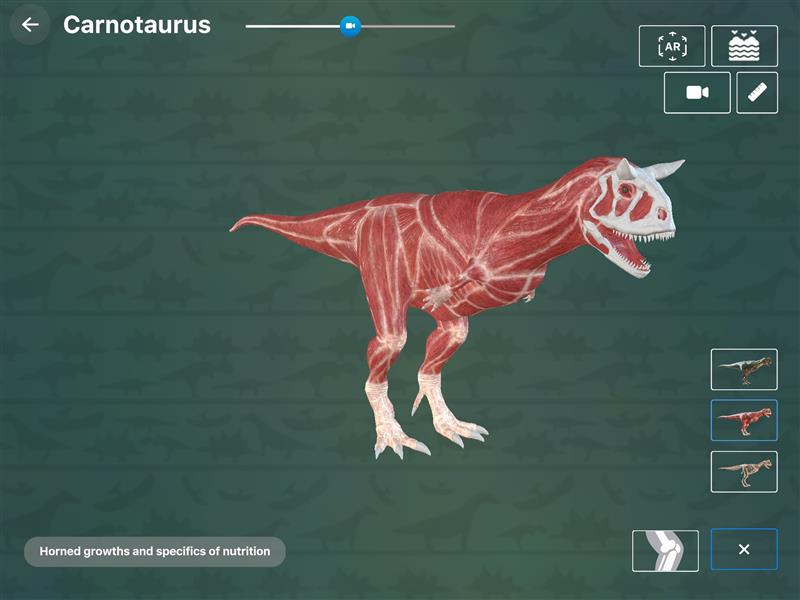
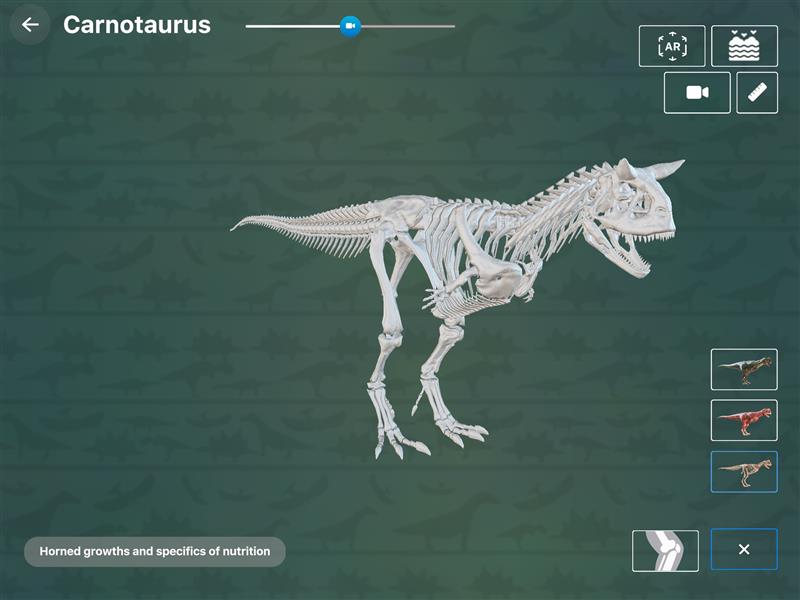
In size, Carnotaurus was roughly comparable to an African elephant, although its mass is estimated to have been closer to that of a small passenger car. Despite its robust body, it was remarkably agile. Long, powerful hind limbs suggest that it could achieve high running speeds, and many researchers consider it one of the fastest large theropod predators of its time. Balance during rapid movement was aided by a long, muscular tail.
The eyes of Carnotaurus were relatively small, indicating that vision may not have been its strongest sense. In contrast, the large nasal openings point to a well-developed sense of smell, which likely played a key role in locating prey. The forelimbs were extremely reduced and functionally insignificant, meaning that the animal relied almost entirely on its jaws and rapid attacks. It likely charged its prey, seized it with powerful bites, and attempted to bring it down quickly. Some researchers have suggested that Carnotaurus may have hunted in groups, potentially cooperating to attack large sauropods.
Paleontologists were exceptionally fortunate to discover an almost complete adult skeleton of Carnotaurus, along with impressions of its skin. This rare preservation made it possible to reconstruct the animal’s external appearance in detail, including its dense musculature, short horns, and skin covered with small, bead-like scales that gave it an almost armored texture. These finds have allowed Carnotaurus to be understood not merely as a fearsome predator, but as one of the most distinctive and remarkable dinosaurs of the Cretaceous period.
Discussions
Start the first one!
 Start a discussion
Other animals





 INTERESTING FACTS
 PUZZLES
 HOME
HOME
 3D MODEL "SKIN"
 3D MODEL "MUSCLES"
 3D MODEL "SKELETON"
 VISION
 NEIGHBORS
 VOICE ACTING
 AR - MODE
 GALLERY
 HISTORY OF DISCOVERIES

