


Psittacosaurus

Name meaning:
Parrot lizard
Period of life:
126-101 mya
Period:
Cretaceous period
Habitat:
Mixed and broadleaf forests
Taxonomy:
Marginocephalians
Countries:






 Confuciusornis


Muttaburrasaurus


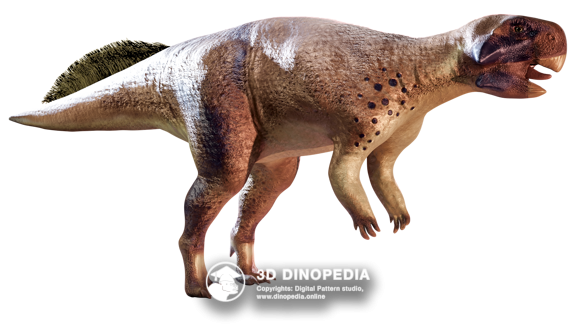
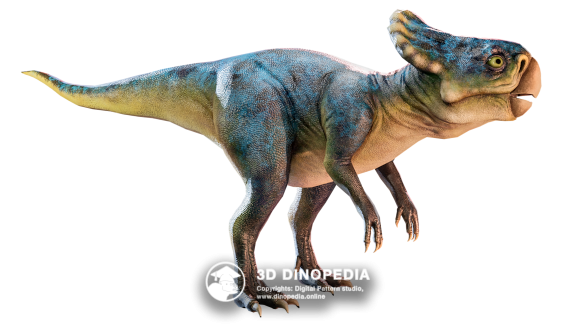
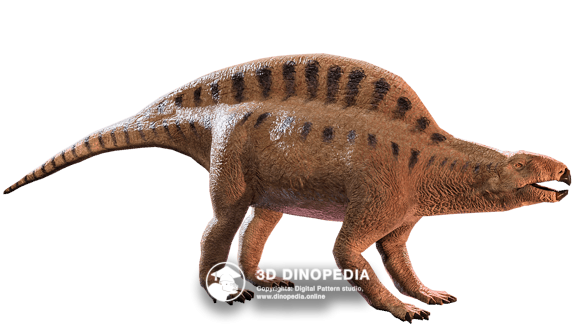
Psittacosaurus is one of the best-known early herbivorous dinosaurs, belonging to the group Ceratopsia. It lived during the Early Cretaceous, more than 100 million years ago, and is considered an early relative of the later large ceratopsians such as Triceratops.
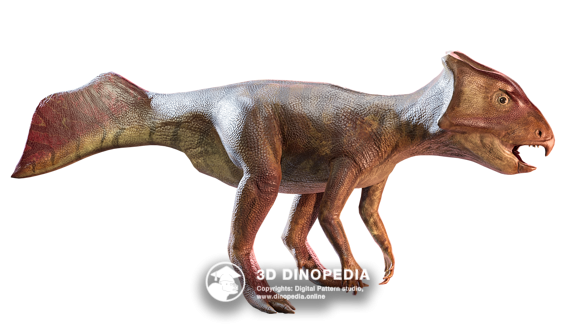
The first remains of Psittacosaurus were discovered in 1922 by an expedition of the American Museum of Natural History in Mongolia. Its skull resembled that of a parrot, with a strongly curved, robust beak — which is how it received its name: Psittacosaurus means «parrot lizard».
An adult Mongolian species reached about 1.5 meters in length and weighed around 20 kilograms — roughly the mass of a large turkey. Later, related species were found in other parts of Asia, some nearly twice as large as their Mongolian relatives, including Psittacosaurus sibiricus (the Siberian Psittacosaurus) and Psittacosaurus lujiatunensis (the Lujiatun Psittacosaurus).
It was a bipedal dinosaur with powerful hind limbs, likely adapted for rapid locomotion, and shorter forelimbs that may have been used for grasping or digging. Each limb bore four digits. Its jaws carried teeth only along the sides; the anterior portion was replaced by a strong keratinous beak, ideally suited for cropping tough vegetation. On the parietal bone of the skull there was a small bony crest, possibly serving as an attachment site for well-developed jaw musculature.
Like many other herbivorous dinosaurs, Psittacosaurus aided digestion by swallowing small stones — gastroliths. These were retained in the stomach and functioned as biological grinding tools, helping to process fibrous plant material. Another notable feature is that its jaws may have moved not only vertically but also anteroposteriorly, increasing masticatory efficiency.
Psittacosaurus was not merely a «small herbivore» — it represents an important evolutionary stage between early bipedal ornithischians and the later ceratopsians. From such relatively modest animals eventually arose the giant horned dinosaurs, including Triceratops and Styracosaurus, that would later become icons of the Cretaceous world.
Discussions
Start the first one!
 Start a discussion
Other animals



 INTERESTING FACTS
 PUZZLES
 HOME
HOME
 3D MODEL "SKIN"
 3D MODEL "MUSCLES"
 3D MODEL "SKELETON"
 VISION
 NEIGHBORS
 VOICE ACTING
 AR - MODE
 GALLERY
 HISTORY OF DISCOVERIES

