


Chaohusaurus

Name meaning:
Named after Lake Chaohu
Period of life:
248 million years ago
Period:
Triassic period
Habitat:
Marine environment
Taxonomy:
Marine reptiles
Countries:




 Triadobatrachus


Diplodocus


What does the name mean: named after Lake Chaohu, where the first fossils were discovered.
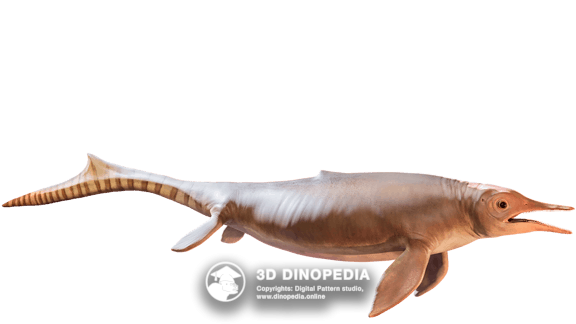
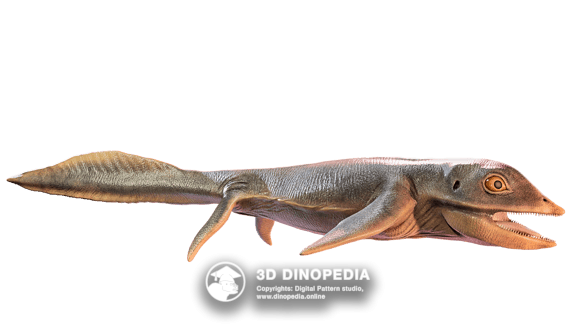
Chaohusaurus was a remarkable creature that inhabited Earth during the Early Triassic period, about 248 million years ago. It was one of the earliest representatives of Ichthyopterygia — the group of marine reptiles that also includes the famous ichthyosaurs. Its fossils were discovered in China, in Anhui Province near Lake Chaohu, from which the animal takes its name. The discovered skeletons allowed paleontologists to reconstruct the appearance and anatomy of this ancient reptile.
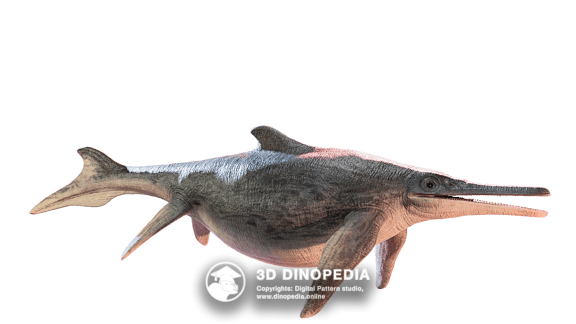
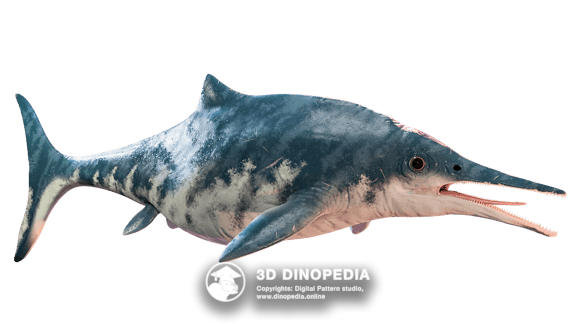
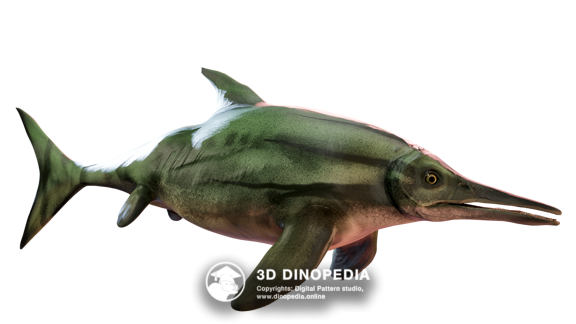
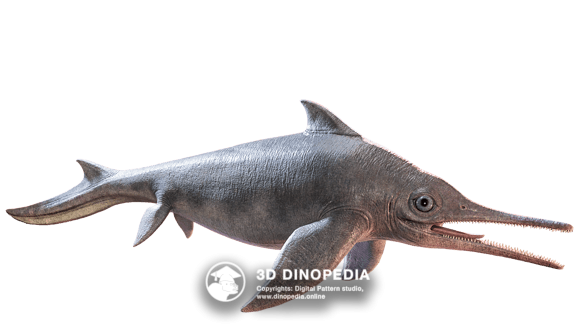
Chaohusaurus did not possess the streamlined, dolphin-like body shape characteristic of later ichthyosaurs. Its body was elongated, with a relatively long neck and a short, broad tail fin. In profile, it appeared rather compact. Adult individuals reached about 70–100 cm in length and weighed approximately 1–3 kg, making it one of the smallest known ichthyopterygians. The head was relatively small — about one-third of the total body length — with a long, narrow snout resembling a beak. Large eye sockets indicate that vision played an important role in its life. The limbs had already transformed into flippers rather than webbed feet.
One of the notable features of Chaohusaurus was its dentition. The teeth differed in shape: the front teeth were sharp, while the rear teeth were rounded and bulbous. This structure suggests a varied diet, probably including both fish and mollusks. Unlike later ichthyosaurs, Chaohusaurus lacked a dorsal fin. Although the limbs had evolved into flippers, they still retained certain features characteristic of terrestrial animals.
Chaohusaurus was one of the early ichthyopterygians that successfully adapted to aquatic life. Its anatomy and lifestyle are of particular importance for understanding the evolution of marine reptiles and their transition from terrestrial to aquatic environments.
Discussions
Start the first one!
 Start a discussion
Other animals





 INTERESTING FACTS
 PUZZLES
 HOME
HOME
 3D MODEL "SKIN"
 3D MODEL "MUSCLES"
 3D MODEL "SKELETON"
 VISION
 NEIGHBORS
 VOICE ACTING
 AR - MODE
 GALLERY
 HISTORY OF DISCOVERIES

