


Diplodocus

Name meaning:
Double beam
Period of life:
154-152 mya
Period:
Jurassic period
Habitat:
Deserts and semi-deserts
Taxonomy:
Sauropodomorphs
Countries:




 Chaohusaurus


Stegosaurus


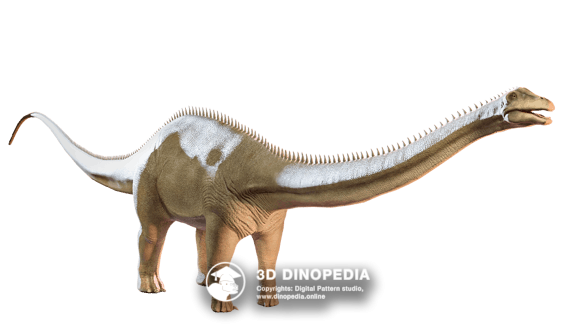
Name meaning is «double beam». It refers to the unusual structure of its tail vertebrae, which had two paired bony projections (chevrons) on the underside.
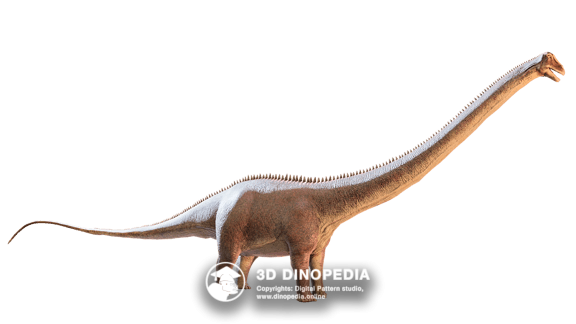
Diplodocus is one of the most iconic giants of the Jurassic Period and a true symbol of the dinosaur age. This sauropod lived around 150–138 million years ago and astonished with its enormous size: adults could reach 30–32 metres in length — comparable to two modern passenger buses placed end to end.
Diplodocus moved on four massive, pillar-like legs. Its hind limbs were slightly longer than the forelimbs, giving the body a characteristic forward slope. Despite its colossal size, its brain was extremely small — no larger than a chicken egg. Intelligence likely played little role in its survival, while its huge body and long neck made it perfectly adapted to the lifestyle of a peaceful herbivorous giant.
Diplodocus fed mainly on soft vegetation such as ferns, horsetails, and conifer shoots. Its teeth were slender and pencil-like, positioned only at the front of the jaws. They were not suited for chewing, but instead functioned like a comb for stripping leaves and shoots. Digestion took place in a powerful stomach containing gastroliths - stones that helped grind plant material - followed by processing in an extremely long intestine.
The dinosaur’s most important «tool» was its neck, about seven metres long and made up of 15 vertebrae. This allowed Diplodocus to browse over a wide area without taking many steps, conserving energy. In danger, it relied on another defence: a long, flexible tail composed of around 80 vertebrae, shaped like a whip. A strike from such a tail may have been powerful enough to knock down — or even fatally injure — a large predator. Diplodocus could also rear up on its hind legs and lash out with its forelimbs, which bore sharp claws.
Fully grown Diplodocus individuals were likely safe from most threats, but juveniles were far more vulnerable. Females probably laid eggs about the size of a football near forest edges, burying them in the ground and leaving them unattended. When the hatchlings emerged, they had to flee immediately into cover to avoid predators such as Allosaurus. Those that survived grew at astonishing rates — gaining up to a tonne per year — and soon became giants themselves, grazing peacefully among prehistoric vegetation.
Diplodocus disappeared around 145 million years ago, near the end of the Jurassic. The exact reasons remain uncertain: changes in plant communities may have reduced food supplies, or new, more efficient predators may have prevented young individuals from reaching adulthood. Even so, Diplodocus remains one of the greatest symbols of the power and grandeur of the prehistoric world.
Discussions
Start the first one!
 Start a discussion
Other animals



 INTERESTING FACTS
 PUZZLES
 HOME
HOME
 3D MODEL "SKIN"
 3D MODEL "MUSCLES"
 3D MODEL "SKELETON"
 VISION
 NEIGHBORS
 VOICE ACTING
 AR - MODE
 GALLERY
 HISTORY OF DISCOVERIES

