


Postosuchus

Name meaning:
Crocodile from the Post Quarry
Period of life:
221-203 mya
Period:
Triassic period
Habitat:
Floodplains
Taxonomy:
Crocodilians
Countries:




 Plateosaurus


Helveticosaurus


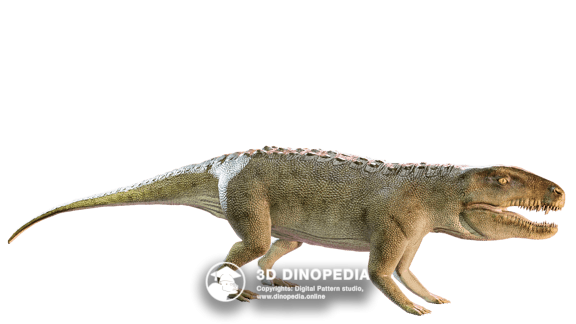
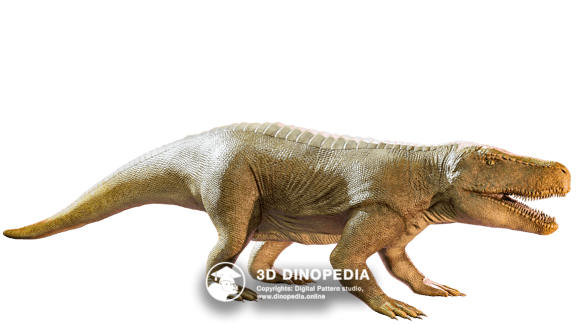
Postosuchus was one of the most formidable predators of the Late Triassic. It lived around 227 million years ago in what are now Texas, Arizona, and New Mexico, when these lands were hot plains and humid tropical forests of the ancient supercontinent Pangaea.
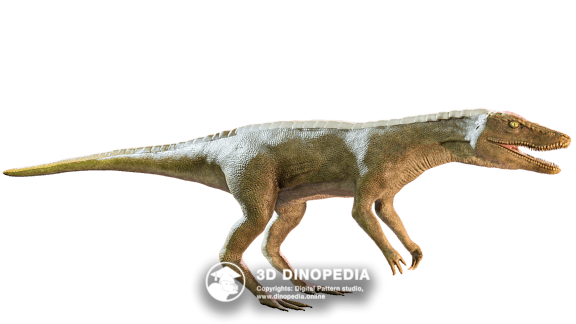
This reptile was impressive in size: its body length reached 7 metres, its height about 2 metres, and its weight up to 400 kilograms. Postosuchus was a true giant of its time. It resembled an enormous lizard with powerful hind limbs on which it moved confidently, and a long tail almost two metres in length that helped it keep its balance. The forelimbs were shorter but armed with sharp claws. For its relatives — the pseudosuchians, ancestors of modern crocodiles — such limb proportions were highly unusual.
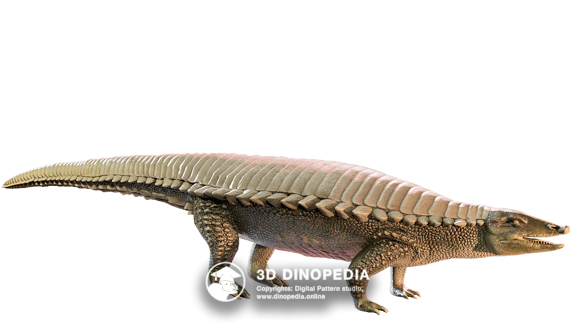
A broad skull with strong jaws and long, sharp teeth made Postosuchus a dangerous opponent. Its head and back were protected by dense bony plates — natural armour that helped it withstand blows and clashes with other large animals.
Postosuchus was carnivorous and hunted herbivorous reptiles such as Placerias. These massive, slow-moving creatures grazed in herds among dense stands of ancient horsetails and ferns. Postosuchus would creep towards them, using the thick vegetation for cover, and then suddenly launch an attack. One powerful bite — and the prey could no longer escape. The huge predator sank its teeth into the body of its victim, completing the hunt and securing a substantial meal.
In its world, Postosuchus was at the top of the food chain — a fearsome symbol of strength and dominance in the prehistoric Triassic forests.
Discussions
 Start a discussion

 0
0
 2
2
 626
626
Other animals






 INTERESTING FACTS
 PUZZLES
 HOME
HOME
 3D MODEL "SKIN"
 3D MODEL "MUSCLES"
 3D MODEL "SKELETON"
 VISION
 NEIGHBORS
 VOICE ACTING
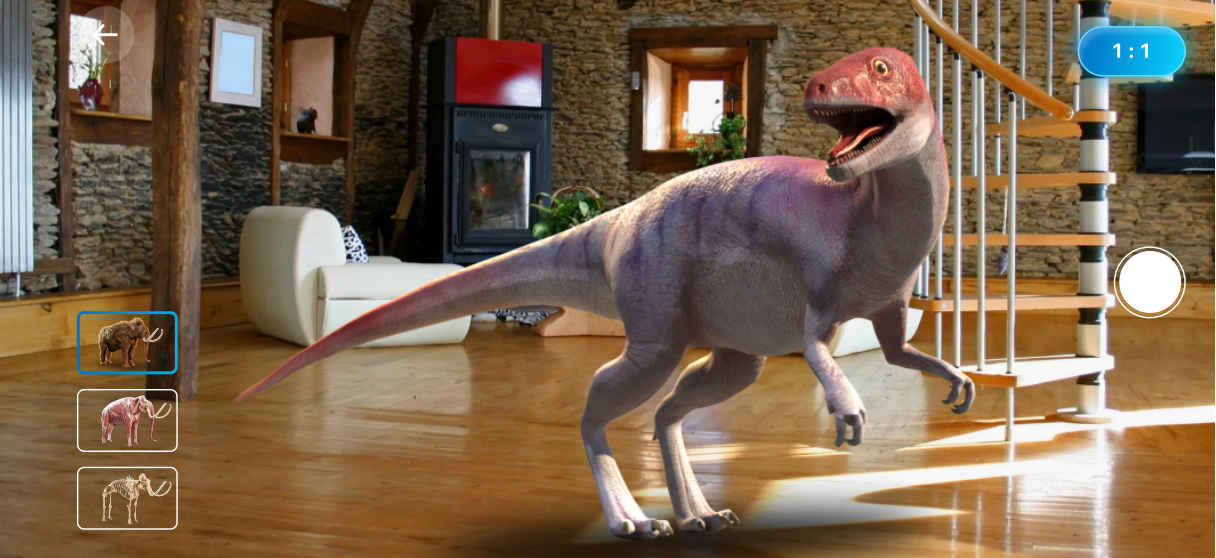
 AR - MODE
 GALLERY
 HISTORY OF DISCOVERIES

