


Argentavis

Name meaning:
Argentine bird
Period of life:
9 - 6.8 million years ago
Period:
Neogene period
Habitat:
Savannas and plains
Taxonomy:
Birds
Countries:




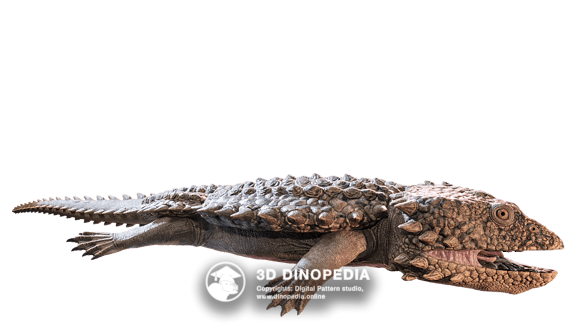
 Meiolania


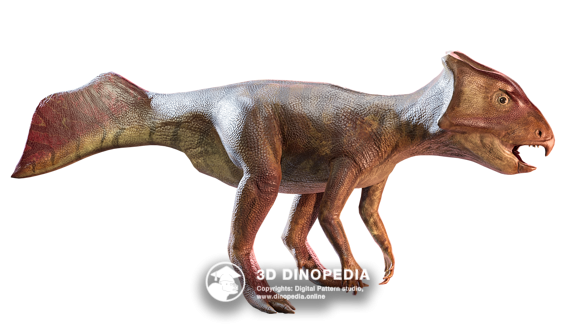
Gomphotherium


What does the name mean: “Argentine bird”.
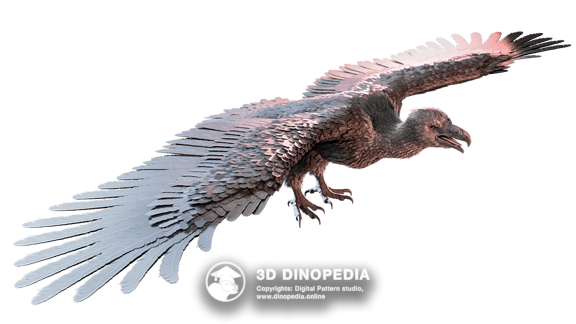
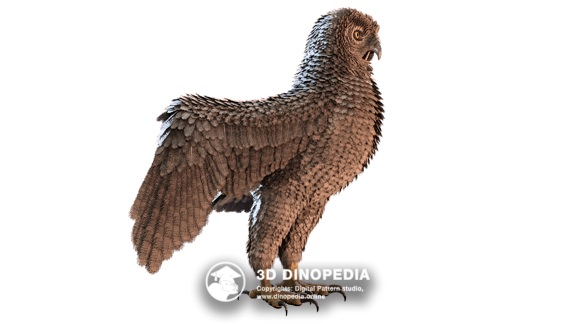
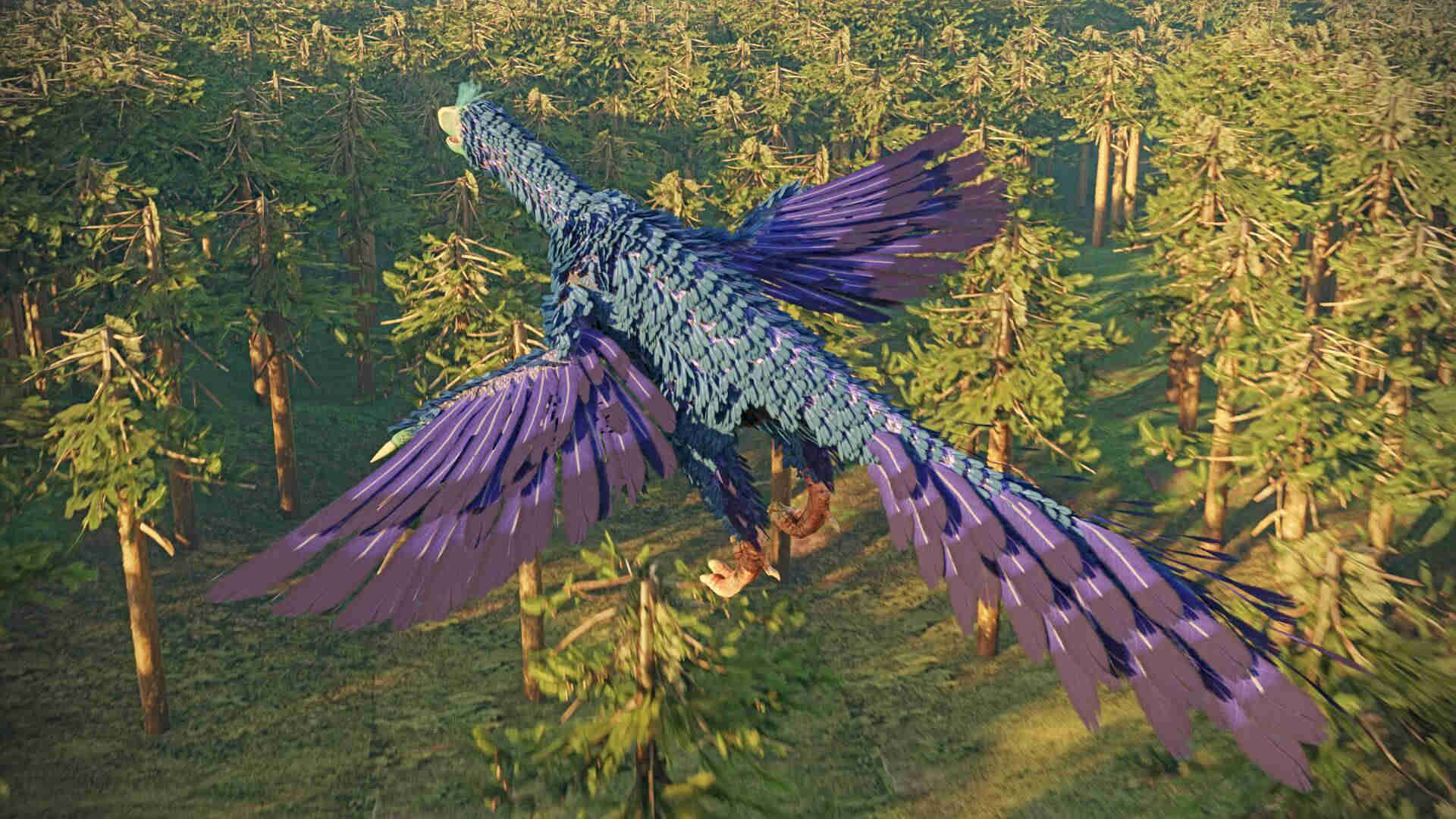
Argentavis was an extinct giant predator soaring through the skies of South America about 6 million years ago, during the Late Miocene. This bird was truly colossal. Its wingspan reached 7–8 meters — imagine wings large enough to easily span the width of a small automobile. Its body mass ranged from 70 to 80 kilograms. Argentavis was the heaviest flying bird in Earth’s history. For comparison, the wandering albatross, the largest modern flying bird, has a wingspan of only about 3.5 meters — nearly half as large.
For a long time, scientists considered Argentavis to be a scavenger similar to modern vultures. Its slender yet powerful hooked beak appeared perfectly adapted for tearing flesh, while its long neck allowed it to reach deep inside carcasses. However, recent studies conducted in 2024 revealed a far more interesting picture. After examining the structure of the ancient bird’s brain, scientists concluded that Argentavis was not only a scavenger, but also a kleptoparasite — stealing prey from other predators. Some researchers even suggest that it may have hunted independently, swallowing prey the size of a hare whole. Its prey may have included armadillos, rodents, and capybaras inhabiting the South American plains.
The structure of its skeleton demonstrates that Argentavis was an unmatched master of soaring flight. Its enormous wings, lightweight bones, and well-developed musculature allowed it to glide through the air for hours while using rising air currents. Scientists believe it could travel enormous distances with almost no wing flapping, much like modern albatrosses. Its cruising speed was approximately 67 kilometers per hour.
However, takeoff was a serious challenge for Argentavis. Its chest muscles were not strong enough for sustained active wingbeats. To leave the ground, it required either a long running start or the assistance of strong headwinds. Most likely, Argentavis nested on cliffs in the foothills of the Andes or atop tall trees — from there, it could simply leap outward and catch rising air currents.
The discovery of Argentavis fossils became a true gift for paleontologists, allowing them to lift part of the veil surrounding the world of prehistoric birds. The study of this remarkable creature helps scientists better understand bird evolution, their adaptation to different environmental conditions, and the role they played within ancient ecosystems.
Discussions
Start the first one!
 Start a discussion
Other animals










 INTERESTING FACTS
 PUZZLES
 HOME
HOME
 3D MODEL "SKIN"
 3D MODEL "MUSCLES"
 3D MODEL "SKELETON"
 VISION
 NEIGHBORS
 VOICE ACTING
 AR - MODE
 GALLERY
 HISTORY OF DISCOVERIES

