


Volaticotherium

Name meaning:
Ancient gliding beast
Period of life:
164 million years ago
Period:
Jurassic period
Habitat:
Woodlands
Taxonomy:
Mammals
Countries:



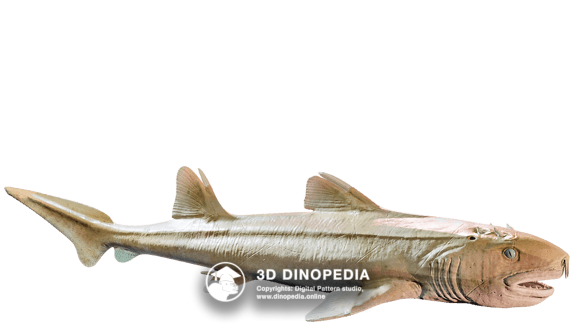 Hybodus


Iguanodon
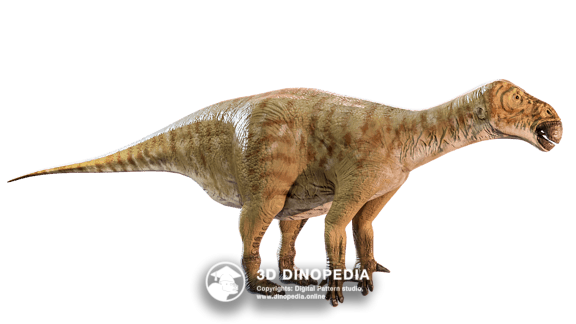


What does the name mean: «ancient gliding beast».
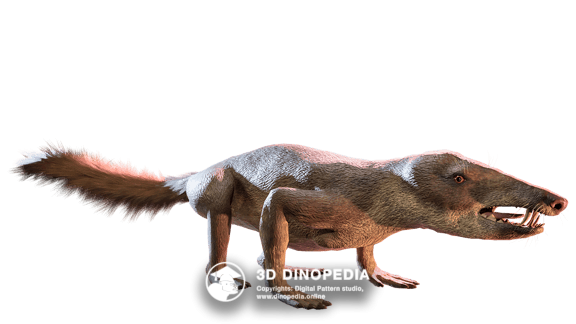
Volaticotherium antiquum was an early mammal that lived during the Jurassic Period approximately 164 million years ago. It inhabited ecosystems dominated by dinosaurs and pterosaurs, occupying an arboreal ecological niche. A distinctive feature of this animal was its ability for gliding flight.
Volaticotherium antiquum was comparable in size to a small squirrel: body length excluding the tail reached about 12–14 cm, while mass was approximately 70 g. The body was covered with dense fur. A well-developed skin membrane (patagium), analogous to that of modern flying squirrels, stretched between the forelimbs and hind limbs. This membrane extended to the fingers and encompassed the foot region; impressions indicate that it was covered with dense hairs. The long flattened tail probably participated in stabilization and maneuvering during gliding, while the elongated limbs supported the membrane.
Despite its external similarity to modern flying squirrels, Volaticotherium antiquum was not related to rodents. Its dentition differed substantially: the incisors were relatively small, whereas the cheek teeth possessed high sharp cusps arranged in a line and inclined backward. Such structure ensured efficient cutting of food and indicates an insectivorous diet.
It is assumed that Volaticotherium antiquum led an arboreal lifestyle, spending most of its time in tree canopies. This facilitated food searching and reduced the risk of encounters with terrestrial predators. The ability to glide allowed efficient movement between trees.
Volaticotherium antiquum is of major importance to paleontology. Its discovery demonstrated that Mesozoic mammals were more diverse than previously assumed. At the time of its description, it represented the first discovery of a Mesozoic mammal with direct evidence of gliding flight, indicating that such adaptations had appeared at least 164 million years ago. Later discoveries of other gliding forms among Jurassic mammals confirmed that similar adaptations evolved repeatedly.
Discussions
Start the first one!
 Start a discussion
Other animals










 INTERESTING FACTS
 PUZZLES
 HOME
HOME
 3D MODEL "SKIN"
 3D MODEL "MUSCLES"
 3D MODEL "SKELETON"
 VISION
 NEIGHBORS
 VOICE ACTING
 AR - MODE
 GALLERY
 HISTORY OF DISCOVERIES

