


Weigeltisaurus

Name meaning:
Named in honor of Johannes Weigelt
Period of life:
259-252 million years ago
Period:
Permian period
Habitat:
Coasts
Taxonomy:
Reptiles
Countries:





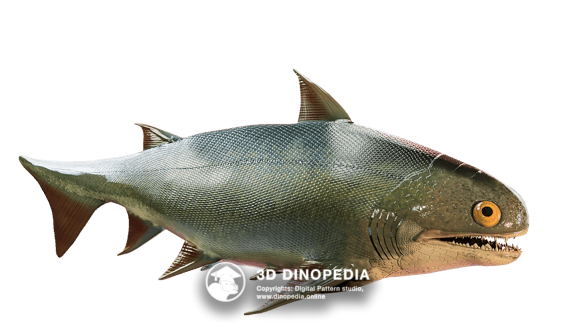
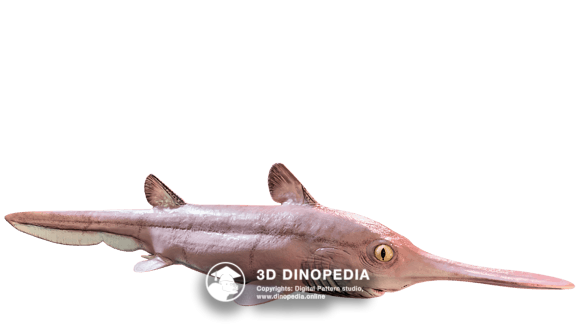 Bandringa


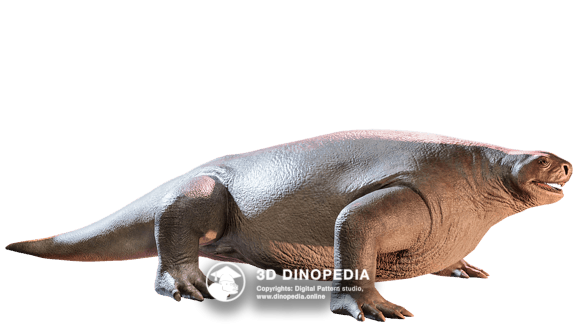
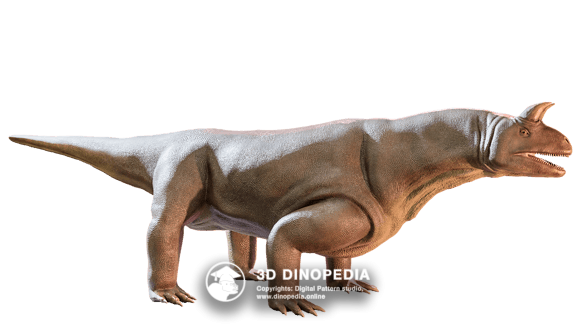
Cotylorhynchus


What does the name mean: named in honor of the German paleontologist Johannes Weigelt.
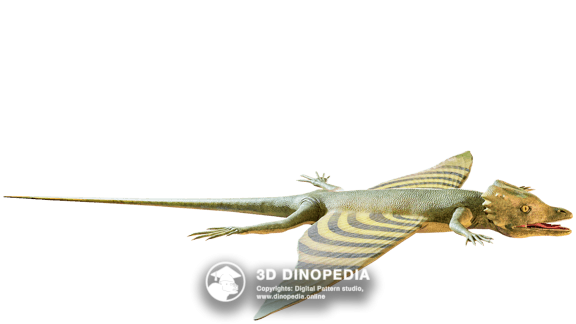
Weigeltisaurus jaekeli was a small arboreal reptile that outwardly resembled a lizard. It lived approximately 259–252 million years ago during the Late Permian, a time when several reptile groups were evolving adaptations for gliding flight. Fossil remains of this animal have been discovered in Germany and the United Kingdom.
Weigeltisaurus jaekeli possessed several anatomical features associated with an arboreal lifestyle and the ability to glide. Its body was slender and exceeded 40 cm in length. It was likely covered in scales, while its long limbs with claws allowed it to move confidently along branches. The long tail functioned as a balancing organ.
The most distinctive feature was a skin membrane stretched between the body and elongated bony rods projecting outward from the torso. This structure resembled the gliding apparatus of modern flying dragons and enabled the animal to travel between trees, reducing the risk of encounters with ground-dwelling predators.
The internal anatomy of Weigeltisaurus jaekeli also reflected its lifestyle. Its skeleton was lightweight yet strong, an important adaptation for arboreal locomotion and gliding. The bone rods supporting the membrane were modified dermal ossifications rather than true skeletal elements. A flexible spine enhanced maneuverability during gliding.
The skull of Weigeltisaurus jaekeli possessed several unusual characteristics, including spine-like projections on the squamosal bones that were probably used for display. The teeth varied in shape in different regions of the jaws, which may indicate an insectivorous diet. Respiration occurred through lungs, as in other reptiles.
The skeleton of Weigeltisaurus jaekeli consisted of thin-walled bones that reduced body mass. The structure of the hands was characteristic of arboreal animals and provided a secure grip on branches.
Overall, the anatomy of Weigeltisaurus jaekeli reflects a complex set of adaptations for tree-dwelling and gliding. Its body structure helps scientists better understand the early evolutionary stages of gliding flight in ancient reptiles.
Discussions
Start the first one!
 Start a discussion
Other animals







 INTERESTING FACTS
 PUZZLES
 HOME
HOME
 3D MODEL "SKIN"
 3D MODEL "MUSCLES"
 3D MODEL "SKELETON"
 VISION
 NEIGHBORS
 VOICE ACTING
 AR - MODE
 GALLERY
 HISTORY OF DISCOVERIES

