


Ankylosaurus

Name meaning:
Fused lizard
Period of life:
68-66 mya
Period:
Cretaceous period
Habitat:
Mangrove forests and bayous
Taxonomy:
Ankylosaurs
Countries:





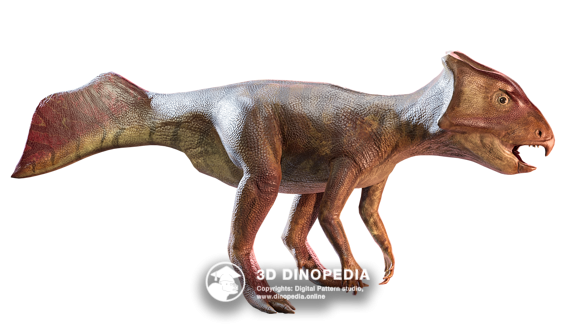 Archaeoceratops


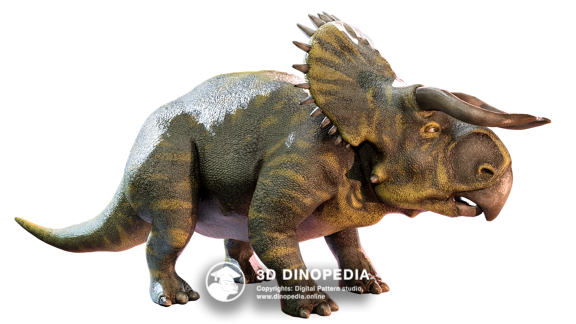
Nasutoceratops


«fused lizard» or «bonded lizard», a name given because of the strongly thickened skull bones that were tightly joined together.
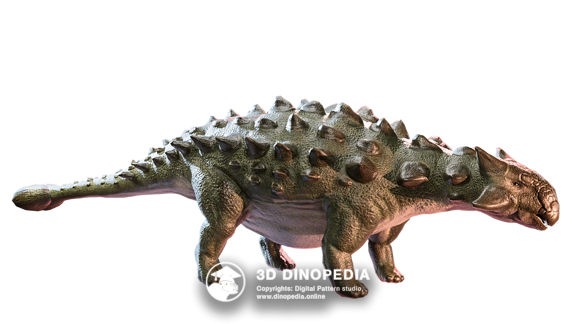
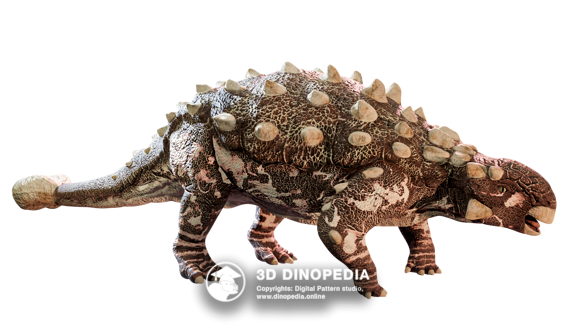
Ankylosaurus was one of the most remarkable dinosaurs ever to inhabit Earth. It was a true living tank of the Mesozoic world, among the largest of the armored dinosaurs. In mass, it rivaled an adult male African elephant — several tons of living weight enclosed within an immense protective shell.
Its body was completely covered with dense bony plates forming an intricate suit of armor, and at the end of its tail was a heavy bony club. This tail was a formidable weapon: with a single swing, Ankylosaurus could defend itself against predators such as Tyrannosaurus, inflicting serious injuries.
An adult Ankylosaurus reached about 6–8 meters in length. Its broad, low body stood on four sturdy legs, and its massive head was adorned with a pair of horns projecting backward from the skull, as well as two smaller horns below, angled downward. Unlike most other dinosaurs, its nostrils opened not forward but to the sides — possibly helping it detect scents more effectively or regulate breathing.
The front of its jaws ended in a beak, followed by rows of small, leaf-shaped teeth. Ankylosaurus was primarily herbivorous, feeding mainly on low-growing plants. However, some researchers suggest that its diet may have been more varied, including tough leaves, fleshy fruits, and perhaps even a small amount of animal matter, making it potentially omnivorous.
The structure of its limbs and its powerful claws suggest that Ankylosaurus could dig into the ground in search of roots and tubers. Thanks to its endurance, heavy armor, and flexible feeding strategy, this dinosaur was exceptionally well adapted to its environment and became one of the most iconic creatures of the Late Cretaceous period.
Discussions
Start the first one!
 Start a discussion
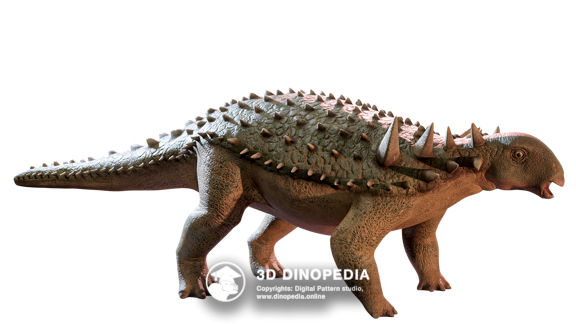
Other animals





 INTERESTING FACTS
 PUZZLES
 HOME
HOME
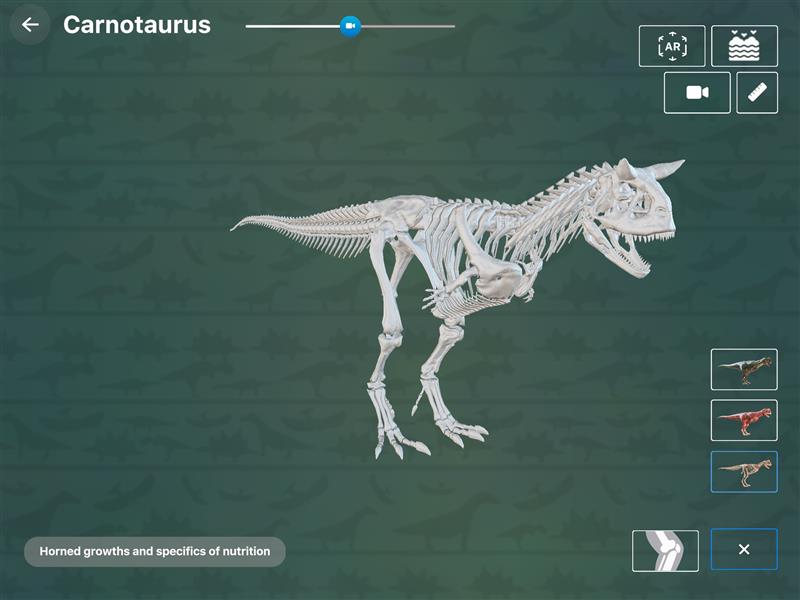
 3D MODEL "SKIN"
 3D MODEL "MUSCLES"
 3D MODEL "SKELETON"
 VISION
 NEIGHBORS
 VOICE ACTING
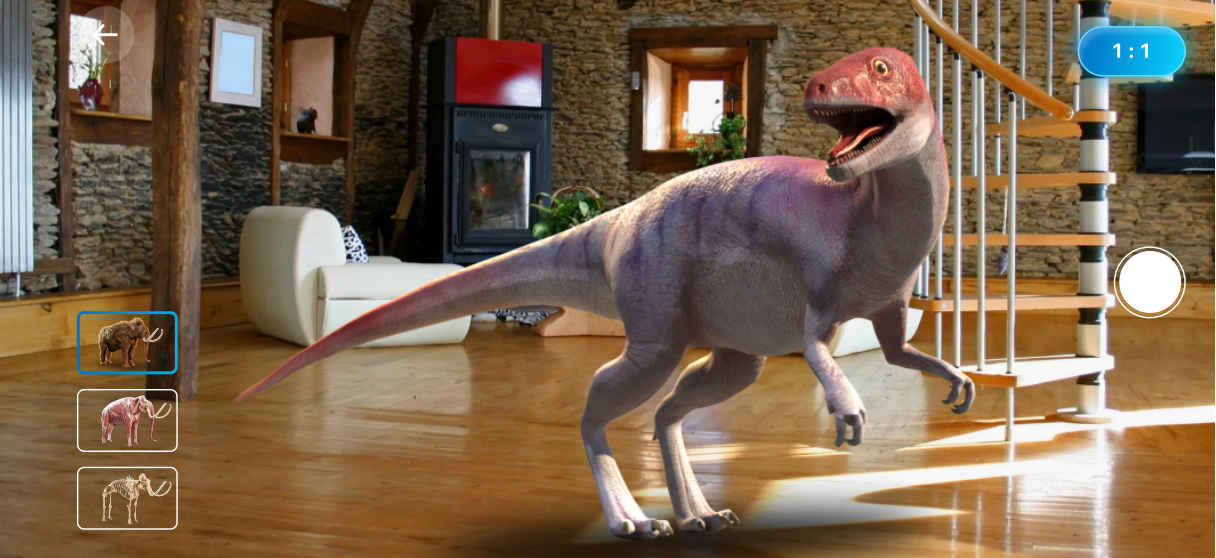
 AR - MODE
 GALLERY
 HISTORY OF DISCOVERIES

