


Dorudon

Name meaning:
Spear tooth
Period of life:
40.4–33.9 million years ago
Period:
Paleogene period
Habitat:
Marine environment
Taxonomy:
Mammals
Countries:





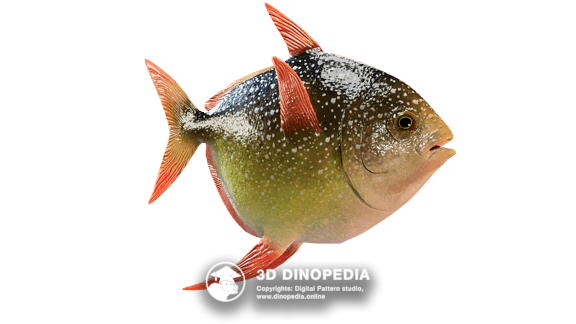 Megalampris


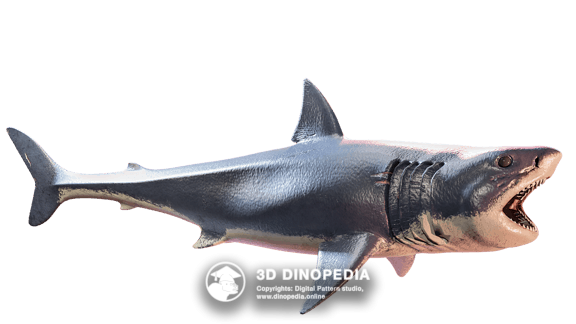
Megalodon


What does the name mean: Dorudon comes from the Ancient Greek words dory (“spear”) and odous (“tooth”). The literal translation is “spear tooth” or “spear-like tooth.”
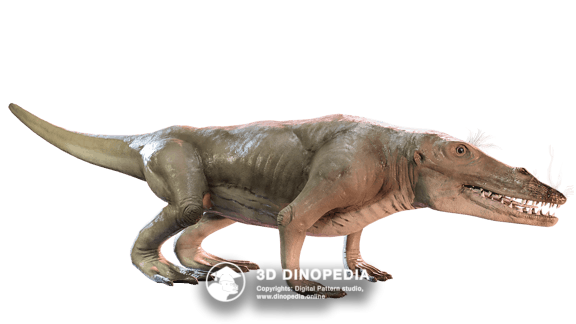
Dorudon was an extinct genus of cetaceans that lived during the Eocene, approximately 40 million years ago. It is known from fossil discoveries in North Africa (particularly Egypt), where warm shallow seas with rich marine fauna existed at that time. Dorudon occupied an important role in these ecosystems as an active marine predator.
The body length of Dorudon reached about 5 m. Compared with its larger relative Basilosaurus, which could exceed 15–20 m in length, Dorudon was significantly smaller. Nevertheless, it was a well-adapted marine predator.
The body of Dorudon was streamlined and adapted for active swimming. The tail fluke provided propulsion, while the forelimbs had been transformed into flippers used for maneuvering. The hind limbs were strongly reduced and survived only as small rudimentary elements.
The nostrils of Dorudon were positioned higher on the skull than in its terrestrial ancestors, although they had not yet reached the top-of-the-head position characteristic of modern whales. This placement reflects an intermediate stage in the evolution of the cetacean respiratory system.
The skeleton of Dorudon illustrates key stages in the transition of cetaceans to a fully aquatic lifestyle. The skull shows reduction of olfactory structures, while the anatomy of the auditory apparatus indicates adaptation for perceiving sound underwater.
The teeth of Dorudon were sharp and slightly curved backward, indicating a predatory diet. It probably hunted fish, cephalopods, and other marine animals.
Dorudon is an important subject for the study of cetacean evolution. Its anatomy helps scientists trace the transition from terrestrial ancestors to fully aquatic forms and better understand their ecology during the Eocene.
Discussions
Start the first one!
 Start a discussion
Other animals



 INTERESTING FACTS
 PUZZLES
 HOME
HOME
 3D MODEL "SKIN"
 3D MODEL "MUSCLES"
 3D MODEL "SKELETON"
 VISION
 NEIGHBORS
 VOICE ACTING
 AR - MODE
 GALLERY
 HISTORY OF DISCOVERIES

