


Tetrapodophis

Name meaning:
Four-legged snake
Period of life:
115–113 million years ago
Period:
Cretaceous period
Habitat:
Freshwater environment
Taxonomy:
Lizards and snakes
Countries:



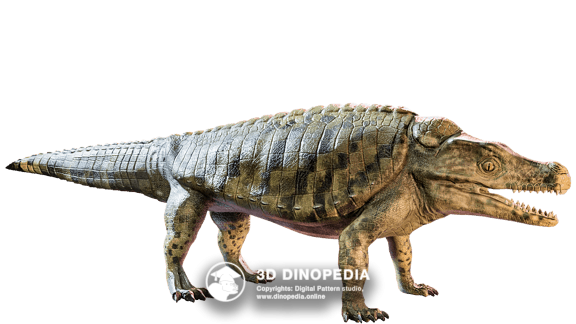 Armadillosuchus


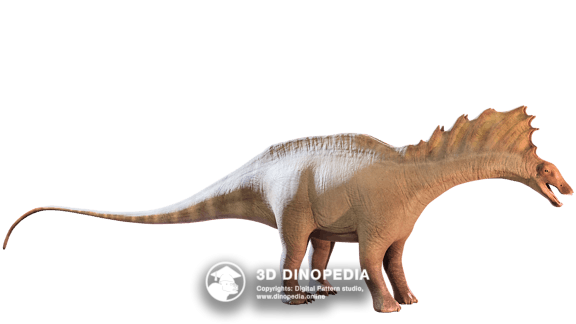
Bajadasaurus


What does the name mean: “four-legged snake” (Tetrapodophis; from the Greek tetra — “four,” pous — “foot,” and ophis — “snake”).
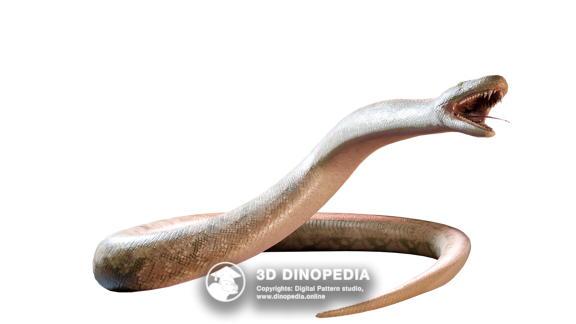
Tetrapodophis was an extinct genus of reptiles that lived during the Early Cretaceous, approximately 115–113 million years ago. Its fossil remains were discovered in Brazil, within the Crato Formation, known for its rich paleontological material.
Tetrapodophis was a small animal about 19.5 cm long. Its body was elongated and snake-like, yet it retained four limbs. The forelimbs and hind limbs were strongly reduced and probably did not participate in locomotion, instead possibly being used for holding prey or during mating.
Despite pronounced similarities to snakes — including an elongated body with more than 150 vertebrae, a short tail, and hooked teeth — studies conducted in 2021 showed that Tetrapodophis probably belongs to dolichosaurs, a group of long-bodied marine lizards.
It is assumed that Tetrapodophis inhabited areas near water bodies or shallow coastal zones characteristic of the Crato Formation ecosystem. Its prey probably included small vertebrates such as lizards and amphibians.
Tetrapodophis is of considerable interest to paleontology because of its combination of features characteristic of different groups of squamates. Its study helps improve understanding of the processes involved in the evolution of snake-like body structure in ancient reptiles.
Discussions
Start the first one!
 Start a discussion
Other animals







 INTERESTING FACTS
 PUZZLES
 HOME
HOME
 3D MODEL "SKIN"
 3D MODEL "MUSCLES"
 3D MODEL "SKELETON"
 VISION
 NEIGHBORS
 VOICE ACTING
 AR - MODE
 GALLERY
 HISTORY OF DISCOVERIES

