


Elasmotherium

Name meaning:
Plate beast
Period of life:
7–0.039 mya
Period:
Quaternary period
Habitat:
Steppes
Taxonomy:
Mammals
Countries:






 Mammoth


Megaloceros


«plate beast», the name is associated with the lamellar structure of the tooth enamel of Elasmotherium.
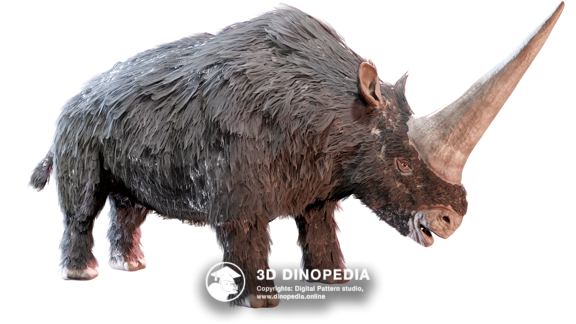
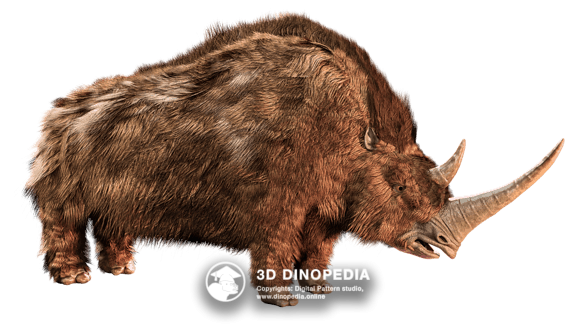
Elasmotherium is one of the most impressive rhinoceroses of the Ice Age, a giant of the ancient Eurasian steppes. These powerful herbivores inhabited vast territories from Eastern Europe to Siberia and lived contemporaneously with Neanderthals and early representatives of Homo sapiens and likely could have been objects of their hunting.
An adult Elasmotherium weighed up to 5 tons, reached 5 meters in length and more than 2.5 meters in height. On its forehead rose a massive bony protuberance to which, presumably, a horn up to one and a half meters long was attached. It was precisely because of this impressive «ornament» that the animal received the poetic nickname «Siberian unicorn». However, modern research casts doubt on the existence of such a gigantic horn: it is possible that in place of the protuberance there was only thick calloused skin or a short keratinous growth.
The shape of the skull of Elasmotherium indicates that it possessed a wedge-shaped muzzle adapted for digging roots, bulbs, and tubers out of the ground. However, judging by the structure of the teeth, these rhinoceroses fed primarily on coarse steppe vegetation—low-growing grasses and sedges.
There is a hypothesis that the specific features of diet and cranial structure may have led Elasmotherium to extinction. Its massive skull and heavy horn hindered the animal from raising its head high, and when at the end of the Ice Age the steppes became impoverished and grasses diminished, Elasmotherium simply could not adapt to new food resources. However, this is only one of the versions: scientists do not exclude that climatic changes, competition with other large herbivores, and even pressure from prehistoric hunters also played a role.
Be that as it may, the Siberian unicorn disappeared about 35 thousand years ago, leaving behind not only massive bones but also numerous legends—possibly forming the basis of myths about mythical horned creatures that lived «at the edge of the earth».
Discussions
Start the first one!
 Start a discussion
Other animals








 INTERESTING FACTS
 PUZZLES
 HOME
HOME
 3D MODEL "SKIN"
 3D MODEL "MUSCLES"
 3D MODEL "SKELETON"
 VISION
 NEIGHBORS
 VOICE ACTING
 AR - MODE
 GALLERY
 HISTORY OF DISCOVERIES

