


Nyanzachoerus

Name meaning:
Nyanza pig
Period of life:
10–2.5 million years ago
Period:
Neogene period
Habitat:
Savannas and plains
Taxonomy:
Mammals
Countries:





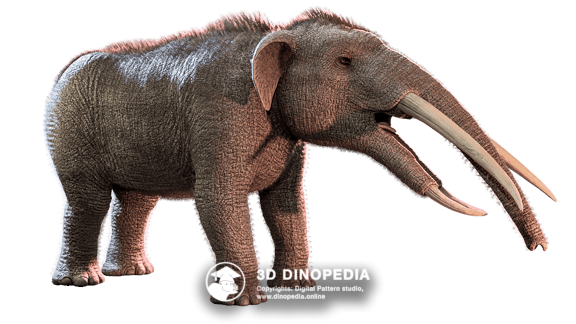 Gomphotherium


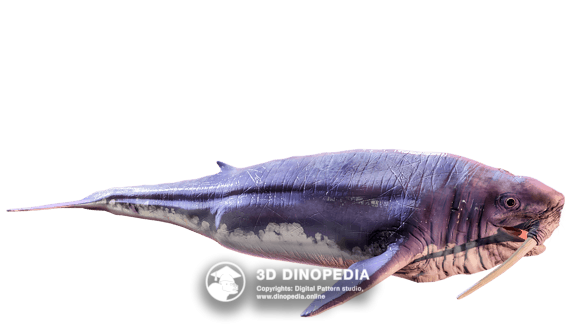
Odobenocetops


What does the name mean: The name Nyanzachoerus is derived from the toponym Nyanza (a region associated with Lake Victoria) and the Greek χοῖρος (choiros) — “pig.”
Nyanzachoerus was an extinct genus of the subfamily Tetraconodontinae within the pig family (Suidae), known from African deposits of the late Miocene and Pliocene (about 10–2.5 million years ago). These were large pig-like animals. Evidence from tooth structure and enamel isotope composition suggests dietary diversity: some species had mixed diets, while others were more specialized for feeding on grasses. Their probable habitats included mosaic landscapes of savannas, sparse woodlands, and floodplain environments.
The body length of Nyanzachoerus could reach about 2 m. The body was massive, with short, sturdy limbs and a powerful neck. The skull was characterized by a well-developed facial region and the presence of bony protuberances. In males these structures were especially pronounced and located on the snout and around the zygomatic arches, which may indicate a role in display behavior or intraspecific interactions.
The snout of Nyanzachoerus was elongated, suggesting that olfaction played an important role. The jaws possessed moderately developed tusks and teeth adapted for processing coarse and abrasive food. Dental microwear and enamel isotope analyses indicate a predominantly plant-based diet that varied among species.
The digestive system of Nyanzachoerus probably resembled that of modern pigs in general organization, although its details cannot be reliably reconstructed from fossil evidence.
About 11 species have been described within the genus Nyanzachoerus, although their taxonomy and species boundaries remain debated. The subfamily Tetraconodontinae represents an extinct side branch of pigs with no direct modern descendants. The study of Nyanzachoerus is important for understanding the evolutionary diversity of pig-like mammals in the late Neogene of Africa.
Discussions
Start the first one!
 Start a discussion
Other animals







 INTERESTING FACTS
 PUZZLES
 HOME
HOME
 3D MODEL "SKIN"
 3D MODEL "MUSCLES"
 3D MODEL "SKELETON"
 VISION
 NEIGHBORS
 VOICE ACTING
 AR - MODE
 GALLERY
 HISTORY OF DISCOVERIES

