


Lotosaurus

Name meaning:
Lizard of the lotus
Period of life:
238 mya
Period:
Triassic period
Habitat:
Floodplains
Taxonomy:
Crocodilians
Countries:




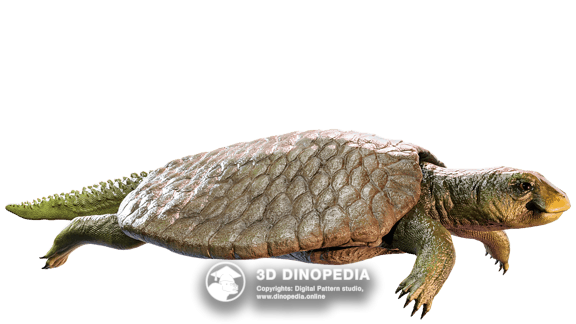 Henodus


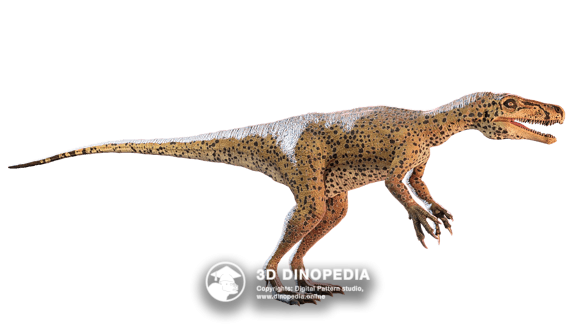
Herrerasaurus


«lotus lizard», named after Hunan Province in China, known as the «province of lotuses».
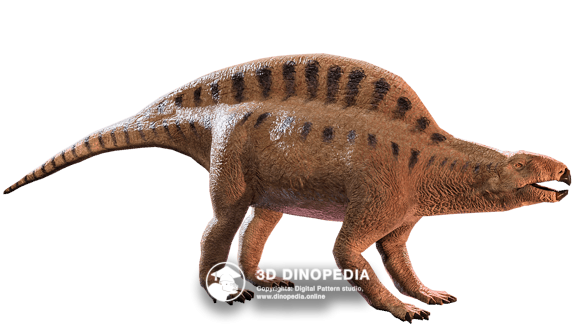
Lotosaurus was a remarkable representative of the ancient group of poposauroids, living long before the appearance of dinosaurs. This relatively large animal reached a length of 1.5 to 2.5 metres. It is easily recognised by its toothless beak — and it was precisely this feature that gave the species the name Lotosaurus adentus, which literally means «toothless Lotosaurus».
Fossils of Lotosaurus were found in China, in Hunan Province, in the Batung area. Here, palaeontologists discovered an entire bone-bearing layer that even received its own name — the «Lotosaurus locality». In 2018, the remains of 38 individuals of different ages were found at this site. Such a large concentration of bones suggests that Lotosaurus probably lived in herds — perhaps moving in groups in search of food and safety.
Lotosaurus moved on four legs and fed on vegetation. Its toothless jaws, resembling a beak, were adapted for cropping soft shoots and aquatic plants.
One particularly striking feature of Lotosaurus was the tall sail on its back — bony projections covered with skin. This gave the animal a resemblance to Permian synapsids such as Dimetrodon. Scientists still debate why Lotosaurus needed this sail: it may have helped regulate body temperature or served as a display structure within the herd.
Research suggests that Lotosaurus lived in cooler and more marshy environments than its closest relatives. This has led to the idea that these ancient reptiles may have had a semi-aquatic lifestyle, spending part of their time in water, where they fed on vegetation and sought refuge from predators.
Discussions
 Start a discussion
Other animals









 INTERESTING FACTS
 PUZZLES
 HOME
HOME
 3D MODEL "SKIN"
 3D MODEL "MUSCLES"
 3D MODEL "SKELETON"
 VISION
 NEIGHBORS
 VOICE ACTING
 AR - MODE
 GALLERY
 HISTORY OF DISCOVERIES

