


Kronosaurus


Name meaning:
Kronos lizard
Period of life:
125–99,6 million years ago
Period:
Cretaceous period
Habitat:
Marine environment
Taxonomy:
Reptiles
Countries:



 Armadillosuchus


Bajadasaurus


What does the name mean: “Kronos lizard” (named after the Ancient Greek Titan Cronus).
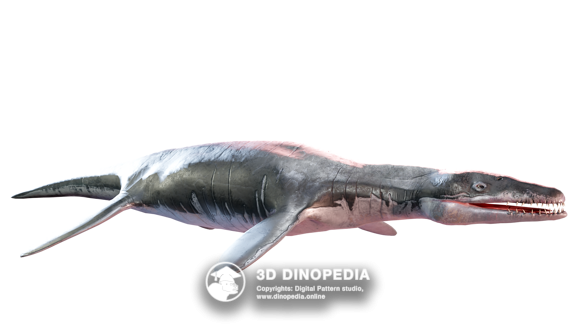
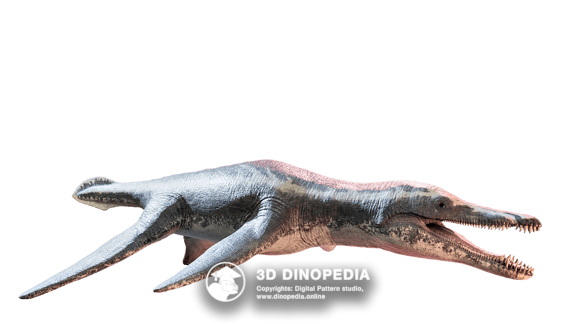
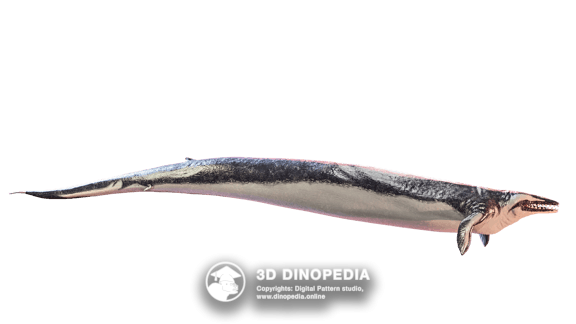
Kronosaurus was a large pliosaur that lived during the Early Cretaceous, about 125–100 million years ago, in what is now Australia. At that time, the region was covered by the vast inland Eromanga Sea.
Kronosaurus reached lengths of up to 10.5 m and was among the largest marine predators of its time. Its body was streamlined and hydrodynamic, adapted for active swimming in open water. Unlike ichthyosaurs, the tail played a secondary role in propulsion; the main thrust was generated by two pairs of powerful flippers functioning in a manner similar to “underwater flight.” Each flipper was a modified limb with shortened, densely packed bones surrounded by strong musculature, providing high maneuverability and speed.
The skull of Kronosaurus was massive, reaching up to ~3 m in length. The rostrum was elongated and armed with large conical teeth. The teeth reached 25–30 cm including the root and were adapted for seizing and holding large prey, including other marine reptiles. Their morphology indicates a specialization for piercing and gripping rather than slicing, as pronounced cutting edges were absent.
The orbits were positioned laterally with a slight upward orientation, providing a wide field of view — an important advantage for a pelagic predator. This arrangement allowed the animal to monitor space both ahead and to the sides.
The functional anatomy of Kronosaurus indicates powerful jaw and limb musculature, enabling a strong bite and active pursuit of prey. Like other plesiosaurs, it breathed with lungs and therefore had to surface regularly. A large lung capacity and efficient blood circulation likely allowed for prolonged dives.
Although the genus is well known, the anatomy of Kronosaurus is reconstructed with some uncertainty because most fossils are fragmentary. Nevertheless, the available evidence supports its interpretation as one of the dominant macropredators of the Eromanga Sea ecosystem.
Discussions
Start the first one!
 Start a discussion
Other animals





 INTERESTING FACTS
 PUZZLES
 HOME
HOME
 3D MODEL "SKIN"
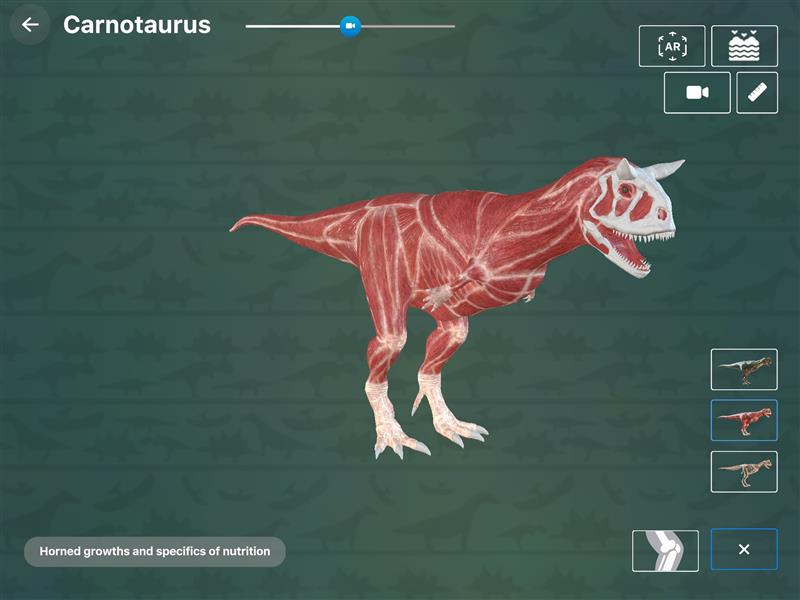
 3D MODEL "MUSCLES"
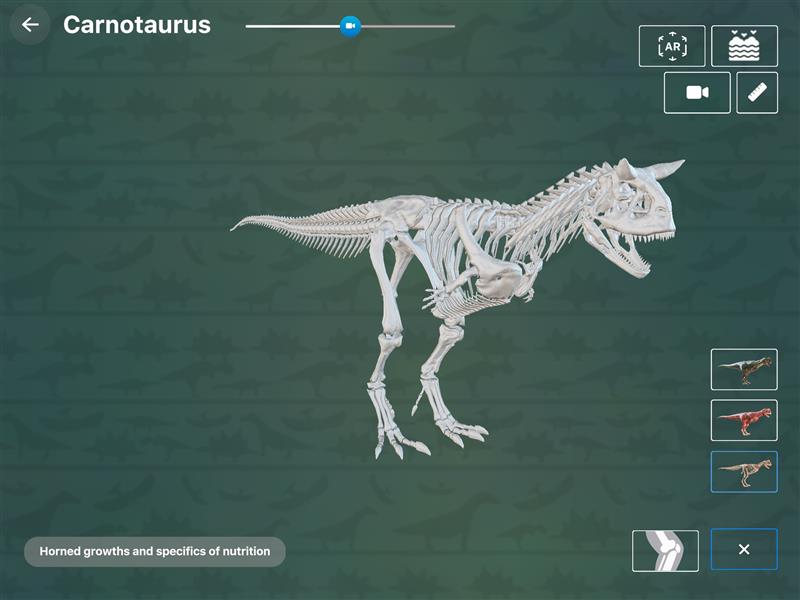
 3D MODEL "SKELETON"
 VISION
 NEIGHBORS
 VOICE ACTING
 AR - MODE
 GALLERY
 HISTORY OF DISCOVERIES

