


Ichthyornis

Name meaning:
Fish bird
Period of life:
95–83,5 million years ago
Period:
Cretaceous period
Habitat:
Marine environment
Taxonomy:
Theropods
Countries:





 Bajadasaurus


Andrewsarchus


What does the name mean: Ichthyornis received its name because of the unusual structure of its vertebrae, which resembled those of fishes while still retaining clear bird characteristics. The name comes from the Greek words ichthys (“fish”) and ornis (“bird”), literally meaning “fish bird” or “fish-like bird.”
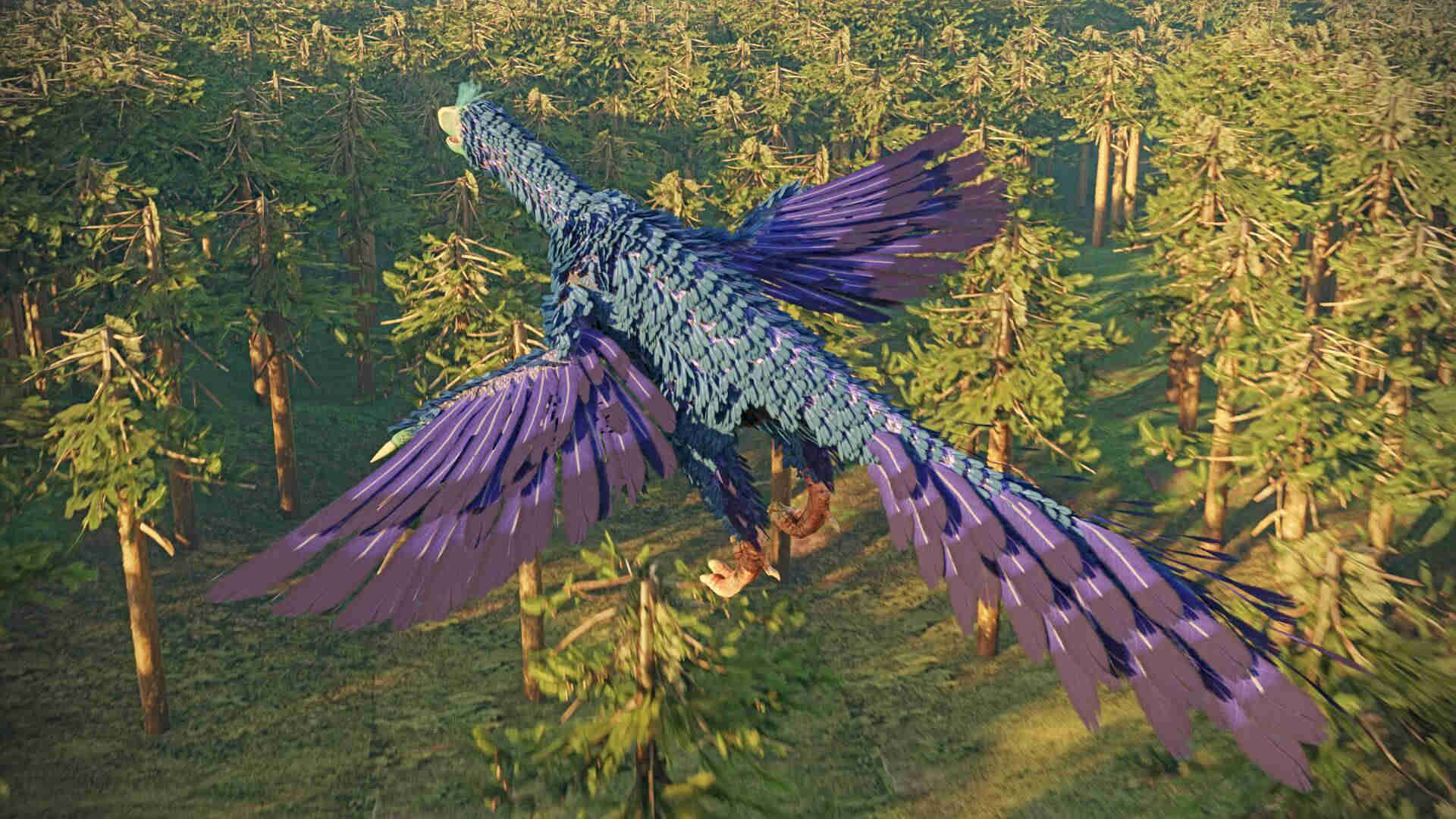
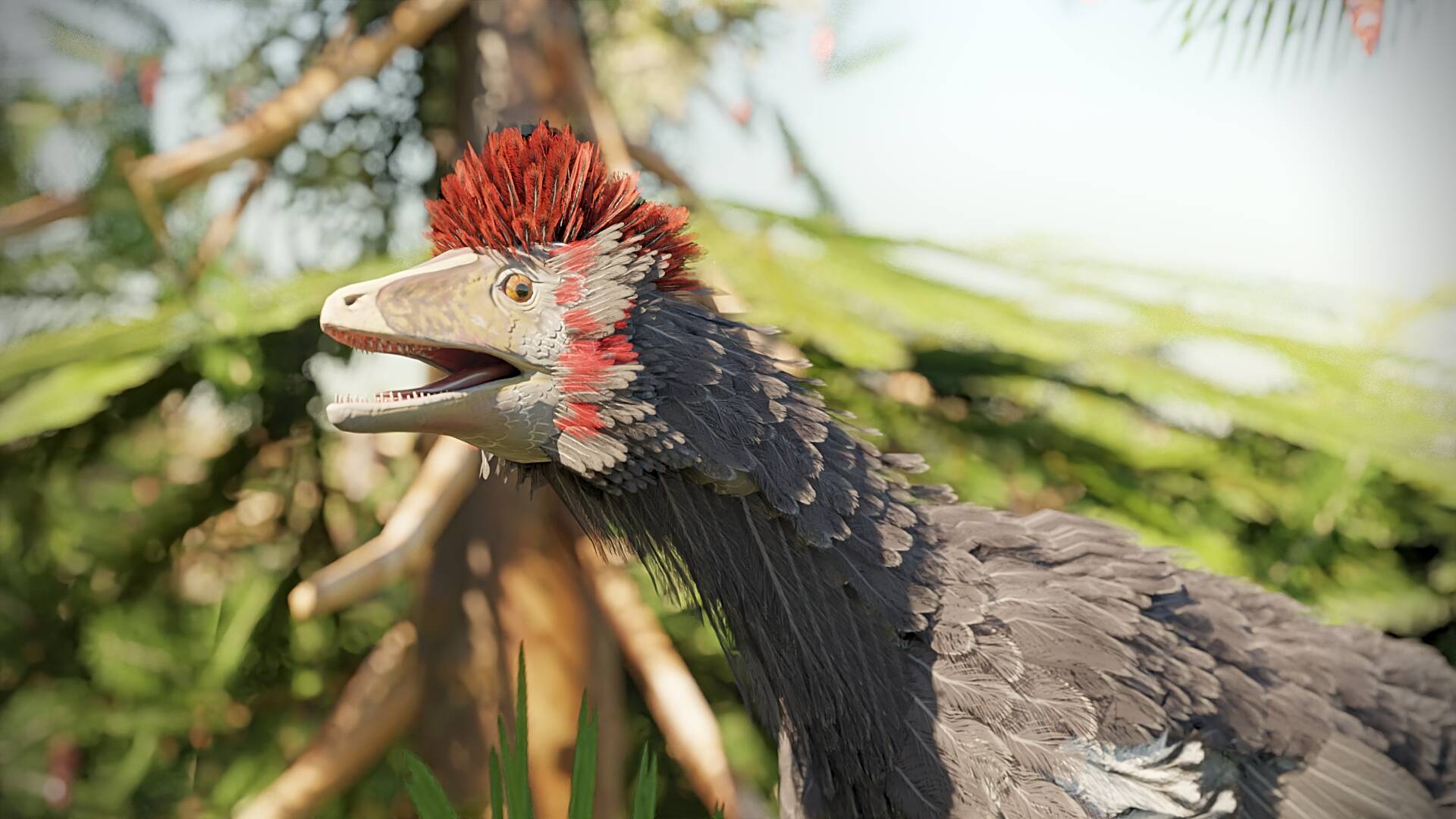
Ichthyornis dispar was a remarkable bird that lived during the Late Cretaceous period, approximately 95–83.5 million years ago. Comparable in size to a modern pigeon, it inhabited North America and lived above the waters of the Western Interior Seaway.
Ichthyornis dispar resembled modern seabirds such as gulls, but possessed one unusual feature — teeth. The presence of teeth makes it an important transitional form combining traits of ancient birds and their dinosaur ancestors.
The body of Ichthyornis dispar was highly adapted for flight. Its wingspan reached about 43 cm, and the well-developed sternum provided attachment sites for powerful flight muscles. The shape of the wings was similar to that of modern birds, indicating high maneuverability and the ability for active flight.
The most notable feature of Ichthyornis dispar was its teeth. Unlike most modern birds, its jaws contained sharp, slightly backward-curving teeth that helped grasp slippery prey such as fish. At the same time, the front portion of the beak was already toothless. The presence of teeth reflects its evolutionary relationship with dinosaurs.
Ichthyornis dispar was probably an active predator feeding mainly on fish. It may have soared above the water while searching for prey and then rapidly dived to capture it with its beak.
Ichthyornis dispar is highly important for science. It represents one of the forms displaying transitional features between dinosaurs and modern birds. The study of its fossil remains helps paleontologists better understand bird evolution and the development of modern avian characteristics.
Discussions
Start the first one!
 Start a discussion
Other animals



 INTERESTING FACTS
 PUZZLES
 HOME
HOME
 3D MODEL "SKIN"
 3D MODEL "MUSCLES"
 3D MODEL "SKELETON"
 VISION
 NEIGHBORS
 VOICE ACTING
 AR - MODE
 GALLERY
 HISTORY OF DISCOVERIES

