


Hesperornis

Name meaning:
Western bird
Period of life:
83,6–72 million years ago
Period:
Cretaceous period
Habitat:
Coasts
Taxonomy:
Theropods
Countries:





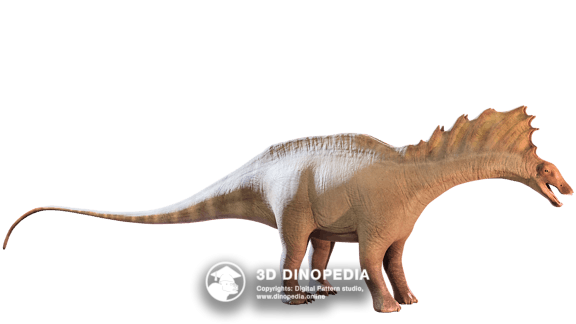 Bajadasaurus


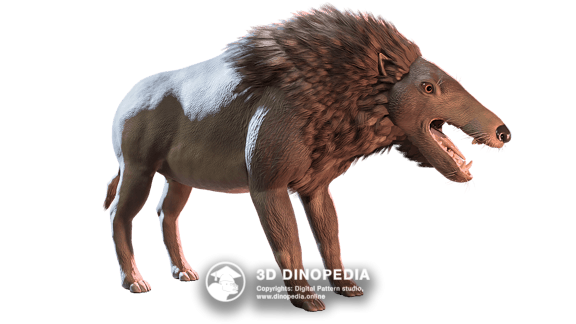
Andrewsarchus


What does the name mean: The name Hesperornis comes from two Ancient Greek words and translates as “western bird.” Hesperos (Ancient Greek: ἕσπερος) means “western” or “evening,” while ornis (Ancient Greek: ὄρνις) means “bird.”
Hesperornis was a bird that lived on Earth during the Late Cretaceous period, about 83.5–72 million years ago. It was a large animal, reaching approximately human size, outwardly resembling a cormorant but unable to fly and possessing teeth. The presence of teeth makes Hesperornis one of the notable ancient birds that retained several traits inherited from its dinosaur ancestors.
Fossils of Hesperornis have been discovered in marine deposits of North America, Sweden, and Russia. These birds spent most of their lives in water and were excellent swimmers and divers. Their method of underwater locomotion differed from that of penguins, which “fly underwater” using their wings: Hesperornis propelled itself with powerful hind limbs. Its body was streamlined, the legs were positioned far back on the body, and the wings were highly reduced and not used for flight.
One of the most interesting features of Hesperornis was the presence of teeth. Unlike modern birds, whose beaks lack teeth, it possessed teeth set within special grooves in the jaws. This adaptation is thought to have helped it hold slippery prey such as fish and cephalopods. The front part of the beak was covered with a keratinous sheath, similar to that of modern birds.
Importantly, despite its ancient origin, Hesperornis was already a true bird. It possessed feathers, laid eggs, and incubated them much like modern birds. At the same time, it was not a direct ancestor of modern birds, but rather a specialized side branch of avian evolution adapted to marine life and secondarily flightless.
As a relatively large bird, Hesperornis probably fell prey to predators. The seas of that time were inhabited by mosasaurs — large marine reptiles that may have posed a danger to it — as well as plesiosaurs. On land, dinosaurs including tyrannosaurids could also have been threats. Nevertheless, Hesperornis was not defenseless: its powerful hind limbs with claws were used not only for swimming but also for defense. Well-developed vision and hearing likely helped it detect danger in time.
The study of Hesperornis is important for science because it helps paleontologists better understand the evolution of birds from dinosaurs, their adaptation to different environments, and the changing appearance of Earth over millions of years.
Discussions
Start the first one!
 Start a discussion
Other animals






 INTERESTING FACTS
 PUZZLES
 HOME
HOME
 3D MODEL "SKIN"
 3D MODEL "MUSCLES"
 3D MODEL "SKELETON"
 VISION
 NEIGHBORS
 VOICE ACTING
 AR - MODE
 GALLERY
 HISTORY OF DISCOVERIES

