


Hatzegopteryx

Name meaning:
Hatzeg wing
Period of life:
66 million years ago
Period:
Cretaceous period
Habitat:
Floodplains
Taxonomy:
Pterosaurs
Countries:



 Armadillosuchus


Bajadasaurus


What does the name mean: “Hatzeg wing”, from the Hațeg region in Romania where its fossils were discovered, and the Greek word pteryx — “wing.”
Hatzegopteryx was a giant pterosaur that lived during the Late Cretaceous, around 66 million years ago. Its fossils were discovered in Transylvania (Romania), on the territory of the ancient Hațeg Island. During the Cretaceous, this island was located within the Tethys Sea and was known for its unusual fauna, including dwarf dinosaurs and other endemic animals.
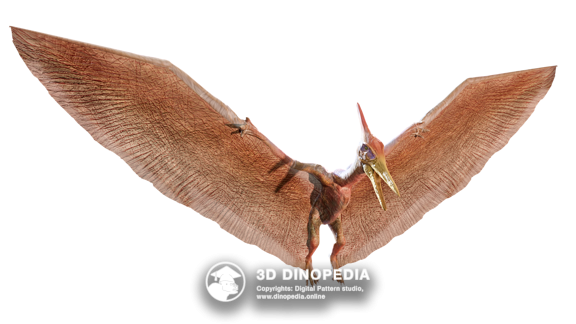
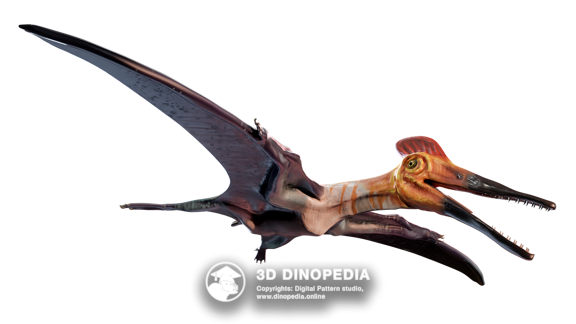
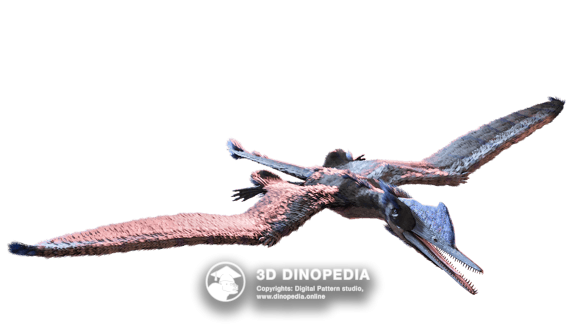
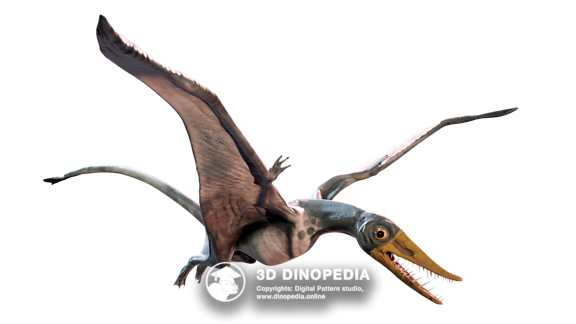
Hatzegopteryx belonged to the pterosaurs — a group of flying reptiles from the Mesozoic Era. It stood out even among giant pterosaurs because of its enormous size: its wingspan may have reached 10–10.5 m. Such dimensions allowed it to soar efficiently above the island landscapes while searching for prey.
Reconstructions suggest that Hatzegopteryx possessed a large body, an elongated skull, and powerful wings. Unlike most azhdarchids, it had an unusually broad and robust skull up to 3 m long. The skull bones bore ridges that served as attachment sites for strongly developed muscles. Despite its size, the skull remained relatively lightweight because of the internal structure of the bones. They consisted of a system of thin struts and air-filled cavities, combining strength with low mass.
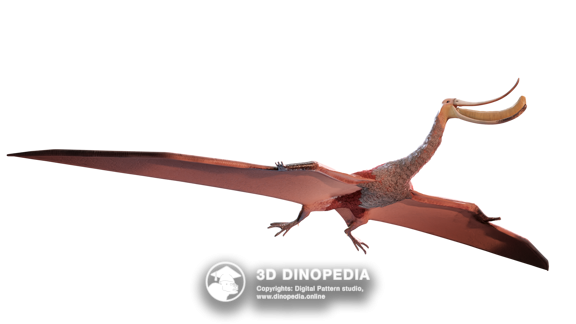
Another distinctive feature of Hatzegopteryx was its short and powerful neck. Unlike other azhdarchids with long and flexible necks, its neck was only about 1.5 m long. The cervical vertebrae were short and massive, with strongly developed muscle attachment areas. This construction provided exceptional strength and allowed the animal to support its enormous head.
Its gigantic size and massive build suggest that Hatzegopteryx occupied the role of an apex predator within the Hațeg Island ecosystem. Unlike some other azhdarchids, which probably fed on small prey, it may have hunted relatively large animals, including dwarf dinosaurs. Its powerful beak and jaws were likely capable of handling dense body tissues.
Hatzegopteryx is of major interest to paleontology. Its unusual anatomical features and probable ecological role help scientists better understand the evolution of pterosaurs and their adaptations to different environments. The study of this animal also provides insight into the distinctive fauna of Hațeg Island, which evolved under conditions of isolation and limited resources.
Discussions
Start the first one!
 Start a discussion
Other animals








 INTERESTING FACTS
 PUZZLES
 HOME
HOME
 3D MODEL "SKIN"
 3D MODEL "MUSCLES"
 3D MODEL "SKELETON"
 VISION
 NEIGHBORS
 VOICE ACTING
 AR - MODE
 GALLERY
 HISTORY OF DISCOVERIES

