


Parasaurolophus

Name meaning:
Near-Saurolophus lizard
Period of life:
77–74 mya
Period:
Cretaceous period
Habitat:
Tropical and subtropical forests
Taxonomy:
Ornithopods
Countries:





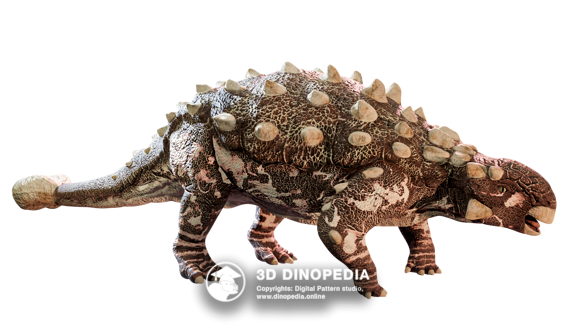 Euoplocephalus


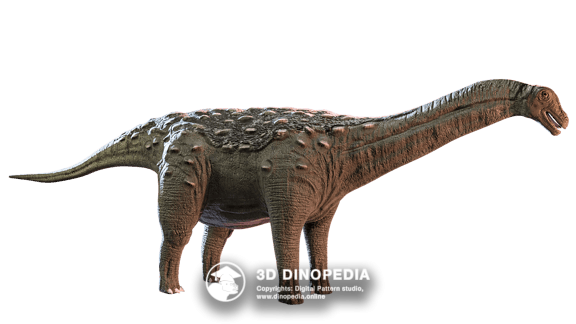
Saltasaurus


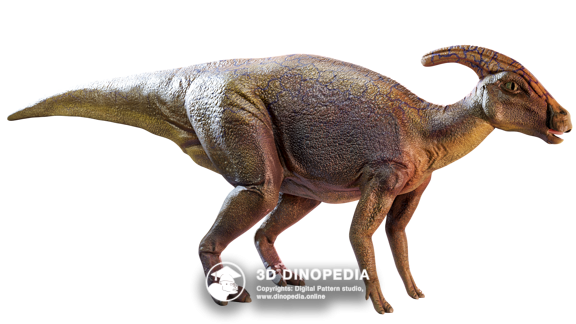
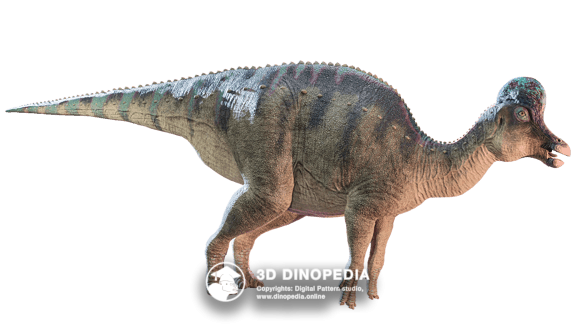
Parasaurolophus is a well-known dinosaur of the Late Cretaceous. This member of the family Hadrosauridae — the so-called «duck-billed dinosaurs» — lived approximately 77–74 million years ago in what is now Canada and the United States. At that time, these regions consisted of humid coastal plains with extensive wetlands and dense forests.
The first partially preserved fossils of Parasaurolophus — an incomplete skeleton with a skull — were discovered in 1920 near the Red Deer River in Alberta, Canada. Since then, paleontologists have recognized three to four species within the genus, differing in overall size and in the morphology of their characteristic cranial crest.
Giants with a resonant crest
Parasaurolophus walkeri reached up to 9.5 meters in total body length and weighed approximately 5 metric tons. Its skull measured up to 1.6 meters in length. Parasaurolophus cyrtocristatus was smaller, about 7 meters long, whereas the largest known species, Parasaurolophus tubicen, possessed a skull approaching 2 meters in length.
The most distinctive feature of this genus was its elongated, tubular cranial crest, originating near the external narial region and extending posteriorly in a sweeping arc. This structure was not merely ornamental. Internal cavities formed a complex system of air passages functioning as acoustic resonating chambers. Air passing through these tubes likely produced low-frequency, trumpet-like sounds. Biomechanical and CT-based reconstructions support the hypothesis that the crest functioned in intraspecific communication — for mate attraction, social signaling within herds, and possibly as an antipredator display.
A large, predominantly herbivorous hadrosaurid
Parasaurolophus was likely facultatively quadrupedal, capable of both bipedal and quadrupedal locomotion depending on speed and behavior. The premaxillary region formed a broad, edentulous, keratin-covered beak used for cropping vegetation. Posterior to the beak, the jaws housed extensive dental batteries composed of hundreds of closely packed teeth arranged in vertical stacks. These teeth were continuously replaced and functioned as a highly efficient grinding apparatus. The jaw mechanics allowed complex anteroposterior (fore–aft) movement during mastication, increasing the efficiency of plant processing. Its diet likely included leaves, shoots, and possibly aquatic or semi-aquatic vegetation, processed through this advanced ornithopod chewing system.
Discussions
Start the first one!
 Start a discussion
Other animals


 INTERESTING FACTS
 PUZZLES
 HOME
HOME
 3D MODEL "SKIN"
 3D MODEL "MUSCLES"
 3D MODEL "SKELETON"
 VISION
 NEIGHBORS
 VOICE ACTING
 AR - MODE
 GALLERY
 HISTORY OF DISCOVERIES

