


Ornitholestes

Name meaning:
Bird robber
Period of life:
156-147 million years ago
Period:
Jurassic period
Habitat:
Coasts
Taxonomy:
Theropods
Countries:



 Hybodus


Iguanodon


What does the name mean: “bird robber”
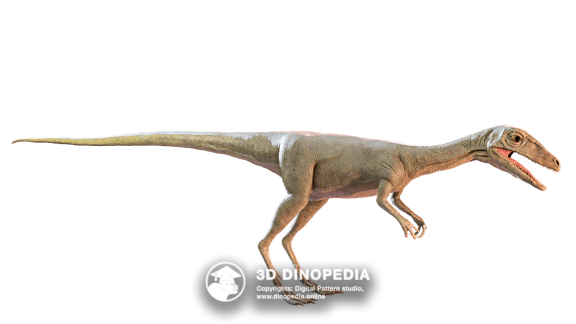
Ornitholestes was a small predatory dinosaur that inhabited the territory of modern North America during the Late Jurassic, approximately 156–147 million years ago. Its fossils were discovered in the Morrison Formation — one of the key Late Jurassic dinosaur localities, where remains of Stegosaurus, Allosaurus, Brachiosaurus, and others have also been found.
Ornitholestes was a relatively small dinosaur: its length reached about 2 meters, while its mass was approximately 15 kilograms. It moved on two legs and possessed a long tail that helped maintain balance during movement. The skull was compact but robust, with a well-developed lower jaw. The eyes were relatively large, indicating well-developed vision.
The forelimbs of Ornitholestes were long and strong, with three fingers equipped with sharp claws. Their structure allowed prey to be effectively seized and restrained. The hind limbs were long and slender, adapted for rapid running; each foot also possessed three clawed toes.
The diet of Ornitholestes can be inferred from the structure of its teeth. The front teeth were relatively conical and suited for grasping and holding prey. At the same time, the mesial (front) teeth generally lacked serrations, whereas the lateral teeth possessed serrations mainly on the posterior edge, where they could be weakly developed or only partially expressed. It is assumed that Ornitholestes fed on small animals, including lizards, early mammals, and small dinosaurs.
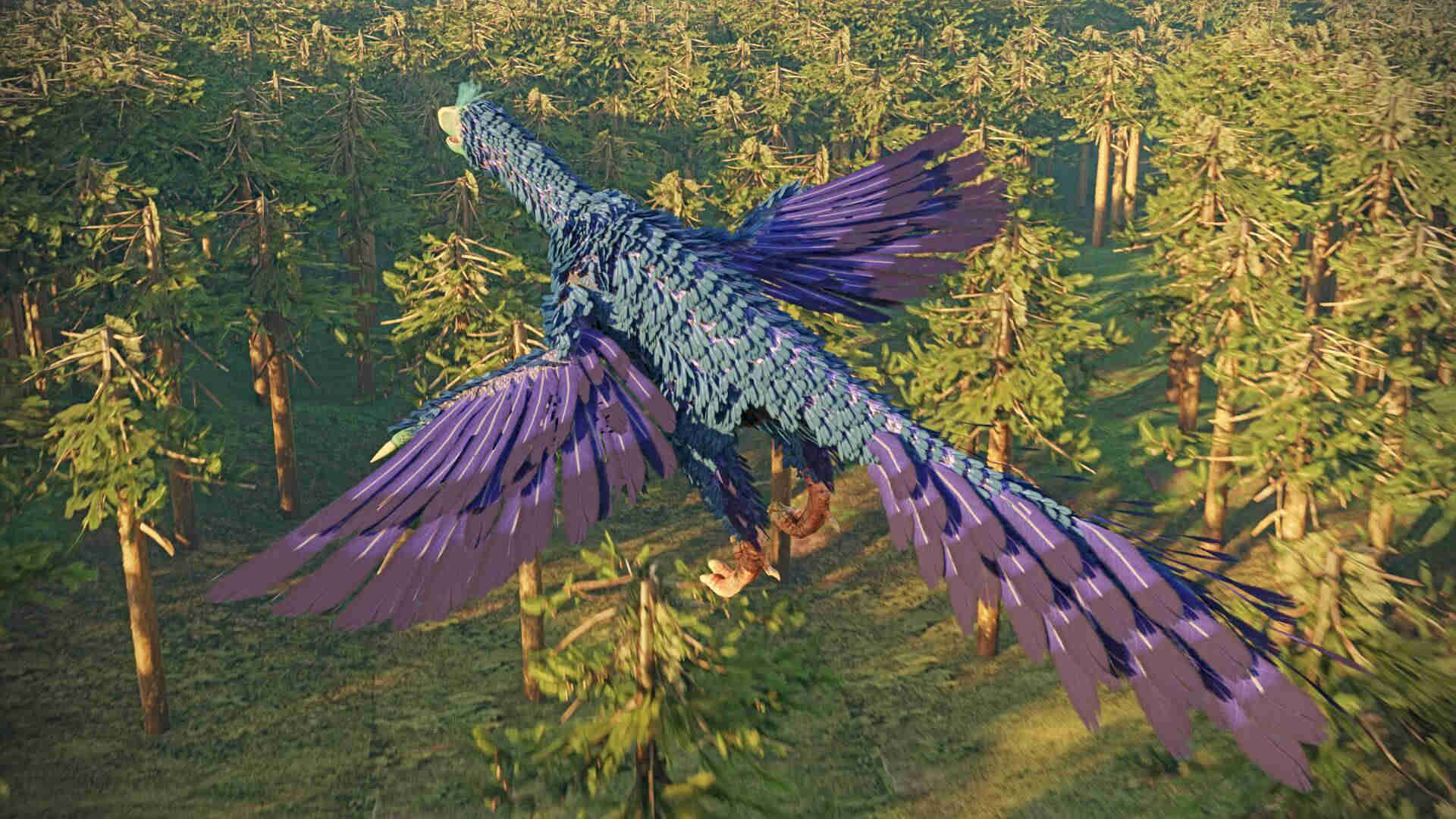
Initially, it was proposed that Ornitholestes, as suggested by its name, hunted birds. This hypothesis was notably popularized by illustrations by Charles Knight depicting Ornitholestes pursuing Archaeopteryx. However, later studies cast doubt on this assumption.
At present, most paleontologists consider that Ornitholestes fed primarily on small terrestrial animals: mammals, lizards, amphibians, and small dinosaurs. Some researchers also suggest that it may have eaten fish, using its conical teeth to seize slippery prey. The robust skull and jaws likely allowed it to handle relatively agile prey.
Ornitholestes is of considerable importance to paleontology because it helps improve understanding of theropod diversity during the Late Jurassic. It inhabited ecosystems populated by numerous large dinosaurs and occupied its own ecological niche among small predators.
Discussions
Start the first one!
 Start a discussion
Other animals






 INTERESTING FACTS
 PUZZLES
 HOME
HOME
 3D MODEL "SKIN"
 3D MODEL "MUSCLES"
 3D MODEL "SKELETON"
 VISION
 NEIGHBORS
 VOICE ACTING
 AR - MODE
 GALLERY
 HISTORY OF DISCOVERIES

