


Moeritherium

Name meaning:
Beast of Lake Moeris
Period of life:
37–35 million years ago
Period:
Paleogene period
Habitat:
Coasts
Taxonomy:
Mammals
Countries:





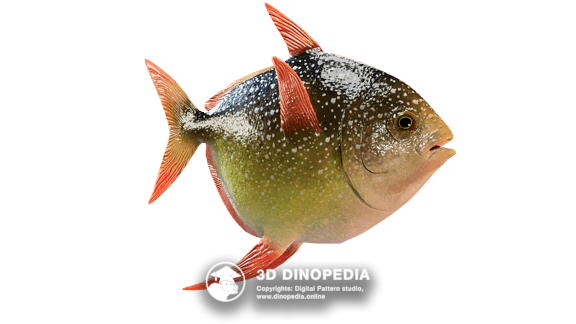 Megalampris


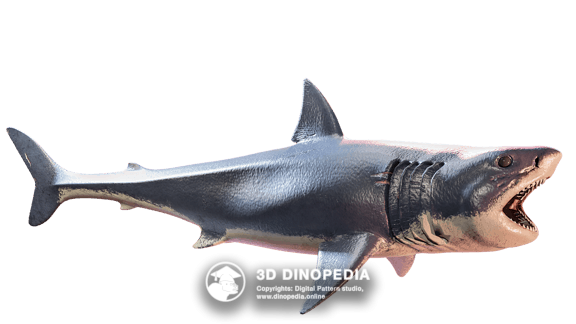
Megalodon


What does the name mean: Moeritherium literally means “beast of Lake Moeris”. Moeris refers to Lake Moeris (an ancient lake in Egypt, now Lake Qarun), where the fossils were discovered, while therium (from Greek therion) means “beast” or “animal”.
Moeritherium lyonsi was an extinct mammal that lived in North Africa during the Eocene, approximately 37–35 million years ago. Its name, meaning “beast from Lake Moeris,” refers to the locality in Egypt where the first fossils were found. Moeritherium belonged to the early proboscideans and was related to modern elephants, although it was much smaller. An adult stood about 70 cm tall at the shoulder and weighed approximately 250 kg.
Instead of the trunk characteristic of modern elephants, Moeritherium possessed an enlarged upper lip with a certain degree of mobility. This structure resembled that of modern tapirs and was used for grasping leaves, fruits, and other vegetation. The animal also possessed small tusks, less developed than those of modern elephants. These resembled enlarged incisors and were probably used for digging roots and tubers out of soft soil.
The dentition of Moeritherium differed greatly from that of modern elephants. The incisors were small and only slightly protruding, while the molars had a bunodont surface. Such morphology is typical of animals feeding on soft plant material, including leaves, stems, and aquatic vegetation.
Moeritherium was a semi-aquatic animal inhabiting the shores of rivers and lakes where vegetation was abundant. Its short limbs were not adapted for fast movement on land, but they provided stability on soft ground and in shallow water. Moeritherium is not considered a direct ancestor of modern elephants, but it belongs to an early branch of their evolutionary tree. The study of this animal has helped scientists better understand the early stages of proboscidean evolution.
Discussions
Start the first one!
 Start a discussion
Other animals




 INTERESTING FACTS
 PUZZLES
 HOME
HOME
 3D MODEL "SKIN"
 3D MODEL "MUSCLES"
 3D MODEL "SKELETON"
 VISION
 NEIGHBORS
 VOICE ACTING
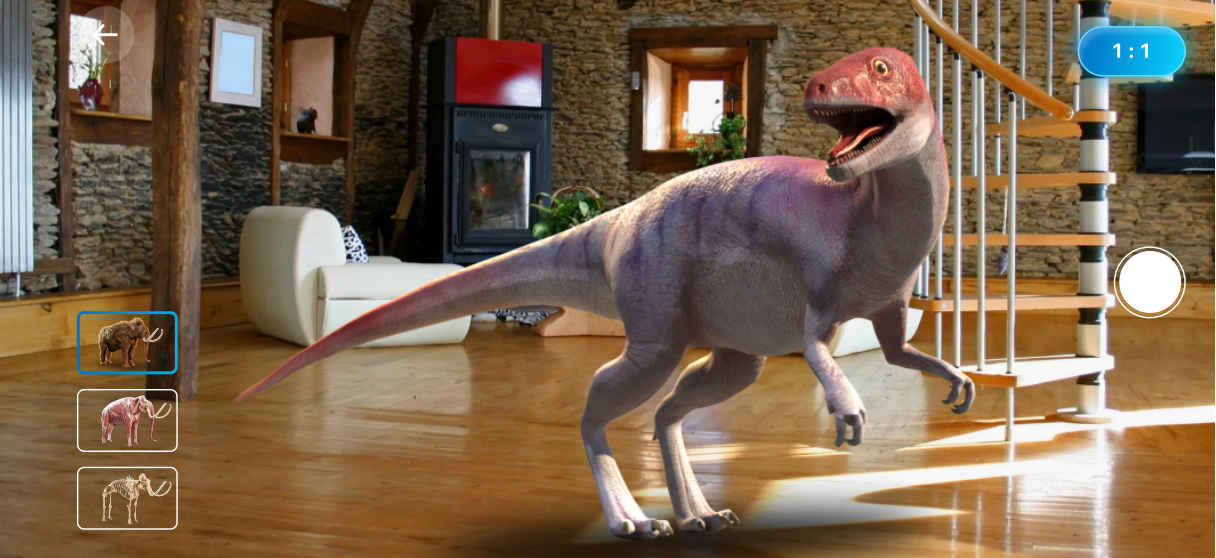
 AR - MODE
 GALLERY
 HISTORY OF DISCOVERIES

