


Miohippus

Name meaning:
Smaller horse
Period of life:
32–25 million years ago
Period:
Paleogene period
Habitat:
Woodlands
Taxonomy:
Mammals
Countries:





 Megalampris


Megalodon


What does the name mean: it derives from Greek words meaning “smaller horse”.
Miohippus was an extinct genus of horses known from fossil discoveries in North America dating from the Late Eocene to the Late Oligocene (approximately 32–25 million years ago). This period was characterized by major climatic changes: tropical forests gradually gave way to drier and more open landscapes — savannas and prairies. These processes had a significant influence on the evolution of mammals, including Miohippus.
Miohippus was a relatively small animal: shoulder height reached about 60 cm, and body mass was approximately 40–70 kg. In size, it resembled a modern pony and was noticeably larger than its ancestor Mesohippus.
Unlike later steppe horses, the lateral toes of Miohippus remained well developed and participated in weight support during locomotion. The three-toed foot distributed body mass and allowed movement across soft substrates such as forest litter or swampy ground. Although faster than its ancestors, Miohippus was adapted more for maneuverable movement among vegetation than for prolonged running across open terrain.
The skull of Miohippus differed from that of Mesohippus: it became longer and narrower, especially in the facial region. The eyes were positioned on the sides of the head, providing a wide field of view.
Significant changes also affected the dentition. An additional crest appeared on the upper molars, increasing the chewing surface area. This reflects a transition toward tougher plant food — leaves, shrub shoots, and probably early forms of grassy vegetation.
The study of Miohippus makes it possible to trace key stages in horse evolution. Its fossil remains demonstrate gradual morphological changes associated with adaptation to changing environmental conditions.
Discussions
Start the first one!
 Start a discussion
Other animals







 INTERESTING FACTS
 PUZZLES
 HOME
HOME
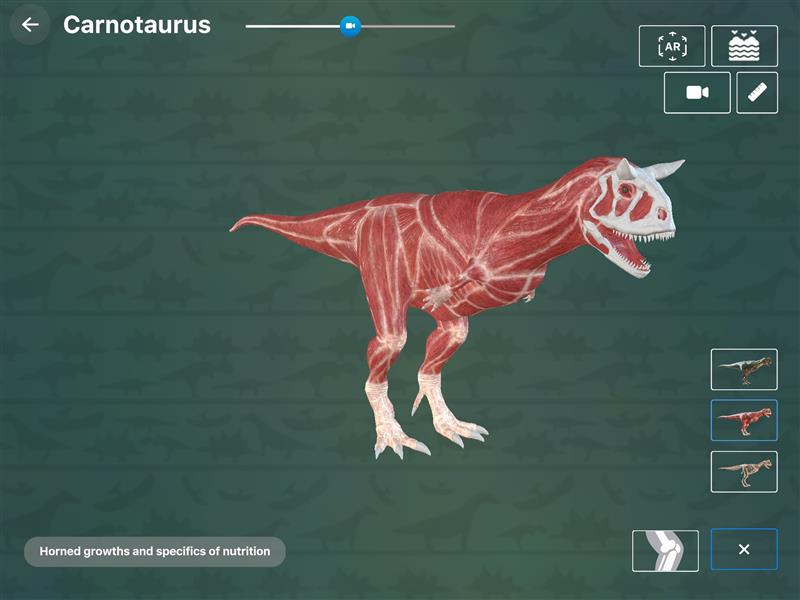
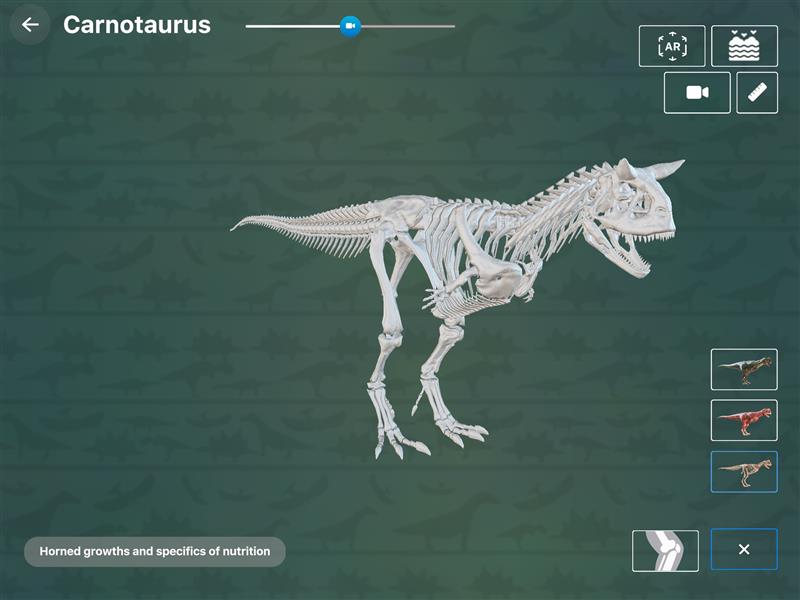
 3D MODEL "SKIN"
 3D MODEL "MUSCLES"
 3D MODEL "SKELETON"
 VISION
 NEIGHBORS
 VOICE ACTING
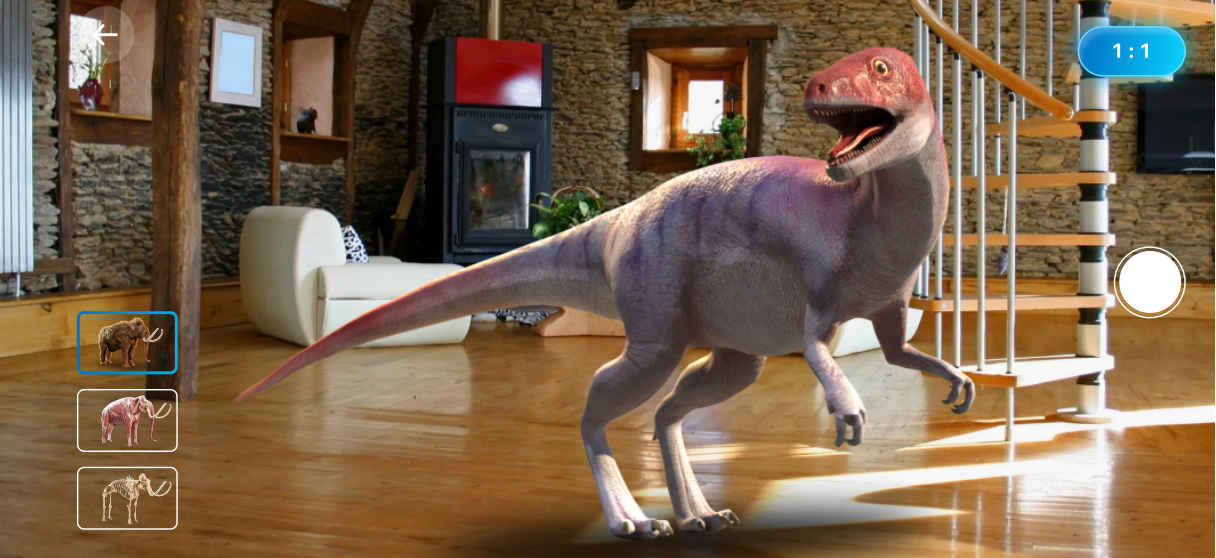
 AR - MODE
 GALLERY
 HISTORY OF DISCOVERIES

