


Gigantopithecus

Name meaning:
Giant ape
Period of life:
2 – 0,2 million years ago
Period:
Quaternary period
Habitat:
Rainforests
Taxonomy:
Mammals
Countries:




 Hydrodamalis gigas


Haikouichthys


What does the name mean: The name Gigantopithecus is derived from two Greek words: gígas — “giant” or “huge,” and píthēkos — “ape.” Thus, the name means “giant ape”.
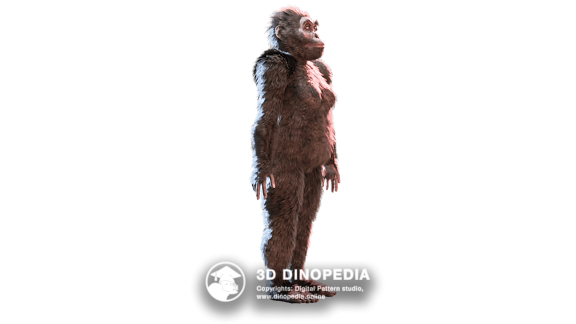
Gigantopithecus was a genus of large primates that inhabited the forests of Asia for millions of years. In size, they greatly exceeded modern great apes: their height may have reached 3–4 m, with a body mass exceeding 200 kg.
Their history began in the Early Pleistocene, about 2 million years ago, in what is now China. During this period, ecosystems differed substantially from modern ones: mastodons and saber-toothed cats inhabited the land, while forest communities included diverse large mammals known from limited fossil evidence.
The first discoveries indicating the existence of Gigantopithecus were made in 1935. These consisted of exceptionally large teeth, approximately twice the size of gorilla teeth, known in traditional Chinese medicine as “dragon teeth.” In addition, several jaws and fragments of a humerus are known and represent the primary sources of information about these animals.
Despite the limited fossil material, researchers have reconstructed the general appearance of Gigantopithecus. These were massive primates with powerful limbs, probably adapted for terrestrial locomotion. The structure of the teeth and jaws indicates a plant-based diet including fruits, leaves, stems, and possibly underground plant parts.
Gigantopithecus existed for approximately 1.5 million years and survived through a number of climatic changes. They coexisted with early representatives of the genus Homo, including Homo erectus, which dispersed across Asia during the same period. It has been suggested that competition for resources may have occurred between them, and hunting interactions are also considered possible. Proposed causes of extinction include a combination of climatic change, reduction of forest habitats, and interspecific competition.
The study of Gigantopithecus is important for understanding primate evolution, including the origins of humans and their closest relatives.
Discussions
Start the first one!
 Start a discussion
Other animals









 INTERESTING FACTS
 PUZZLES
 HOME
HOME
 3D MODEL "SKIN"
 3D MODEL "MUSCLES"
 3D MODEL "SKELETON"
 VISION
 NEIGHBORS
 VOICE ACTING
 AR - MODE
 GALLERY
 HISTORY OF DISCOVERIES

