


Isanosaurus

Name meaning:
Lizard from Isan
Period of life:
220-201 mya
Period:
Triassic period
Habitat:
Savannas and plains
Taxonomy:
Sauropodomorphs
Countries:




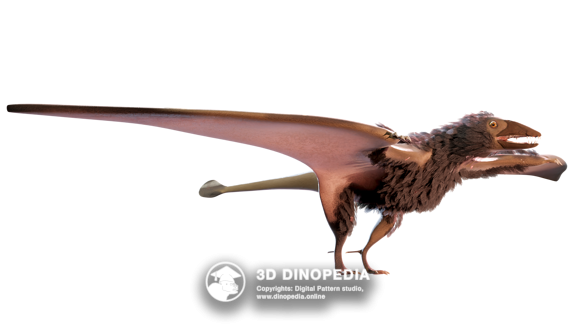 Eudimorphodon


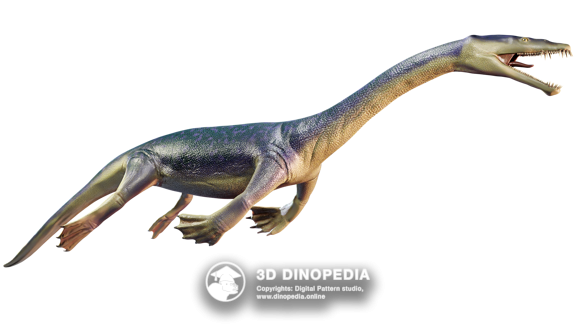
Nothosaurus


«lizard from Isan», named after the Isan region in north-eastern Thailand.
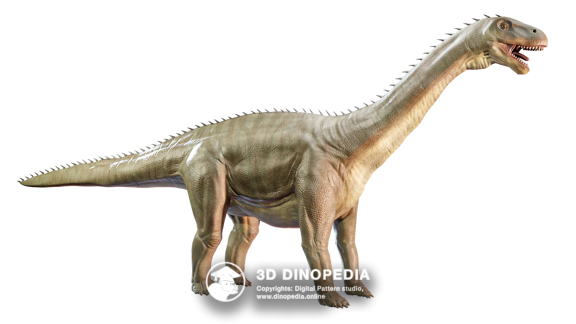
Isanosaurus was one of the earliest representatives of the sauropod dinosaurs. It lived in the Late Triassic or Early Jurassic, more than 190 million years ago, in what is now Thailand.
The first remains of this dinosaur included several tail vertebrae, bones from the neck and torso, fragments of ribs, and a femur. Although the discoveries were limited, they allowed scientists to reconstruct the general appearance of this ancient herbivore.
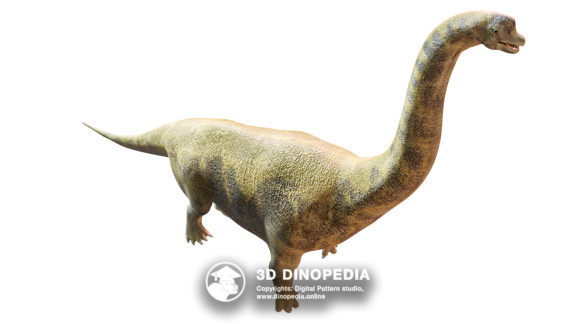
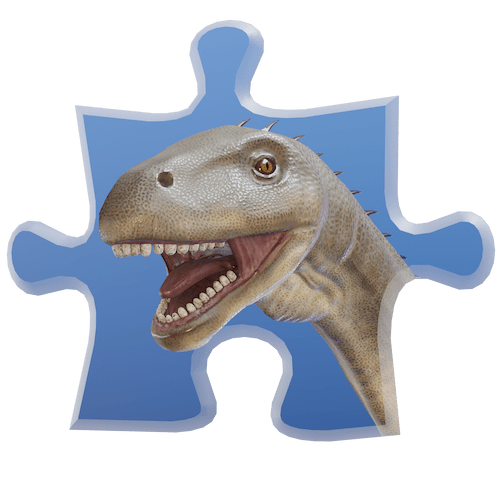
Isanosaurus reached about 6.5 metres in length and up to 4 metres in height. It had a long, flexible neck, a powerful tail, and a relatively small head — features typical of all sauropods. But the most interesting aspect is its transitional characteristics: Isanosaurus walked on four legs, whereas its predecessors, the prosauropods, often moved on two. Its legs had already acquired a column-like form — the same as in the giants that appeared later, such as diplodocids and brachiosaurs. These massive limbs helped support its own weight securely.
The structure of the vertebrae of Isanosaurus also proved remarkable. The neck vertebrae had a convex front surface and a concave rear surface — a type of articulation known as opisthocoelous. This provided mobility and flexibility to the neck. The tail vertebrae, by contrast, were concave on both sides — amphicoelous — making the tail both stable and flexible.
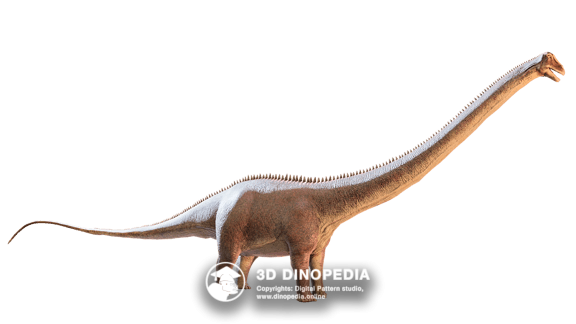
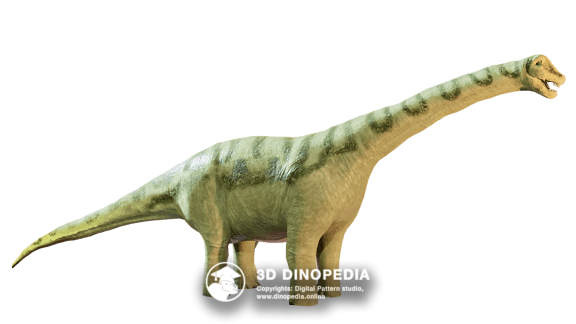
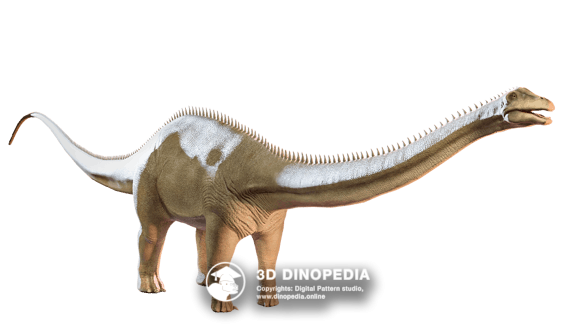
Judging by the conditions in which these animals lived, Isanosaurus inhabited river valleys and plains. It probably wandered slowly through dense vegetation, feeding on soft shoots and leaves. However, because of the scarcity of remains, it is not yet possible to say exactly what it ate — foliage from the tops of trees, like Brachiosaurus, or plants closer to the ground, like Diplodocus.
In any case, Isanosaurus was an important link in the evolution of giant sauropods — a transitional form between lighter, two-legged herbivores and the massive «long-necked giants» of the Jurassic Period.
Discussions
Start the first one!
 Start a discussion
Other animals


 INTERESTING FACTS
 PUZZLES
 HOME
HOME
 3D MODEL "SKIN"
 3D MODEL "MUSCLES"
 3D MODEL "SKELETON"
 VISION
 NEIGHBORS
 VOICE ACTING
 AR - MODE
 GALLERY
 HISTORY OF DISCOVERIES

