


Euparkeria

Name meaning:
Parker’s good animal
Period of life:
247 million years ago
Period:
Triassic period
Habitat:
Lakes and marshes
Taxonomy:
Marine reptiles
Countries:



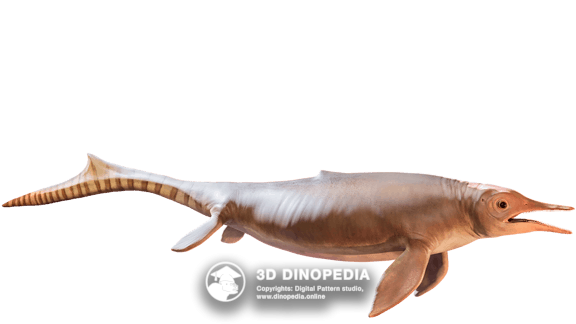 Chaohusaurus


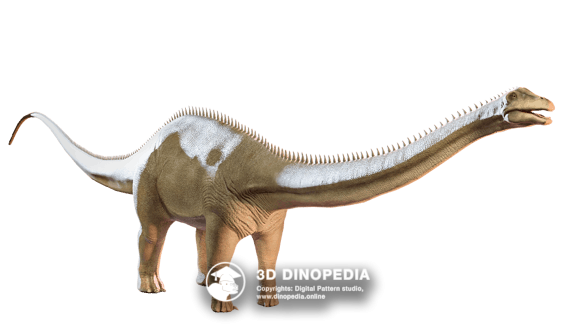
Diplodocus


What does the name mean: “Parker’s good animal.”
Euparkeria capensis was a small extinct reptile that lived about 247 million years ago during the Early Triassic period. Its name — “Parker’s good animal” — was given in honor of the British anatomist William Kitchen Parker (W. K. Parker). Fossil remains of Euparkeria have been discovered in South Africa, in the Karoo Basin, a region famous for its rich fossil deposits. The most complete skeletons come from the Burgersdorp Formation.
Euparkeria capensis reached about 55 cm in length. In appearance, it resembled a lizard-like animal with a long tail and slender limbs. Its body was covered with rows of small bony plates — osteoderms — which probably served a protective function.
The skull of Euparkeria capensis was relatively small and elongated, with large eye sockets. The jaws contained rows of small but sharp teeth, indicating a predatory lifestyle. One of its most notable features was the structure of the limbs: the hind limbs were noticeably longer than the forelimbs. For a long time, this was considered evidence of bipedal locomotion, but modern studies suggest that Euparkeria moved primarily on all fours.
The internal anatomy of Euparkeria capensis is of great interest to paleontologists. Analysis of its skeleton reveals several evolutionarily advanced features linking it to archosaurs — the group that includes dinosaurs, crocodilians, and pterosaurs. In particular, it possessed a characteristic ankle joint structure that allowed efficient straightening of the hind limbs during locomotion. This feature is regarded as an important stage in archosaur evolution.
The study of this animal’s internal anatomy helps scientists better understand the origin and evolution of archosaurs, as well as reconstruct its lifestyle and ecological role within Late Early Triassic ecosystems.
Discussions
Start the first one!
 Start a discussion
Other animals






 INTERESTING FACTS
 PUZZLES
 HOME
HOME
 3D MODEL "SKIN"
 3D MODEL "MUSCLES"
 3D MODEL "SKELETON"
 VISION
 NEIGHBORS
 VOICE ACTING
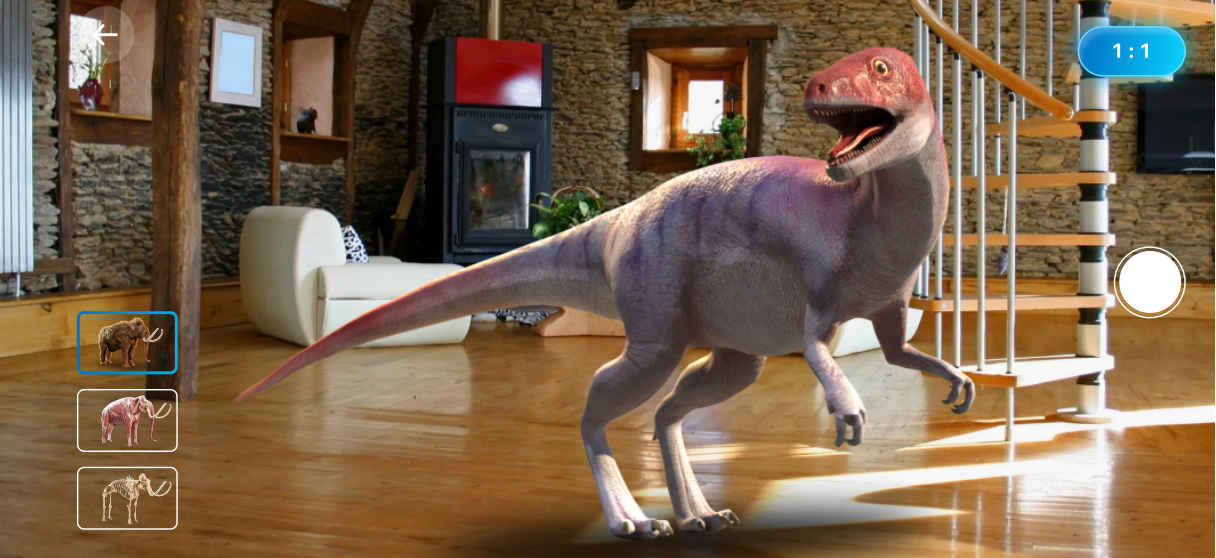
 AR - MODE
 GALLERY
 HISTORY OF DISCOVERIES

