


Purgatorius

Name meaning:
Named after Purgatory Hill in Montana (USA)
Period of life:
66–63 million years ago
Period:
Paleogene period
Habitat:
Rainforests
Taxonomy:
Mammals
Countries:



 Megalampris


Megalodon
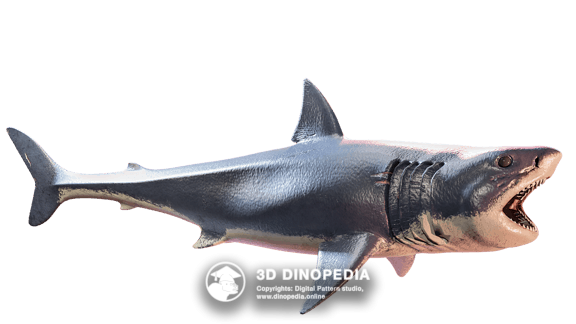


What does the name mean: Purgatorius was named after Purgatory Hill in Montana, USA, where its first fossils were discovered.
Purgatorius janisae was a small mammal that lived 66–63 million years ago during the early Paleocene, shortly after the extinction of the dinosaurs. This period marked the beginning of the Cenozoic Era and major changes in Earth’s ecosystems. After the disappearance of large reptiles, mammals began to diversify rapidly and occupy newly available ecological niches.
The appearance of Purgatorius belongs to the early stages of ecosystem recovery following the mass extinction event. Its fossils, discovered in North America, provide important information about the early evolution of primate-like mammals, including the lineage that would eventually lead to humans.
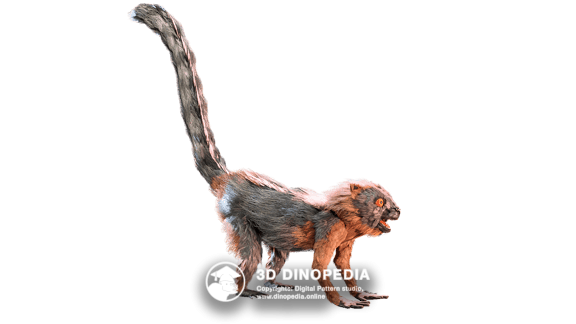
Purgatorius was a very small animal, about 15 cm long and weighing from several dozen up to roughly 100 g. No complete skeleton has been found; the known material consists mainly of teeth, jaw fragments, and isolated limb bones. Based on these remains, researchers suggest that it resembled modern tree shrews: it likely had a long tail, fur, and limbs adapted for climbing branches.
The structure of the teeth is especially important for interpreting this animal. Their morphology indicates an omnivorous diet that included both plant and animal matter. Insects probably formed the basis of its diet, supplemented by fruits, seeds, and other plant foods.
Purgatorius is thought to have led an arboreal lifestyle. It lived in the tree canopy, where it found both shelter from predators and food resources. Its small size and limb structure provided high mobility and climbing ability.
The discovery of Purgatorius played an important role in paleontology. It helped clarify the early stages in the evolution of modern mammal groups and trace the evolutionary processes that eventually led to the emergence of primates, while also improving our understanding of ecosystem recovery after the mass extinction event.
Discussions
Start the first one!
 Start a discussion
Other animals











 INTERESTING FACTS
 PUZZLES
 HOME
HOME
 3D MODEL "SKIN"
 3D MODEL "MUSCLES"
 3D MODEL "SKELETON"
 VISION
 NEIGHBORS
 VOICE ACTING
 AR - MODE
 GALLERY
 HISTORY OF DISCOVERIES

