


Proterogyrinus


Name meaning:
Earlier wanderer
Period of life:
331 - 323 million years ago
Period:
Carboniferous period
Habitat:
Floodplains
Taxonomy:
Amphibians
Countries:




 Falcatus


Dunkleosteus


What does the name mean: “earlier wanderer” or “earlier tadpole”.
Proterogyrinus was an extinct genus of early tetrapods belonging to the embolomeres. It lived approximately 331–323 million years ago during the Serpukhovian Age of the Carboniferous Period, a time when vertebrates were actively colonizing land. Fossil remains have been discovered in Scotland and West Virginia. This does not indicate migrations across oceans: at that time the Atlantic Ocean had not yet formed, and these regions were part of the same continuous landmass.
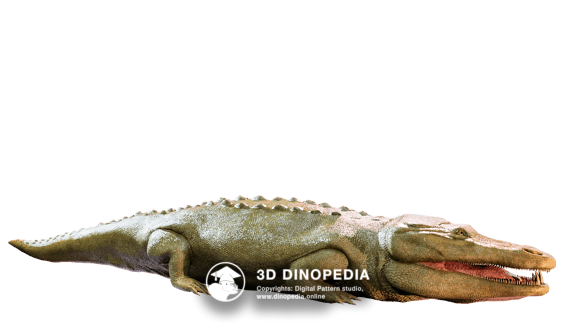
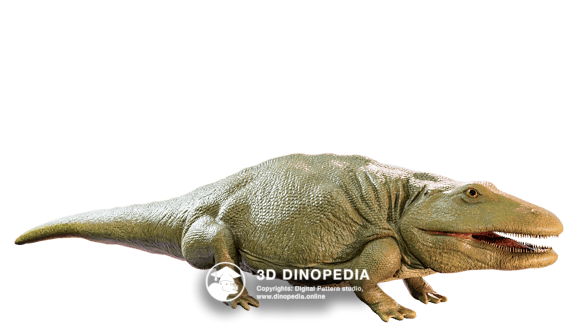
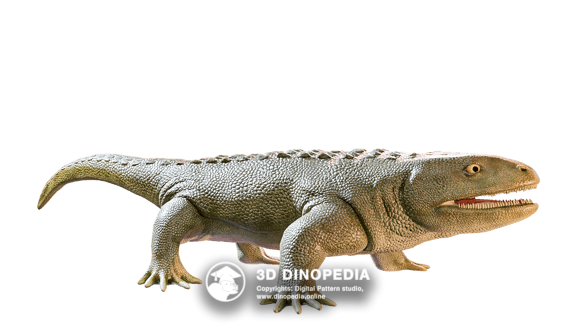
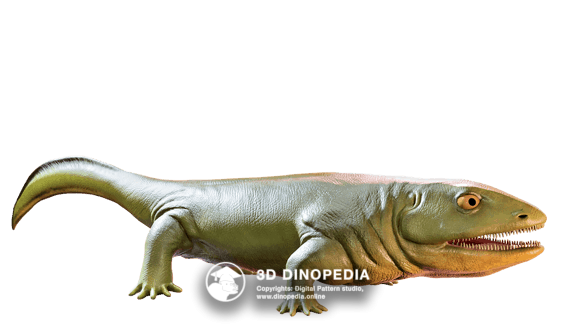
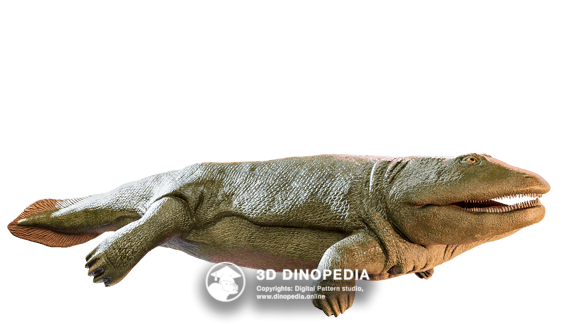
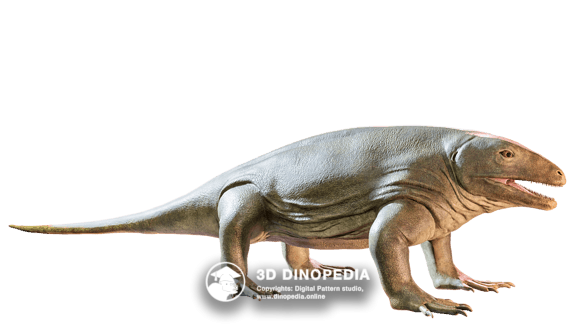
Proterogyrinus was relatively large for its era, reaching lengths of 1.5–2.3 meters. In appearance, it resembled a small crocodile or a large lizard, with a massive body, short but strong five-toed limbs, a large head with an elongated snout, and a flattened tail adapted for swimming.
Proterogyrinus belonged to the group of early tetrapods capable of moving both in water and on land. Its limbs possessed well-ossified wrist and ankle bones, providing support for locomotion on land. At the same time, the presence of a lateral line system and ear notches, probably associated with spiracles, indicates a primarily aquatic lifestyle.
The eyes were positioned high on the skull, a feature characteristic of ambush predators. Scientists suggest that the animal remained near the water surface while tracking prey before launching a rapid attack.
Proterogyrinus is considered an important stage in vertebrate evolution, demonstrating the transition from aquatic to terrestrial life. Members of this group and their close relatives played a significant role in the development of evolutionary lineages that eventually gave rise to the diversity of land vertebrates.
Discussions
Start the first one!
 Start a discussion
Other animals





 INTERESTING FACTS
 PUZZLES
 HOME
HOME
 3D MODEL "SKIN"
 3D MODEL "MUSCLES"
 3D MODEL "SKELETON"
 VISION
 NEIGHBORS
 VOICE ACTING
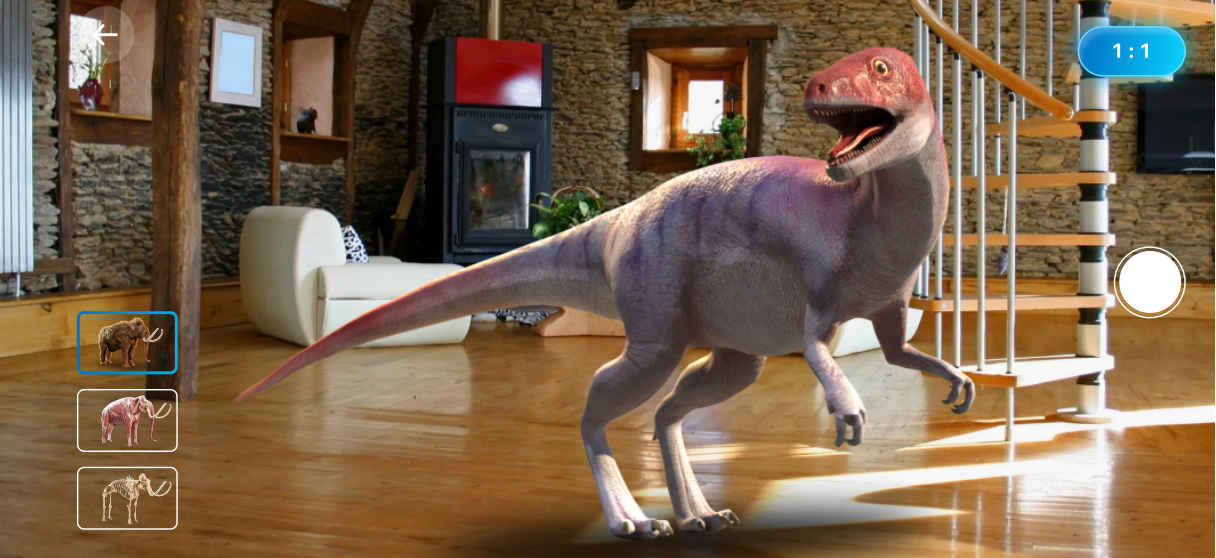
 AR - MODE
 GALLERY
 HISTORY OF DISCOVERIES

