


Piranhamesodon

Name meaning:
Piranha Mesodon
Period of life:
152 million years ago
Period:
Jurassic period
Habitat:
Marine environment
Taxonomy:
Bony fish
Countries:



 Hybodus


Iguanodon


What does the name mean: Piranhamesodon is derived from the word “piranha” and the genus name Mesodon, an ancient pycnodontiform fish. The name reflects the similarity of its teeth to those of modern piranhas.
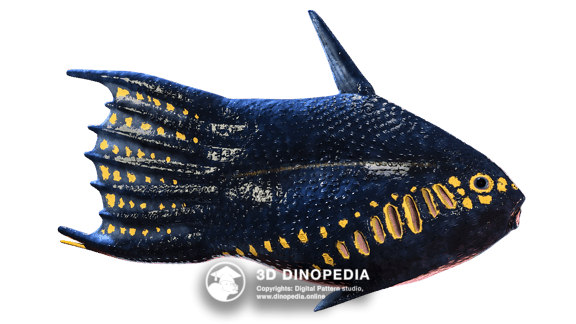
Piranhamesodon pinnatomus was an extinct fish that inhabited warm tropical seas during the Late Jurassic, about 152 million years ago. Its fossils were discovered in the Solnhofen deposits of Bavaria, Germany, which are famous for their exceptional preservation of fossils, including Archaeopteryx.
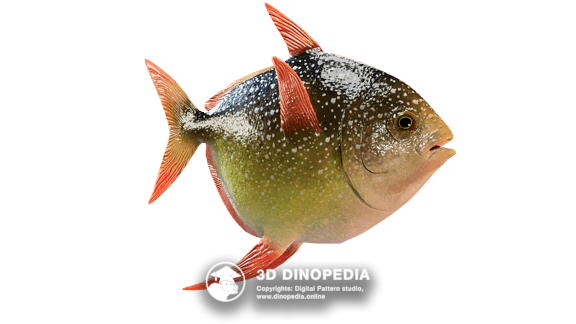
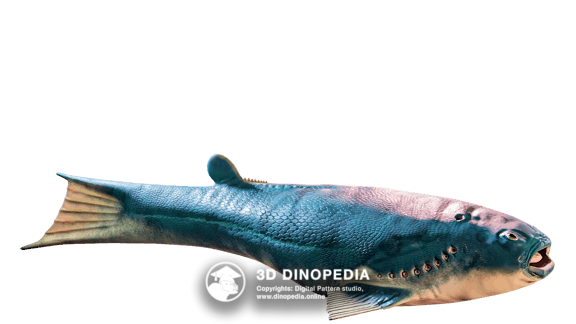
In appearance, Piranhamesodon pinnatomus probably resembled modern butterflyfish. Its body was deep and laterally compressed, with well-developed fins that provided high manoeuvrability in complex environments such as coral reefs and dense aquatic vegetation. However, its most distinctive feature was its dentition.
Unlike other pycnodontiform fishes (Pycnodontiformes), which possessed flat crushing teeth adapted for hard food items, Piranhamesodon pinnatomus had sharp serrated teeth similar to those of modern piranhas. The dentition was differentiated: the front of the jaws contained recurved teeth for grasping prey, behind them were tall cutting teeth, and farther back were smaller tooth elements. This structure indicates an ability to slice flesh from prey.
According to data published in the journal Current Biology, Piranhamesodon pinnatomus represents one of the earliest ray-finned fishes capable of tearing pieces of tissue from other fishes. This suggests that this type of predatory feeding evolved earlier than previously thought.
It is suggested that Piranhamesodon pinnatomus hunted from ambush, hiding among corals and aquatic vegetation. When prey approached, it likely made a rapid strike and used its teeth to tear away parts of the body, including fins. The prey probably included fishes of similar or even larger size.
Fossils of fishes from the same deposits show bite marks and damaged fins, supporting the predatory lifestyle of Piranhamesodon pinnatomus. These findings expand our understanding of the evolution of feeding strategies in Jurassic fishes.
Discussions
Start the first one!
 Start a discussion
Other animals








 INTERESTING FACTS
 PUZZLES
 HOME
HOME
 3D MODEL "SKIN"
 3D MODEL "MUSCLES"
 3D MODEL "SKELETON"
 VISION
 NEIGHBORS
 VOICE ACTING
 AR - MODE
 GALLERY
 HISTORY OF DISCOVERIES

